Editorial guidance only. Product characteristics, care needs, and commercial terms should be confirmed in writing for any specific item.
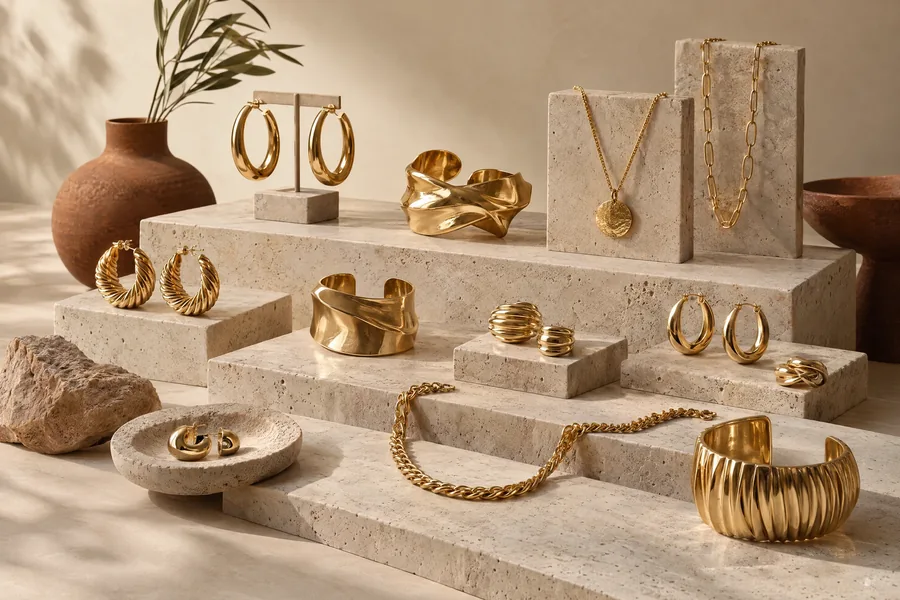
Good jewelry sourcing begins before a quotation arrives. A photograph can establish a design direction, but it cannot confirm metal content, gemstone identity, construction or delivery terms. Whether you are planning a small retail assortment or exploring a business collaboration, the most useful questions connect what you want with what a supplier can document. This guide develops practical jewelry sourcing questions about materials and supplier terms, from describing a brief to reviewing samples and agreeing on responsibilities. The goal is not to find a supplier who says yes to everything; it is to make decisions with fewer assumptions and a clearer written record.
Build a Brief That Separates Appearance from Specification
Start with the purpose of the purchase, not a folder of attractive images. Are you exploring display concepts, planning an assortment for occasional wear, or seeking pieces intended for frequent use? Record the audience, preferred silhouettes, approximate dimensions and budget boundaries. In jewelry sourcing, those details give a supplier something concrete to answer. They also prevent an appealing proposal from quietly replacing your original requirements with different sizes, finishes or construction.
Separate visual language from material language in your brief. “Warm yellow finish” describes appearance; it does not establish gold content. “Clear center stone” leaves gemstone identity unresolved. Ask for the base metal, any surface coating, and the identity of each stone or decorative component. The FTC Jewelry Guides provide a useful reference for truthful descriptions. A sound jewelry sourcing record keeps these answers beside the image rather than treating the image as evidence.
Explore our product collection for individual designs, photographs, and product details. When considering jewelry sourcing, look at each piece in the context of your own preferences and practical needs. Use the product description to check relevant specifications rather than relying on appearance alone. For a more personal recommendation or a question about a particular piece, contact katherine jewelry with the details that matter to you.
Consider a buyer who requests ten visually coordinated designs for a display. The essential requirement might be a consistent finish and a balanced range of sizes, while the exact clasp style remains flexible. Mark each point as essential, preferred or open to discussion. This simple hierarchy makes jewelry sourcing negotiations more productive: a supplier can identify a genuine constraint, propose an alternative and explain the consequences without guessing which feature matters most to you.
Finish the brief with a short response checklist and a version date. Request a description, dimensions, material details, relevant limitations and a quotation against the same numbered requirements. If a supplier offers a substitute, ask which requirement it changes. The decision rule for this stage of jewelry sourcing is straightforward: do not compare proposals until you know whether they answer the same brief. Otherwise, an apparently attractive option may simply omit something another proposal includes.
Ask Material Questions That Produce Usable Answers
Move from broad labels to component-level descriptions. A necklace can have different materials in its chain, pendant, clasp and connecting rings. Ask whether the specification applies to every component or only the visible centerpiece. Sterling silver is normally described as an alloy containing 92.5% silver, while a surface plating is not the same as solid metal throughout. In jewelry sourcing, a familiar label is a starting point for clarification, not a complete construction report.
For coated pieces, ask what lies beneath the finish, how the coating is described and what care or wear limitations the supplier identifies. If thickness or testing is relevant to your requirements, ask whether supporting documentation is available and what it covers. Do not convert a vague answer into an assumed performance guarantee. Effective jewelry sourcing distinguishes a documented specification from phrases such as “premium finish,” which may convey a sales position without explaining measurable characteristics.
Stone questions need similarly precise language. Ask for gemstone identity, whether it is natural, laboratory-created or imitation, and any disclosed treatments that affect description or care. Laboratory-created and imitation are not interchangeable categories; moissanite and diamond are distinct materials. For jewelry sourcing decisions, request written wording you can retain with the quotation. If a claim about origin or certification matters to the purchase, ask what evidence supports it and whether it applies to the offered items.
Turn every answer into a practical follow-up. If a supplier identifies a treated stone, ask how that treatment affects cleaning. If construction includes a delicate setting, ask what handling precautions are appropriate. The GIA guidance on jewelry care explains why chemicals, heat and some cleaning methods can damage particular materials. Jewelry sourcing should establish care information before purchase, rather than leaving the eventual wearer to infer suitable treatment from appearance alone.
A useful comparison sheet has separate columns for the supplier's claim, the supporting document and the unresolved question. For example, a stone name may be confirmed while treatment disclosure remains outstanding. Record uncertainty explicitly instead of marking the whole item “verified.” No material description should become a promise of freedom from allergy or a medical benefit. The jewelry sourcing decision rule here is to pause when a missing answer affects your intended description, care instructions or acceptance criteria.
Review Samples and Compare the Full Commercial Terms
A sample review should test the brief, not merely ask whether you like the piece. Confirm whether a sample represents proposed production, a finish reference or an approximate design. Establish any sample charges and return conditions in writing before requesting it. In jewelry sourcing, the distinction matters: approving a visual reference should not accidentally become approval of dimensions, materials or components that have not been specified. Note exactly what the sample can and cannot demonstrate.
Inspect a sample systematically where one is available. Compare measured dimensions with the specification, examine accessible edges and connections, and operate clasps or closures gently as intended. Observe color under more than one lighting condition, since screens and lighting can alter its appearance. Photograph relevant details and log concerns without claiming that a visual check proves composition. A jewelry sourcing review can reveal inconsistencies and usability questions, but specialist assessment may be necessary to evaluate uncertain materials or construction.
Next, compare quotations on a common basis. Ask what quantities the price covers, whether different designs can be combined, and whether packaging, samples, delivery charges or applicable taxes are included or separate. Confirm currency and how long the quotation remains valid. For jewelry sourcing, the useful number is the cost of the arrangement you actually need, not an isolated unit figure attached to unspecified conditions. Keep excluded or unconfirmed costs visible rather than estimating them silently.
Timing deserves its own questions. Ask what event starts the stated lead time, whether it includes sample approval, and how changes to the brief affect the schedule. Clarify any proposed dispatch window separately from expected arrival, and ask who arranges transport. A jewelry sourcing plan for a scheduled display should allow time for inspection and resolving discrepancies, not just delivery. If a deadline is essential, request written confirmation of what is agreed and how delays will be communicated.
Finally, examine payment stages, cancellation conditions and procedures for incorrect or damaged deliveries. Ask when concerns must be reported, what evidence is required and what remedies are proposed; do not assume a return entitlement or warranty that has not been stated. The wholesale inquiry page can provide a starting point for business questions, but it does not establish order quantities or discounts. Actual jewelry sourcing terms require a written quotation and confirmation of the agreement.
Keep a Decision Record and Close the Remaining Gaps
Before committing, bring the brief, material responses, sample notes and quotation together in one dated record. Name the exact proposal under review and identify who confirmed each answer. Save revisions rather than overwriting them, especially when a component or finish changes. In jewelry sourcing, a tidy record is not bureaucracy for its own sake: it helps both parties distinguish an approved detail from a suggestion, and an accepted condition from a question still awaiting a reply.
Evaluate responses by their usefulness, not their confidence. A supplier who identifies a limitation and explains available evidence may give you a stronger basis for deciding than one who offers broad assurances. Divide open points into those that prevent approval and those that can remain optional. For jewelry sourcing, an unresolved material identity or unclear payment obligation deserves a different response from a minor preference about presentation. Ask one focused follow-up for each approval-blocking issue.
Agree how substitutions and changes will be handled. If a specified clasp, stone or finish becomes unavailable, will you receive a revised description and an opportunity to approve it before proceeding? Ask whether the agreed specification can be attached to the order confirmation. Jewelry sourcing becomes harder to manage when “similar” is left undefined. A workable rule is that changes affecting appearance, materials, cost, care or timing should be explained and accepted in writing rather than inferred from silence.
Plan the handover as carefully as the purchase. Request final material descriptions, relevant care guidance and any agreed packaging details so that future customer-facing language matches the documented item. Store pieces separately with suitable cushioning while awaiting display or distribution; uncertain materials should be assessed before aggressive cleaning. This final stage of jewelry sourcing connects the business agreement with responsible handling. It also helps avoid repeating unsupported claims simply because they appeared in an informal message or early concept description.
If you are approaching katherine jewelry, use the contact page to send a concise brief and ask which details can be confirmed in writing. Do not infer merchandise specifications or available services from editorial imagery. The strongest jewelry sourcing decision is one you can explain: the proposal meets your essential requirements, the remaining limitations are understood, and the commercial responsibilities are clear. When those conditions are missing, asking another question—or declining to proceed—is a practical outcome, not a failed negotiation.