Editorial guidance only. Product characteristics, care needs, and commercial terms should be confirmed in writing for any specific item.
Choosing holiday jewelry can feel surprisingly personal: a small object has to suit someone’s style, fit your budget, and arrive at the right moment. A calmer approach begins with observation rather than a shopping deadline. Notice what the recipient actually wears, decide what you can comfortably spend, and separate a beautiful design idea from the details that need written confirmation.
This guide approaches holiday jewelry gift planning for thoughtful seasonal giving as a series of manageable decisions. Whether you are choosing for a partner, relative, friend, or yourself, the goal is a gift that feels considered without making the season more complicated.
Start with the Person, Not the Occasion
Before browsing holiday jewelry, write down three things you know about the recipient’s everyday habits. Do they wear the same necklace each morning, change earrings with every outfit, or remove all accessories before work? These observations are more useful than a broad label such as “classic” or “creative.” They tell you whether a gift should slide into an existing routine or offer an occasional change of pace.
Look for repeated choices rather than isolated outfits. Someone who wore dramatic earrings once at a wedding may still prefer compact shapes most days. A useful holiday jewelry shortlist records preferred scale, visible metal color, and the types of pieces worn regularly. Treat color as a visual preference, not proof of composition: a yellow-toned piece does not tell you whether it is solid metal, plated, or another construction.
Explore our product collection for individual designs, photographs, and product details. When considering holiday jewelry, look at each piece in the context of your own preferences and practical needs. Use the product description to check relevant specifications rather than relying on appearance alone. For a more personal recommendation or a question about a particular piece, contact katherine jewelry with the details that matter to you.
Consider the relationship as well as the wardrobe. A ring can carry a message that a bracelet does not, especially between romantic partners. If that meaning would be ambiguous, choose a different category or discuss the intention openly. For holiday jewelry between colleagues or newer friends, a modest, clearly explained gesture may feel easier to receive than something highly intimate. Never assume that a bigger gift will communicate greater thoughtfulness.
When clues are scarce, invite a small amount of participation without surrendering the surprise. Ask whether they prefer earrings or necklaces, or whether they enjoy choosing accessories themselves. You can keep the final silhouette and presentation secret. This is especially helpful when someone rarely wears jewelry: holiday jewelry should not become an obligation to adopt a new style. A shared selection can be more personal than a perfectly wrapped guess.
Set a Budget and Build a Backward Calendar
A sensible holiday jewelry budget starts with the amount you can spend comfortably, not the most impressive option you can find. Set a total ceiling that includes any applicable tax, delivery charges, packaging, and possible sizing work. Keep those categories provisional until the seller confirms them. If an item uses the entire budget before practical costs are known, it is not yet a workable choice, however attractive it looks.
Build your calendar backward from the day you want to give the gift. Leave separate time for researching, asking questions, receiving written answers, making a decision, and checking the item after receipt. Seasonal demand may affect individual sellers differently, so do not assign a universal ordering deadline. For holiday jewelry inquiries, ask for the expected dispatch date and delivery estimate, and distinguish an estimate from any expressly stated guarantee.
Imagine choosing a bracelet for a family gathering while also arranging travel. The critical date may be your departure, not the celebration itself. Ask where the package can safely arrive and whether someone will be available to receive it. If holiday jewelry requires a fit adjustment, confirm the process and timing before committing. Personalization can add another decision stage; ask whether it changes cancellation or return terms rather than assuming ordinary policies apply.
Use a compact comparison note for your finalists: design suitability, written material description, total cost, fit information, expected timing, and return conditions. This makes holiday jewelry decisions less vulnerable to attractive photography or an approaching deadline. A missing answer is a reason to pause, not to fill the gap with optimism. The contact page is a starting point for inquiries to katherine jewelry; obtain actual availability and transaction terms in writing.
Set a decision date and an alternative plan at the same time. If essential details remain unresolved, switch to a shared choosing experience or give a personal note explaining the intended gift. That is better than rushing into an unsuitable purchase. Thoughtful holiday jewelry planning includes permission not to buy immediately. You can still mark the occasion warmly, without promising a specific item or arrival date that has not been confirmed.
Check Materials, Fit, and the Details Pictures Cannot Show
Once a design feels right, treat holiday jewelry as an object the recipient will wear, not just an image they will admire. Ask for a written description of the metal, any coating or plating, gemstone identity, and relevant treatments. The FTC Jewelry Guides explain why accurate descriptions matter. Appearance alone cannot establish composition, and a vague phrase such as “gold look” is not a substitute for material details.
Keep distinctions clear when comparing descriptions. Sterling silver is normally described as an alloy containing 92.5% silver; plating is a surface layer rather than the same metal throughout. Lab-created gems and imitation gems are not interchangeable descriptions, and moissanite is not diamond. These are general educational distinctions, not statements about any brand’s merchandise. For holiday jewelry, the practical question is whether the seller clearly identifies what the proposed item actually contains.
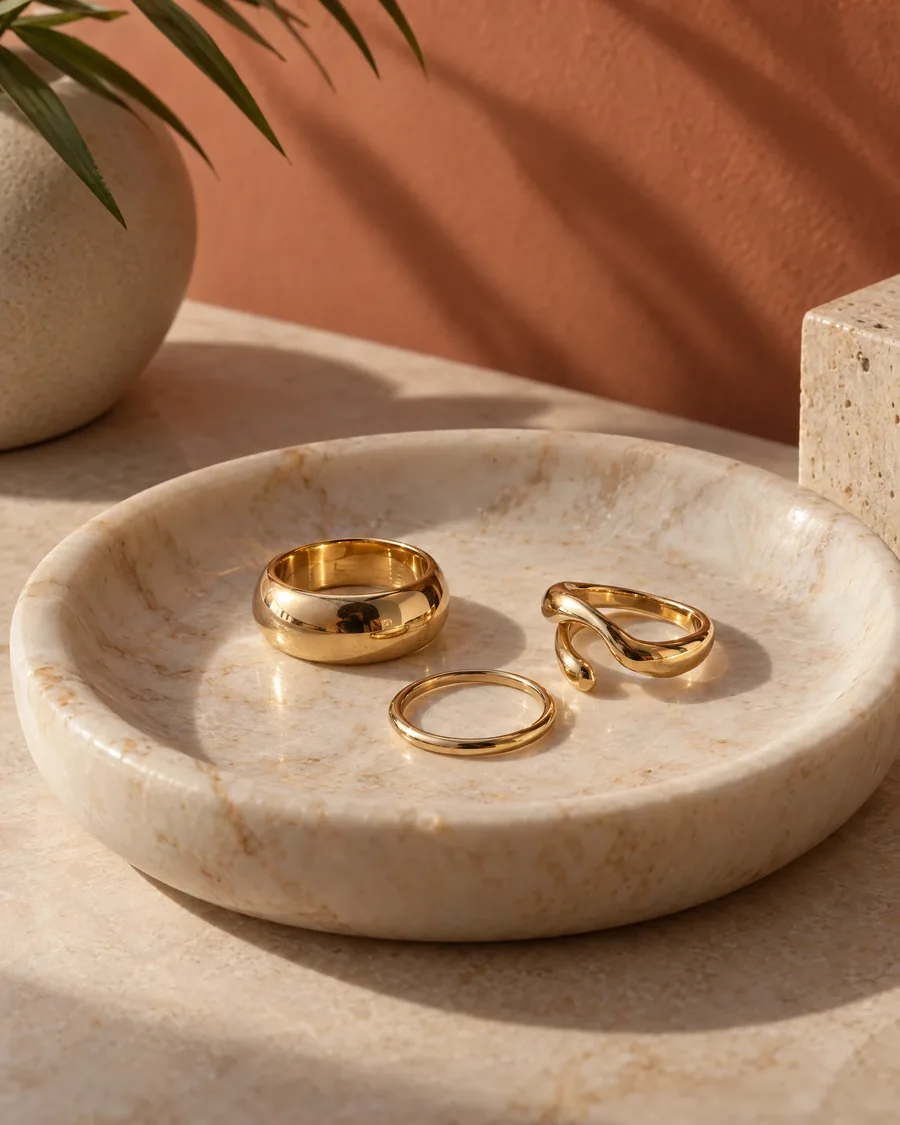
Fit deserves its own conversation. A ring size borrowed from an existing ring is only useful if it fits the intended finger; broad and narrow designs can also feel different. Professional fitting and the seller’s sizing table should guide the purchase. If you are considering ring design concepts, resolve size uncertainty before treating holiday jewelry as a surprise. Otherwise, plan to choose together or investigate a category with fewer sizing demands.
Other pieces have fit variables too. Ask about necklace length, pendant dimensions, bracelet measurements, earring weight, fastening style, and whether earrings require pierced ears. A bracelet that slips over the hand has a different fitting problem from one with a clasp. Someone who prefers lightweight accessories may not enjoy a substantial-looking design. Good holiday jewelry questions focus on how the piece will sit, move, and fasten during the recipient’s ordinary day.
If the recipient has known material sensitivities, ask what they already tolerate and seek clear composition information; do not rely on an unqualified allergy-free promise. Also check return or exchange conditions, including any restrictions on earrings, resized items, or personalized pieces. Confirm who handles adjustments and at what cost. The strongest holiday jewelry decision rule is simple: when a detail could make the gift unwearable, clarify it before purchase rather than leaving the recipient to solve it afterward.
Present the Gift with Care and Room for Choice
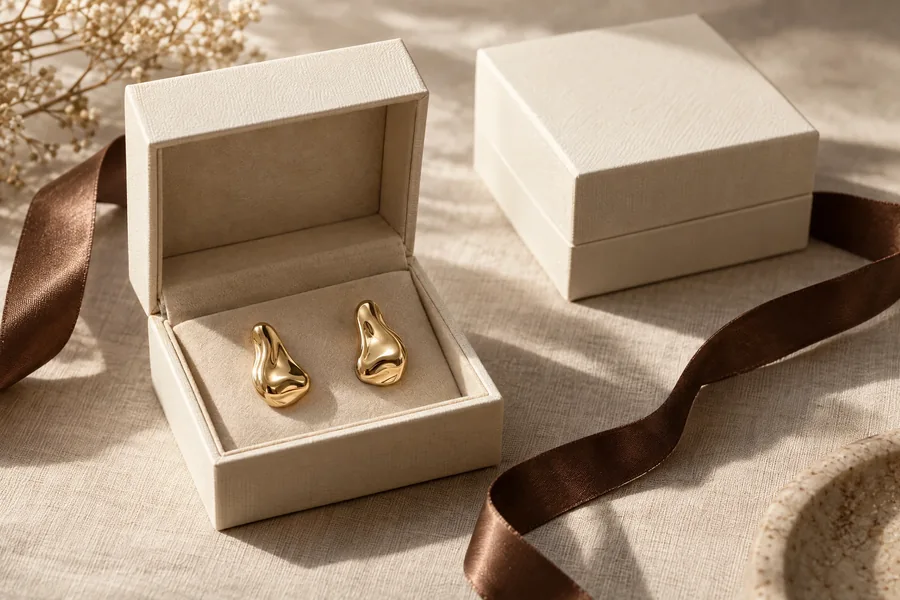
Presentation should help the recipient understand your intention, not overwhelm the object. A short note might explain that a curved silhouette reminded you of the shapes they often wear, or that you hoped to choose something for everyday use. Avoid declaring holiday jewelry “an investment” or promising lifetime durability without supporting information. A specific, honest reason for choosing the design carries more warmth than a grand claim about its value.
Keep practical information accessible but separate from the greeting. Include the material description, any supplied care instructions, and relevant exchange details in an envelope or digital message. If the gift is holiday jewelry that needs a fit check, explain that an adjustment or alternative choice is welcome, subject to the seller’s confirmed terms. Do not make the recipient feel that accepting the gift means accepting every decision you made on their behalf.
Care advice should match the complete piece. The GIA guide to caring for jewelry notes that chemicals, heat, light, and sudden temperature changes can harm certain materials. Encourage removing jewelry before swimming or household cleaning. For holiday jewelry with uncertain stones, treatments, or construction, consult a qualified jeweler before recommending a cleaning method. Ultrasonic cleaners are not universally suitable, and vibration can loosen settings.
Pack for the journey as carefully as for the reveal. Keep pieces separately cushioned so they do not scratch one another, and avoid letting chains and earrings rattle loose together. Sterling silver can benefit from anti-tarnish storage, while pearls and opals should not be kept in excessively dry conditions. These are material-dependent guidelines, not instructions for every illustrated design. If holiday jewelry is traveling with you, separate padded compartments make both transport and unpacking simpler.
Finally, give the recipient room to react naturally. They may love the thought but prefer another length, shape, or way of wearing it. Listen without defending the choice, and use whatever options were confirmed beforehand. The calmest approach to holiday jewelry ends where it began: with attention to the person. A realistic budget, clear questions, comfortable timing, and a gracious handover make the gift meaningful without requiring a flawless surprise or an extravagant purchase.