Editorial guidance only. Product characteristics, care needs, and commercial terms should be confirmed in writing for any specific item.
A necklace can recall a first apartment; a ring can mark a promise made to yourself. Through jewelry storytelling, objects become reminders of the people, places and decisions that shape a life. Their significance does not depend on rarity, expense or someone else recognizing the symbolism.
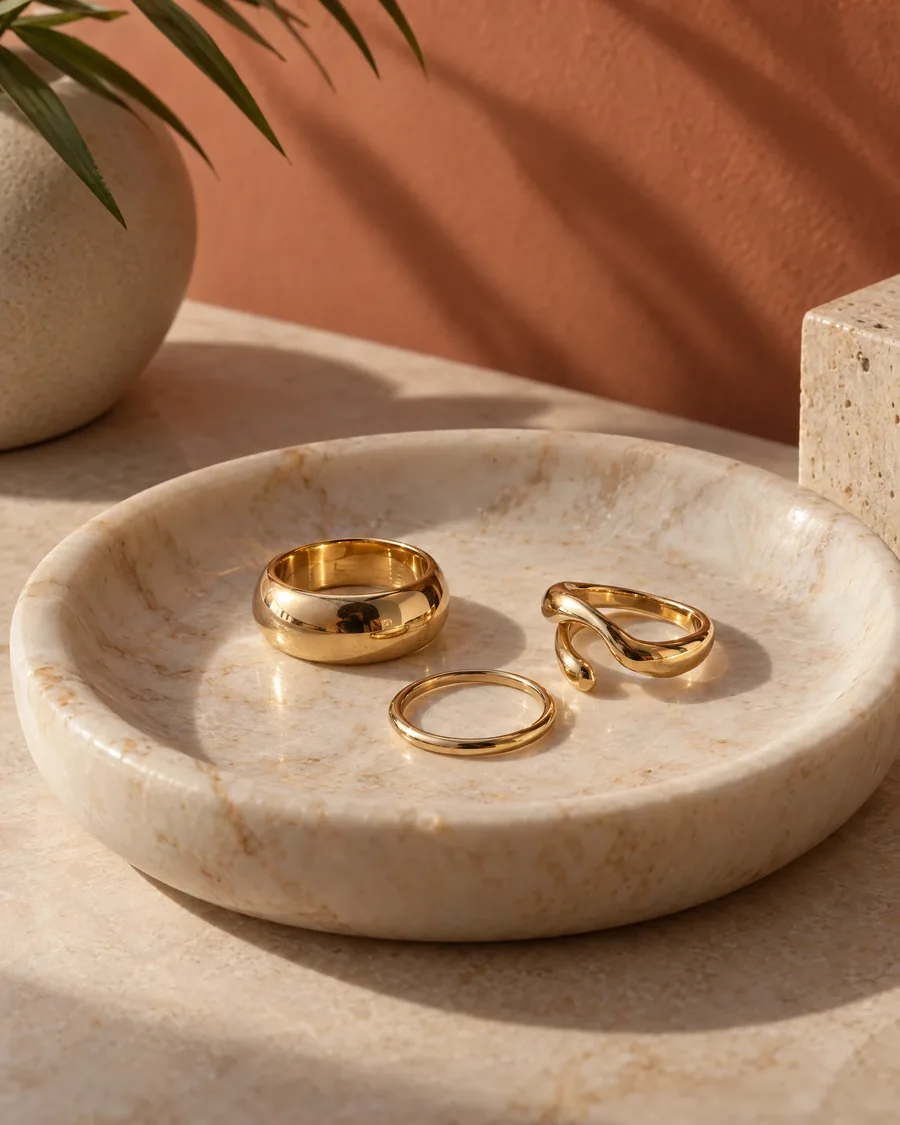
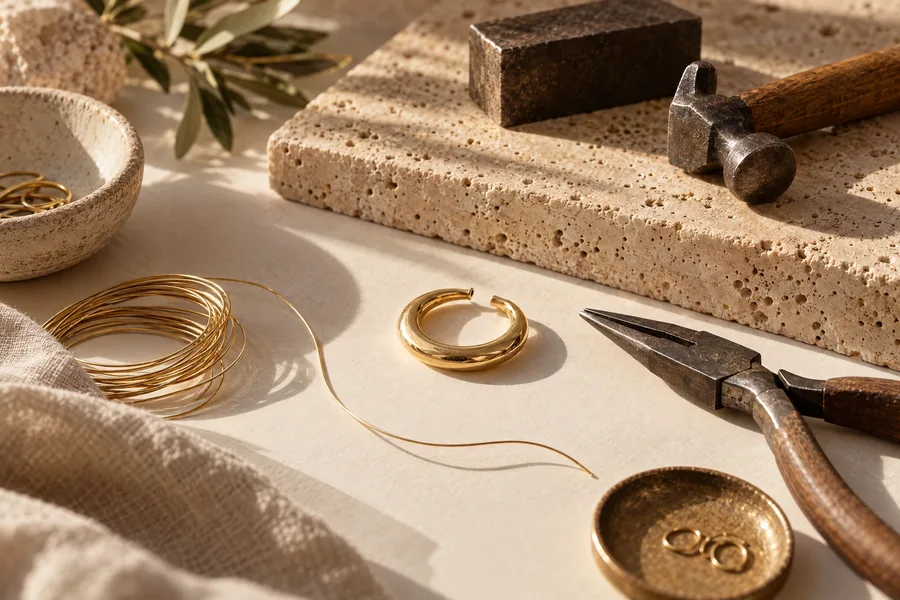
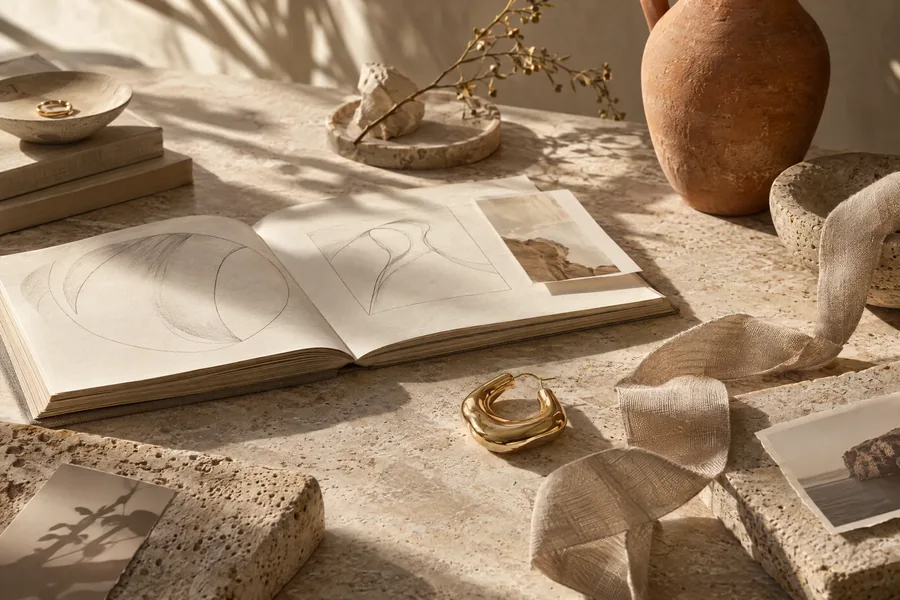
This guide explores jewelry storytelling through personal milestones and memories, from choosing a design cue to recording an inherited piece’s history. At katherine jewelry, the collection imagery offers editorial design inspiration rather than evidence of available merchandise. Use those ideas as starting points, then build a collection around experiences you actually want to remember.
Begin with a Memory, Not a Shopping List
Before choosing anything new, look at what you already own. Lay out a few pieces and ask three questions: Where did this enter my life? What did it mean then? What does it mean now? This small inventory makes jewelry storytelling specific. A modest bracelet might recall your first independent trip, while an elaborate gift may hold little personal relevance. Let the memory, rather than the apparent importance of the object, guide your attention.
Write one sentence for each piece using an event, a detail and a feeling. For example: “I wore these earrings on the train to my new job, watching the city wake up and feeling nervous but ready.” Concrete details give jewelry storytelling its texture. You do not need a dramatic turning point; a regular Sunday lunch or the walk home from school can provide a more enduring association than a formal celebration.
Next, separate memories you want to revisit from occasions you merely feel expected to commemorate. A graduation, relationship or promotion may matter deeply, but none requires a purchase. For thoughtful jewelry storytelling, choose a piece only when wearing it would help you acknowledge something meaningful. If the event still feels unsettled, wait. You can mark a milestone later, once you know which part of the experience you want the object to hold.
Try a simple decision rule: name the story before naming the style. Someone celebrating a move might begin with “I learned to make a home,” then consider a linked form, a rounded shape or a familiar color. Someone marking a new boundary might prefer a clean, restrained silhouette. This order keeps jewelry storytelling from becoming an exercise in inventing a sentimental explanation for a design you already felt pressured to acquire.
Keep room for pieces that have no story yet. An object chosen simply because you enjoy its proportions can gather meaning through repeated wear. Your collection does not need to function as a complete autobiography. A useful starting point for jewelry storytelling is selecting three pieces: one connected to the past, one representing your present and one associated with a hope. Record those connections privately, without worrying whether they sound impressive to anyone else.
Translate Your Story into Wearable Design
Once you have identified a memory, translate it into one or two visual cues rather than a literal illustration. A curved line could suggest a familiar coastline; repeated links might represent the people who helped you through a difficult year. In jewelry storytelling, a symbol works best when its connection feels clear to you. It does not need a universally accepted meaning, and there is no obligation to explain it whenever someone notices the piece.
Consider scale, movement and placement as part of the message. A small pendant may suit a private reminder, while a broad sculptural shape might express a milestone you want to acknowledge openly. Browse necklace design concepts and sculptural jewelry inspiration to compare visual approaches, not to assume product availability. Effective jewelry storytelling also considers comfort: a meaningful design that catches constantly on your clothing may become more frustrating than reassuring during an ordinary day.
Color can provide another connection, but be precise about what you are choosing. You might associate a green accent with a childhood garden without requiring a particular gemstone. Appearance alone cannot establish material identity, and screens or lighting may change perceived color. The FTC’s Jewelry Guides support truthful descriptions of materials and treatments. When jewelry storytelling leads toward a purchase, ask for written material details rather than treating a photograph or evocative name as technical information.
For a concrete example, imagine commemorating the completion of a demanding course. Instead of seeking an obvious academic symbol, list the qualities you developed: patience, consistency and confidence. A repeated pattern could evoke steady effort; a single strong line might suggest clarity. Explore ring design inspiration if you like a reminder visible on your own hand. This approach to jewelry storytelling gives you several design possibilities without implying that one motif carries an objectively correct meaning.
Finally, test whether the design can live with your routines. Consider your clothing, work activities, preferred jewelry placement and willingness to maintain delicate details. If possible, assess comparable dimensions and how they feel before committing. A piece marking independence need not be bold if you prefer subtle jewelry. The strongest jewelry storytelling aligns the symbol with the wearer, rather than asking the wearer to perform a personality that belongs only to the occasion.
Let Wearing and Sharing Add New Chapters
A piece’s meaning often develops after it enters your collection. Wearing the same earrings to weekly dinners can gradually connect them with friendship, even if that was not your original intention. Think of jewelry storytelling as an ongoing practice rather than a label fixed at purchase. Choose one object you enjoy and wear it during a recurring activity for a while. Notice whether the association strengthens naturally; do not force every outing to become significant.
Styling can help distinguish different chapters without requiring separate pieces for every event. A pendant worn alone might feel personal and quiet; the same pendant paired with another necklace may recall a shared celebration. Try combinations from your existing collection before adding anything. For jewelry storytelling through personal milestones and memories, continuity can be valuable: the object that accompanied an uncertain beginning can also accompany a later achievement, allowing both experiences to remain part of its meaning.
Shared stories need not require matching designs. Two siblings might choose different shapes linked by a common color or keep pieces associated with the same family gathering. One could prefer earrings while the other likes bracelets; bracelet design concepts can help clarify that difference. Collaborative jewelry storytelling works better when each person has genuine choice. Agree on the connection, but let comfort and taste determine how each person carries it into everyday life.
When giving jewelry, offer an invitation rather than an assignment. A note saying, “This reminded me of our long walks after work,” leaves space for the recipient’s interpretation. Saying, “You must wear this whenever you need courage,” can impose an emotional duty. Consider including a small written memory and explaining why you selected the design. Generous jewelry storytelling shares your perspective while allowing the other person to wear, store or reinterpret the gift without guilt.
You can also choose how much of a story to share publicly. Prepare a short version for casual conversation and keep the fuller account for someone you trust. “It marks a fresh start” is enough if the circumstances are private. Jewelry storytelling does not require disclosure of grief, conflict or intimate history. If a piece becomes connected with an experience you no longer want to revisit, set it aside or give it a new role; changing meaning is not a failure.
Preserve the Object and the Story Separately
Memory is easier to preserve when it has a record beyond the object itself. Photograph each meaningful piece and write down who gave it to you, when you first wore it and what you know about its background. For inherited items, distinguish confirmed details from family recollections. Responsible jewelry storytelling might say, “My aunt believed this belonged to her grandmother,” rather than turning an uncertain account into an established fact. Uncertainty can remain part of an honest story.
Keep that personal record separate from technical documentation. Receipts, written material descriptions, treatment disclosures and repair notes serve a different purpose from memories. A piece can be emotionally irreplaceable without having an established monetary value or known composition. In jewelry storytelling, separating those categories protects both accuracy and sentiment. If you plan to repair or alter an inherited item, ask a qualified jeweler to assess its construction before assuming that its appearance reveals how it should be handled.
Care should follow the materials and construction, not the emotional importance of a piece. The GIA’s jewelry care guidance explains that chemicals, heat and light can harm certain materials, and ultrasonic cleaning is not suitable for every item. Remove jewelry before swimming or household cleaning, and use separately padded storage to limit scratches. Thoughtful jewelry storytelling includes resisting aggressive home cleaning recipes when you do not know what a treasured object contains.
Before redesigning a sentimental piece, consider whether a reversible change could meet your needs. You might wear it less often, change its place within an outfit or store it alongside a photograph instead of altering it immediately. Document its current appearance and discuss any proposed work with a qualified professional. Jewelry storytelling can continue even when an item is no longer wearable. A carefully recorded object does not lose its place in your life simply because it stays in a box.
Review your collection occasionally, adding new memories and correcting details as you learn them. If you have questions about the editorial concepts shown by katherine jewelry, use the contact page for inquiries rather than assuming images establish materials or availability. Ultimately, jewelry storytelling is a way of paying attention: choosing what deserves remembrance, making room for changing meanings and caring for the objects that carry them. Start with one piece and one truthful sentence; a meaningful collection can grow from there.