Editorial guidance only. Product characteristics, care needs, and commercial terms should be confirmed in writing for any specific item.
A hoop, a pendant or a patterned ring can feel contemporary while carrying an idea much older than the outfit around it. Looking at jewelry history helps explain why certain shapes remain useful: they frame the face, hold personal meaning or turn a small surface into a place for ornament. Understanding jewelry history influences on modern everyday accessories does not require memorizing periods or dressing in costume. It means noticing what a design does, then deciding whether that quality suits your life. This katherine jewelry editorial explores enduring influences as design inspiration, not as claims about the age, origin or availability of illustrated pieces.
Symbols and Personal Meaning: Choose What the Motif Says
Across many societies, jewelry has communicated belonging, status, remembrance and belief as well as decoration. One useful lesson from jewelry history is that a small motif can carry more meaning than a large, elaborate object. A circular pendant might suggest continuity to one wearer and simply offer a pleasing outline to another. Those readings can coexist, but a symbol's significance should not be treated as universal or detached from its cultural context.
For everyday styling, begin with the meaning you want to express rather than the number of pieces you can wear. Someone marking a personal milestone might prefer one recurring motif instead of a different statement accessory each day. Seen through jewelry history, this preference connects with the longstanding role of adornment as a reminder. You do not need to claim an ancient origin for your chosen shape; a contemporary association can be meaningful on its own.
Consider a simple workday example: a pendant worn with an open collar draws attention toward the center of the outfit. If it carries a personal association, smaller earrings can leave that idea visually prominent. Browsing necklace design concepts can help you compare centered pendants with repeated shapes or longer lines. The practical value of jewelry history here is not a prescribed look, but a question: which element deserves to be the focal point?
Inherited pieces add another layer because family stories and documented origins are not the same thing. A relative's ring may matter deeply even when nobody knows when it was made. Keep the story attached to the person, and describe its style cautiously unless reliable information supports a stronger claim. Studying jewelry history can suggest questions about a motif or construction, but resemblance alone cannot establish age, cultural provenance or authenticity.
When choosing unfamiliar religious or culturally specific imagery, learn its context before treating it as a decorative shortcut. If that context remains unclear, a broadly geometric or botanical shape may be a more thoughtful choice. This is where jewelry history becomes an everyday decision tool: choose a motif you can explain honestly, give it enough visual space, and allow personal meaning without inventing a historical pedigree. The result can feel distinctive without needing to look theatrical.
Enduring Silhouettes: Translate the Shape, Not the Costume
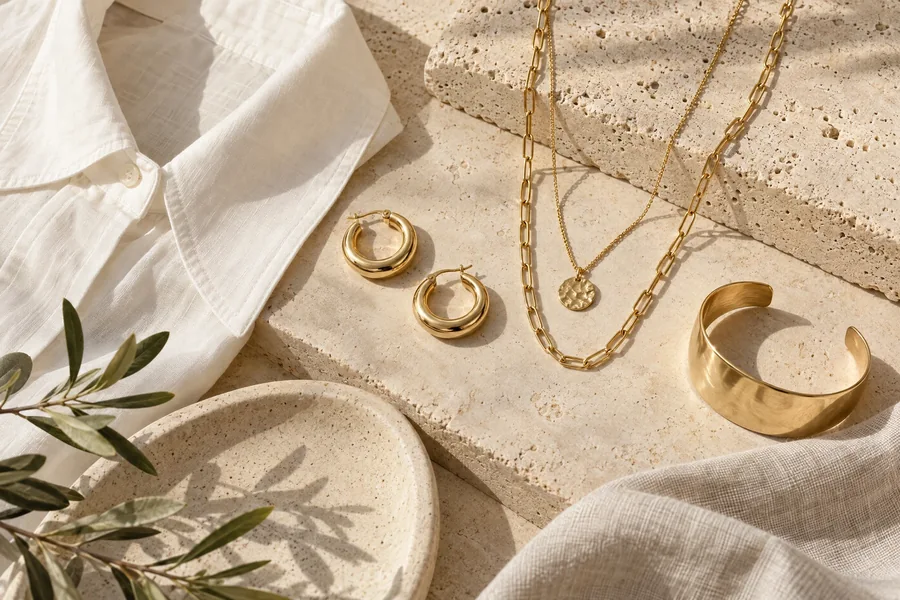
Hoops, chains, bands and suspended ornaments persist because they solve basic design problems. They follow the body's contours, create movement or place decoration where it is easily seen. Jewelry history reveals repeated interest in these forms, although their proportions and meanings vary across cultures and periods. For a modern wardrobe, the useful starting point is the silhouette: notice whether a piece creates a circle, a vertical line, a broad surface or a sequence of connected elements.
Scale changes how an enduring form behaves. A compact hoop can act as a quiet frame for the face; a larger hoop introduces a more visible outline and more movement. Neither size is inherently more historically faithful or more stylish. Instead of using jewelry history as a rulebook, test proportion against your actual routine. Turn your head, check how the earrings meet your hair, and notice whether they compete with glasses, headphones or a high collar.
Chains offer a similar lesson in translation. Their linked structure can read as delicate rhythm or as a strong graphic line, depending on apparent width and spacing. With a patterned shirt, a simpler chain outline may provide useful contrast; with a plain knit, more visible links may become the main detail. The continuing relevance of jewelry history lies in this balance between structure and ornament, rather than in reproducing an entire historical ensemble.
For hands and wrists, consider how much surface a design occupies. A broad ring changes the visual balance of the hand differently from several narrow bands, while a rigid bracelet behaves differently from a flexible one. Explore ring style concepts and bracelet design inspiration with those distinctions in mind. Jewelry history encourages attention to form, but comfort still requires checking fit, movement and practical interference during the activities you actually perform.
A useful decision rule is to borrow one silhouette and keep the surrounding outfit familiar. Pair a substantial ring with a simple sleeve, or let elongated earrings supply the vertical line beside an otherwise understated neckline. Translating jewelry history this way avoids the feeling of costume because the reference remains selective. Before committing to a look, sit down, reach forward and handle a bag: an attractive outline should also work when your body is moving.
Nature and Geometry: Build a Coherent Visual Language
Leaves, flowers, flowing lines and geometric patterns recur throughout adornment, but they do not belong to one single tradition or period. They offer different ways to organize a surface: nature-inspired forms often suggest growth or movement, while repeated angles and circles can create order. A thoughtful reading of jewelry history notices these broad approaches without assuming that every floral ornament or symmetrical design shares the same source, symbolism or method of production.
Start by looking at the lines already present in your clothes. A softly draped blouse may work with a curved accessory because both repeat a flowing rhythm. A crisp jacket might support a sharper, more structured shape. Contrast can work too: one organic form can soften a highly tailored outfit. The practical contribution of jewelry history is a vocabulary for these choices, not a claim that certain shapes are suitable only for certain people or occasions.
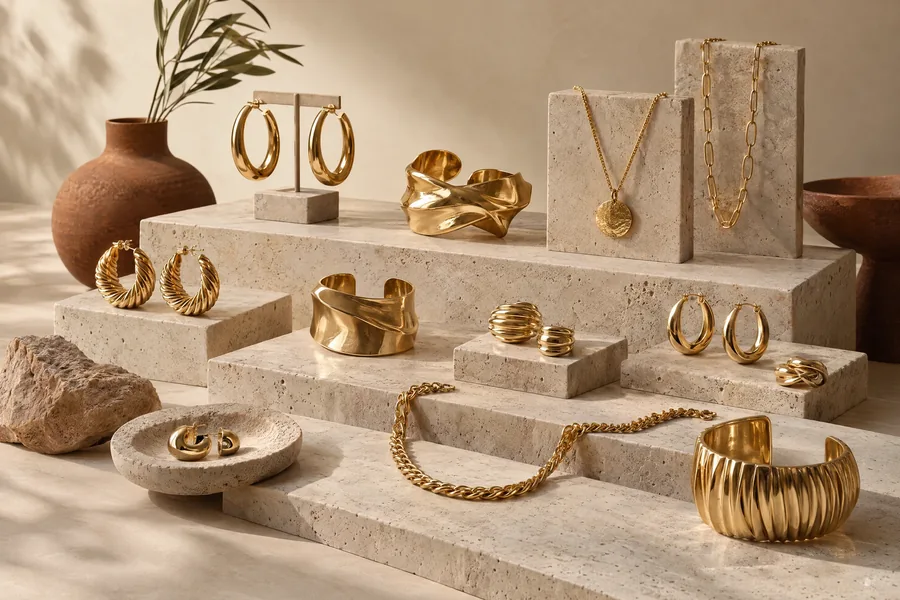
Imagine dressing for a dinner directly after an ordinary workday. Rather than replacing every accessory, you could introduce one piece with a more pronounced curve or open shape. Keep the remaining jewelry quieter so the change feels intentional. The sculptural collection concepts offer a place to study volume and negative space as editorial ideas. Through jewelry history, such experiments connect to enduring questions about how ornament can suggest movement without becoming visually crowded.
Combining pieces is easier when you identify one shared feature. Two accessories might both have rounded edges, repeating openings or a similar visual weight even if their motifs differ. That relationship can feel more coherent than matching every detail. Jewelry history also reminds us that richly decorated designs and restrained designs have both had lasting appeal. Neither is a universal improvement over the other; the better choice depends on where you want attention to settle.
Try a simple visual edit before leaving home: look at the outfit from a little distance, then temporarily remove one accessory. If the remaining shapes become easier to read, the extra piece may not be helping. If the outfit loses its intended rhythm, restore it. This turns jewelry history into an exercise in observation rather than accumulation. You are selecting the lines, spaces and repetitions that serve today's outfit, not assembling a checklist of references from the past.
From Inspiration to Ownership: Ask Better Questions
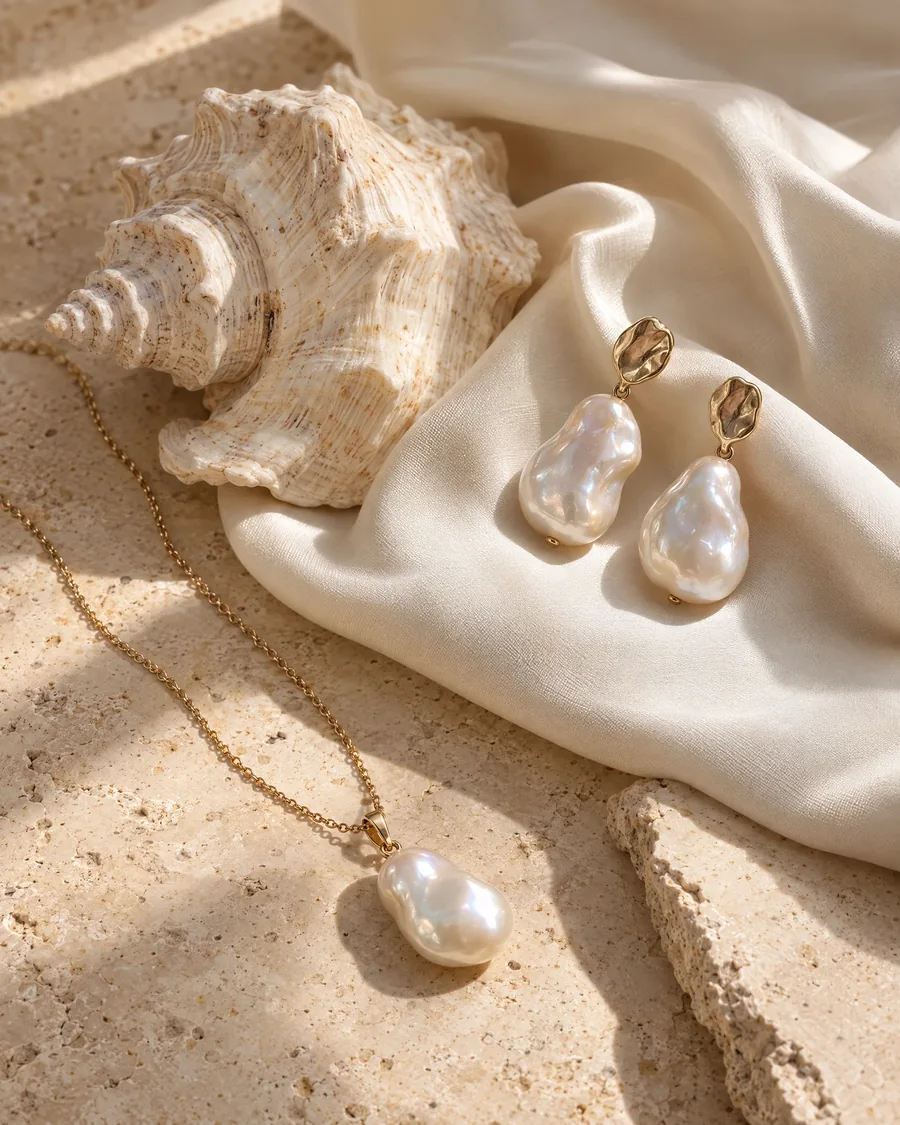
A historical-looking design is not necessarily an antique, and a familiar color does not identify a material. An aged-looking surface, ornamental setting or pearl-like appearance can be achieved in different ways. The most practical lesson of jewelry history may be to separate visual interpretation from factual description. Enjoy what a design evokes, but ask for evidence before accepting claims about its origin, age, metal content, gemstone identity or production method.
When considering a purchase from any seller, request written material details rather than relying on photographs. Ask what the metal is, whether it has a surface coating, and how any stones are described. Natural, cultured, laboratory-created and imitation descriptions require appropriate distinctions; laboratory-created and imitation are not interchangeable. The FTC Jewelry Guides provide context for truthful representation. Jewelry history can explain a visual influence, but it cannot supply missing product specifications.
Care should follow the actual construction, not the era a design seems to reference. A decorative piece may combine materials that need different handling, and ultrasonic cleaning is not universally suitable. The GIA jewelry care guidance advises caution around chemicals, heat and cleaning methods. However convincing its historical appearance, jewelry history is no substitute for knowing what you own; ask a qualified jeweler before attempting aggressive cleaning when materials or treatments are uncertain.
Give sentimental or frequently worn pieces a practical routine: remove jewelry before swimming or household cleaning, and store items separately with padding to reduce scratching. During travel, use separate cushioned compartments rather than letting accessories rub together in one pouch. Your interest in jewelry history can also guide recordkeeping. Save written descriptions and family notes separately, distinguishing confirmed details from remembered stories. Clear records preserve useful information without turning an appealing possibility into an unsupported fact.
Explore our product collection for individual designs, photographs, and product details. When considering jewelry history, look at each piece in the context of your own preferences and practical needs. Use the product description to check relevant specifications rather than relying on appearance alone. For a more personal recommendation or a question about a particular piece, contact katherine jewelry with the details that matter to you.