Editorial guidance only. Product characteristics, care needs, and commercial terms should be confirmed in writing for any specific item.
A useful approach to minimalist jewelry begins with your working day, not a shopping list. Your accessories need to sit comfortably beside collars, sleeves, glasses, and headsets while expressing something of your taste. Restraint does not mean every piece must be tiny or every outfit must look alike. It means making a few choices that work together without demanding constant adjustment. These minimalist jewelry ideas for a professional office wardrobe focus on four practical decisions: matching the setting, building repeatable combinations, testing movement, and looking after the pieces you wear. Start with what you own, then let everyday experience guide any changes.
Read the room and choose one visual priority
Begin with the expectations of your workplace. A client-facing legal office, a relaxed design studio, and a shared administrative workspace may allow different levels of expression. Look at your organization's dress guidance and any rules relevant to your duties rather than guessing from job titles. Minimalist jewelry is a styling approach, not an exemption from safety requirements. If your work includes equipment, clinical tasks, or restricted areas, those requirements come before the outfit.
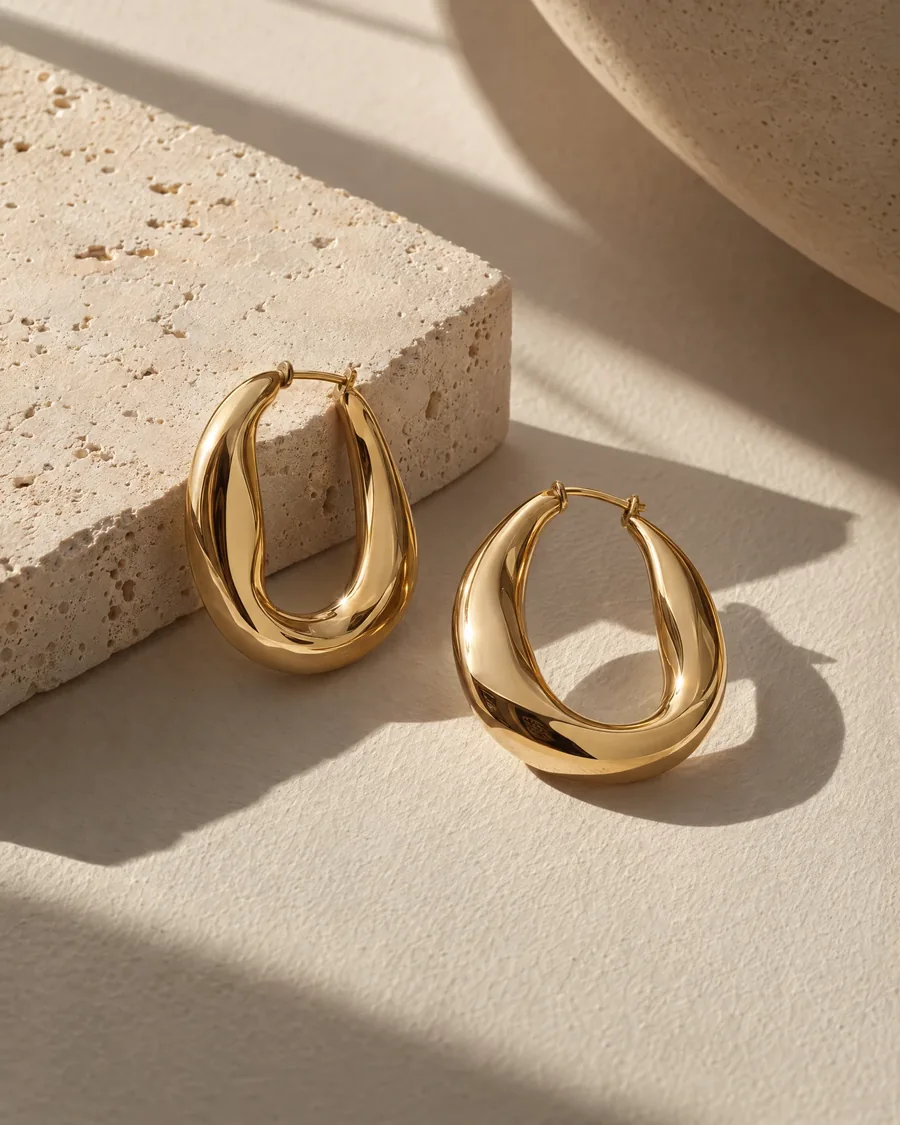
Next, decide where you want the eye to settle. With a plain crewneck and tailored trousers, a distinct earring shape can supply the main detail. An open shirt collar might suit a simple pendant instead. You can wear both, but one should feel visually secondary. For minimalist jewelry, the useful question is not “How many pieces are allowed?” but “Can I identify the focal point without studying the outfit?”
Scale depends on the background. A very delicate detail can vanish beside a bold check jacket, while a slightly larger, clean outline may remain legible without looking crowded. Conversely, a blouse with ruffles or decorative buttons may need little added near the neck. Browse the earring design concepts to compare silhouettes, not to infer materials or availability. The same outline can read differently depending on hairstyle, collar height, and the surrounding fabric.
Think about how colleagues encounter you. For a video presentation, check the camera view while seated: an earring may be visible while a pendant falls below the frame. For an in-person meeting, step back from the mirror and look at the complete silhouette. Minimalist jewelry need not disappear, but it should support the impression you intend. Try your usual glasses and jacket during this check rather than judging accessories against an unfinished outfit.
Give yourself two versions of a reliable combination: an everyday setting and a more restrained meeting setting. Perhaps the first uses a shaped earring and a ring, while the second keeps only the earring. Save photographs labeled by outfit and occasion so the decision is easy to repeat. This makes minimalist jewelry adaptable without requiring an entirely different wardrobe whenever your calendar changes. It also helps separate your personal preferences from assumptions about what every professional should wear.
Build a rotation from outfits you actually repeat
Take three frequently worn work outfits out of the wardrobe before organizing your accessories. Choose representative examples, such as a jacket with a plain top, a blouse with trousers, and a knit dress. Place the jewelry you already own beside each and look for overlap. A useful minimalist jewelry rotation begins with combinations that serve real clothes, rather than an imagined capsule wardrobe that bears little resemblance to your week.
Assign each candidate a job. One pair of earrings might work with both a high collar and a jacket; one necklace might suit your open-neck tops; one ring might add interest when sleeves hide the wrists. Avoid treating these roles as a mandatory buying list. If you never wear open collars, a necklace may not fill a useful gap. Minimalist jewelry becomes practical when each item earns its place through repeated use.
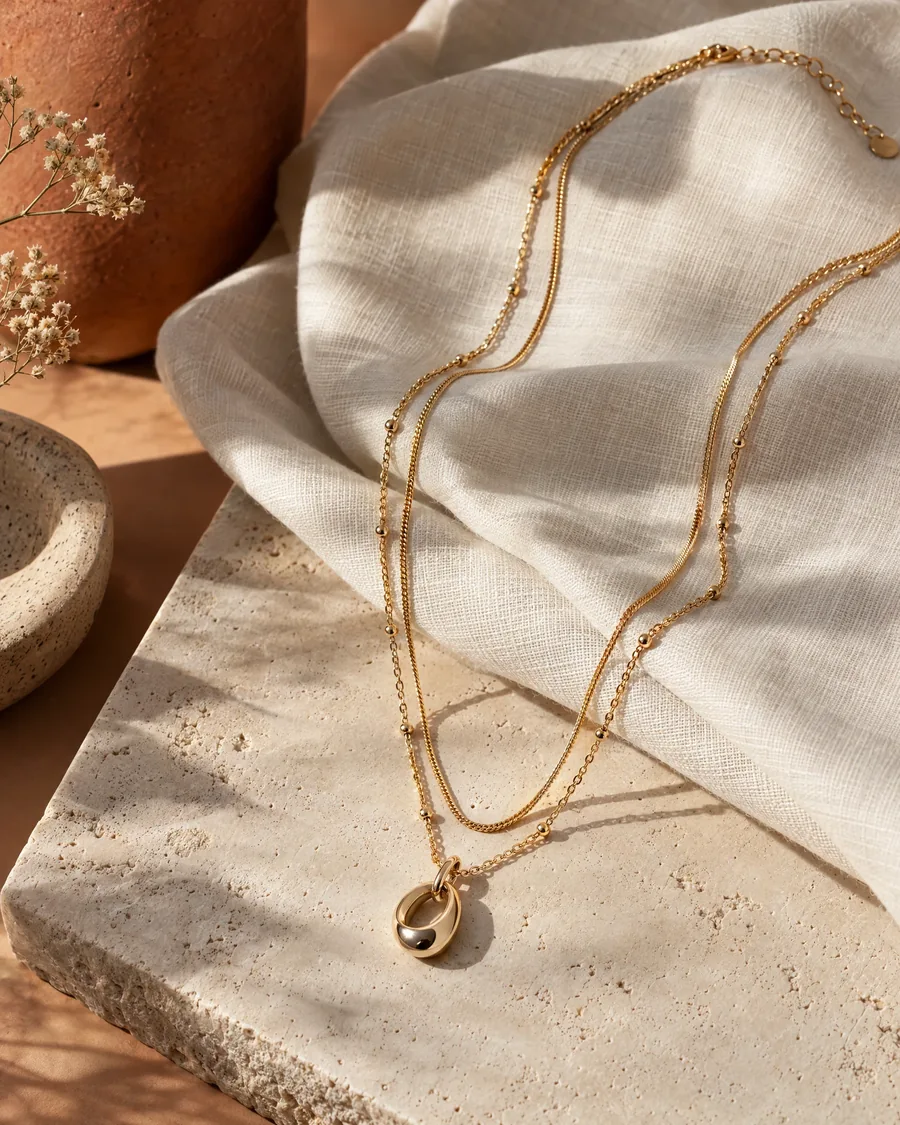
Use a simple color strategy to reduce decisions. You could repeat one metal-colored appearance across the week, or deliberately combine contrasting tones while repeating a shape. Neither approach is inherently more professional. Judge the result against your clothing, watch, and glasses. Remember that appearance does not establish material identity. The necklace styling concepts can help you compare lengths and outlines, but images alone cannot tell you what a pictured design is made from.
Run a five-day experiment before adding anything. Choose your accessories each morning, then note whether you changed or removed them during the day. Record the reason: collar interference, too much visual detail, an awkward clasp, or simply not feeling like yourself. This is more useful than counting compliments. Your minimalist jewelry plan should make getting dressed and working easier. A piece that photographs beautifully but stays in your bag has not solved a wardrobe problem.
Explore our product collection for individual designs, photographs, and product details. When considering minimalist jewelry, look at each piece in the context of your own preferences and practical needs. Use the product description to check relevant specifications rather than relying on appearance alone. For a more personal recommendation or a question about a particular piece, contact katherine jewelry with the details that matter to you.
Test layers, sleeves, and movement at your desk
A combination that looks balanced while standing can behave differently once you sit down. Before making it your default, spend a few minutes performing ordinary work movements: type, reach for a notebook, put on a headset, and lift your bag onto your shoulder. Minimalist jewelry should not require repeated correction throughout these tasks. Listen as well as look; a bracelet that taps the desk may be distracting even when its proportions seem restrained.
For necklace layering, start with one piece and add another only if the second contributes a distinct line. Check both standing and seated, because fabric folds can pull pendants together or hide one beneath a collar. Two necklaces that repeatedly cross may be better worn on separate days. Layering minimalist jewelry is optional, not a test of styling skill. A single clear outline often does more for an office outfit than several details occupying the same space.
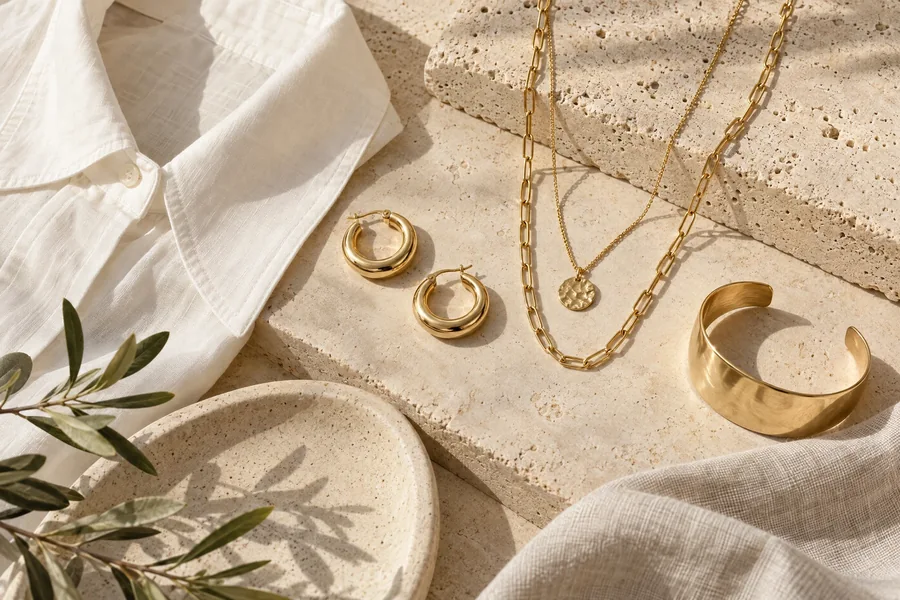
Pay particular attention to the wrist and hand if your day involves a keyboard. Try a bracelet on each wrist and notice its interaction with your watch, cuff, and desk surface. A ring can also press against neighboring fingers or catch when you reach into a pocket. Consult the bracelet design inspiration for proportions, then assess any actual piece through wear. Do not assume that a slim silhouette automatically means a comfortable fit.
Keep visual repetition selective. You might echo a rounded outline between earrings and a ring while leaving the neck bare, or repeat a small color accent without matching every accessory. This gives minimalist jewelry coherence without turning the outfit into a rigid set. If your glasses and patterned collar already create detail near the face, move the accent to your hand. Empty space is a useful part of the composition, especially when clothing already supplies texture.
For a workday followed by dinner, change one element rather than carrying a complete second arrangement. Switch a discreet earring for a more noticeable outline, or add a necklace after removing your jacket. Test the evening variation with the same outfit beforehand, and carry the spare in a separate cushioned compartment. The most useful minimalist jewelry transition is one you can make calmly and securely, without balancing loose pieces on a restaurant table or searching through a crowded bag.
Make informed choices and keep the routine manageable
Once an outfit combination works, check whether the actual pieces suit repeated wear. Try them at home for several ordinary hours and notice pressure, snagging, or awkward fastenings. Small does not necessarily mean lightweight, and a simple outline does not guarantee comfort. If an item causes irritation or discomfort, stop wearing it rather than treating that as the price of looking polished. Minimalist jewelry should simplify your routine, not add a distraction you have to endure.
Before purchasing, ask for written details about metal content, coatings, gemstone identity, and any relevant treatments. Surface plating is not the same as solid metal throughout, and similar appearances can conceal different constructions. The FTC's Jewelry Guides explain the importance of truthful material and product descriptions. This is general buying guidance, not a statement about Katherine's merchandise. Choosing minimalist jewelry by appearance alone leaves important care and durability questions unanswered.
Keep care proportionate to what you actually know. According to GIA's jewelry care guidance, cosmetics and household chemicals can harm some jewelry materials, and pieces should be removed before swimming or household cleaning. Store items separately with padding to reduce scratching. Do not assume an ultrasonic cleaner is safe for every stone or setting; ask a qualified jeweler when construction or treatments are uncertain. A minimalist jewelry routine benefits from reliable care, not aggressive cleaning shortcuts.
Make storage part of the weekday system. Keep your tested combinations together in a way that prevents pieces from rubbing against one another, and return them there after wear. Set aside anything with a loose setting or a fastening that no longer feels secure for professional assessment. For questions about the inquiry website, use the katherine jewelry contact page; do not treat a concept image as a specification sheet. Clear information helps keep minimalist jewelry decisions grounded in more than visual appeal.
The finished rotation should still feel personal. A favorite curve, an unusual outline, or one considered color can express your taste without competing with the rest of the outfit. Keep what works across your clothes and tasks, revise what distracts you, and resist filling gaps that exist only on a checklist. The strongest minimalist jewelry ideas for an office wardrobe are repeatable rather than prescriptive: choose a focal point, test it in motion, understand the piece, and let the rest of your day take priority.