Editorial guidance only. Product characteristics, care needs, and commercial terms should be confirmed in writing for any specific item.
Everyday bracelet styling works best when your hands can get on with their day. A beautiful combination loses its appeal if it knocks against your keyboard, catches a sleeve, or needs constant repositioning. Start with how you move, then consider the shapes, colors, and details you enjoy looking at.
These bracelet styling tips for comfortable everyday wear focus on small, useful decisions: testing a fit, giving each layer a purpose, and adapting a look to your wardrobe. Whether you favor a single quiet accent or a more expressive stack, the goal is wristwear that feels intentional without turning into another task on your list.
Find a comfortable base through movement, not a mirror
Begin by identifying your most demanding everyday activity. If you spend hours typing, notice where your wrist meets the desk. If you carry shopping bags or help children with coats, think about dangling details and exposed edges. Practical bracelet styling starts with these ordinary movements, because a piece that looks effortless while you stand still may behave quite differently once you reach, lift, or bend.
Choose one bracelet and run a short movement test before adding layers. Fasten a shirt cuff, pick up your bag, reach into a pocket, and sit at your usual workspace. Notice whether the bracelet travels toward your hand, presses into your wrist, or turns its decorative element underneath. A little movement may be part of the design; repeated interference is a reason to reconsider. Comfortable bracelet styling should not depend on constantly rescuing a piece from an awkward position.
Fit is about both dimensions and construction. A flexible chain, rigid bangle, and open cuff do not behave alike even when their measurements sound similar. Ask how a stated size is measured and follow the seller's style-specific sizing guidance. Bangles also need to pass over the hand, while cuffs require attention to their opening. Do not repeatedly bend a cuff to change its fit unless its maker specifically says that adjustment is appropriate.
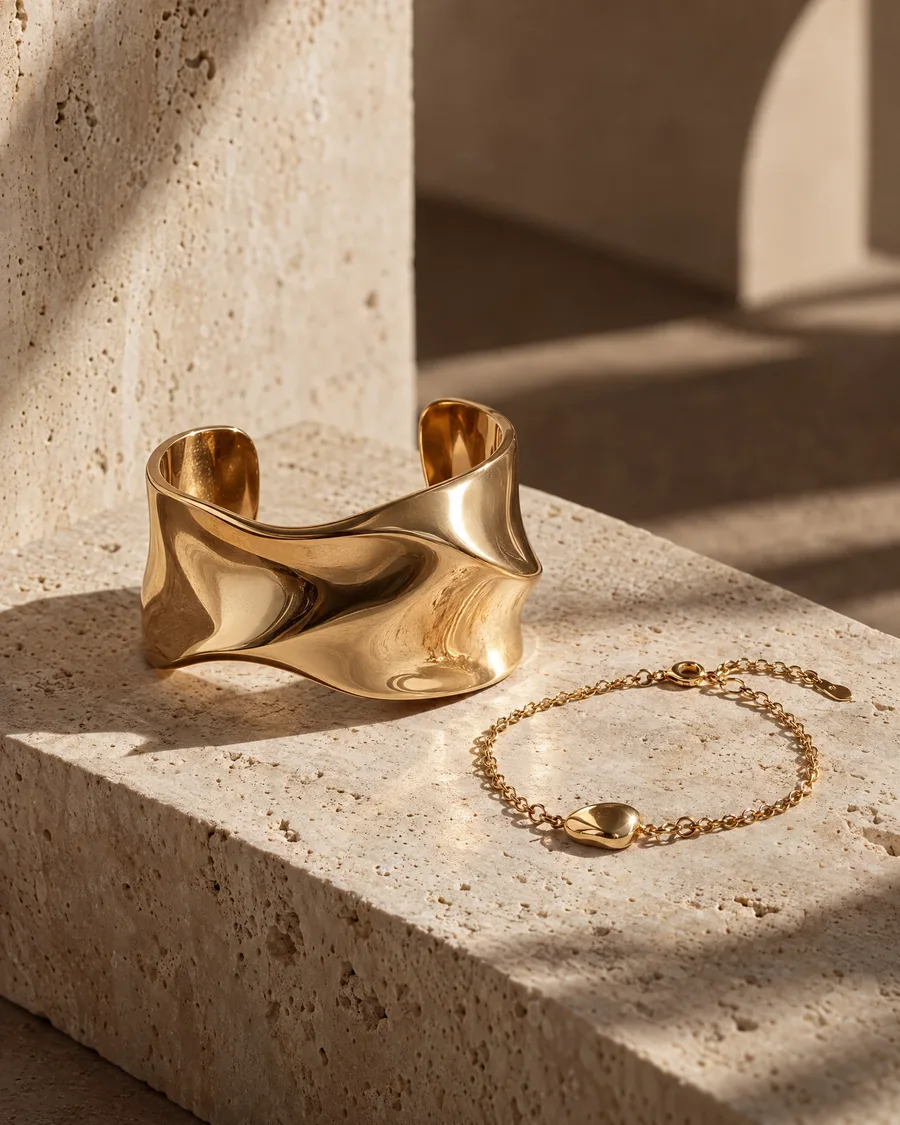
Next, test the fastening as part of your actual routine. Can you secure the clasp without rushing, and can you remove the bracelet when a task requires it? If fastening is difficult, choose a design you can manage rather than treating inconvenience as inevitable. For bracelet styling inspiration, explore the silhouettes in the bracelet concept collection. These illustrations suggest visual directions; they do not establish materials, fit, or availability.
Finally, try the bracelet on the other wrist. Your dominant hand may encounter more surfaces, although your particular work matters more than a universal rule. Keep whichever placement makes ordinary tasks easier. After several hours, ask whether you noticed the piece because you enjoyed it or because it distracted you. That distinction gives bracelet styling a reliable foundation before color, layering, or outfit coordination enters the picture.
Build a stack by assigning each piece a role
A coherent stack does not need a prescribed number of bracelets. It needs a reason for each addition. Choose a lead piece first: perhaps a broad, smooth silhouette or a bracelet with an interesting repeating shape. Then decide what a companion contributes. It might add a finer line, gentle movement, or a color echo. This approach to bracelet styling prevents several individually appealing pieces from competing for exactly the same attention.
Try a simple contrast exercise with pieces you already own. Place one narrow bracelet beside a more substantial shape, then compare that pairing with two substantial shapes together. Neither arrangement is automatically better, but each creates a different visual weight. For everyday bracelet styling, choose the version that suits both your outfit and your tolerance for movement. Check it from a few steps away, where you can see the whole look rather than isolated details.
Sound and contact matter as much as appearance. Rigid pieces can tap together, and loose bracelets may slide over neighboring details. Wear the proposed stack while writing, opening a door, and reaching across a table. If the pieces repeatedly collide or catch, separate them onto different wrists or remove one. Bracelet styling should account for how a combination behaves, not simply how neatly it can be arranged for a photograph on a motionless arm.
A watch introduces another focal point and another fit question. You might leave it alone, put bracelets on the opposite wrist, or test a slim companion nearby. Avoid crowding the watch or allowing neighboring pieces to scrape against it. Roll your sleeve down during the test: the cuff may push everything together. Good bracelet styling sometimes means choosing between a watch-led look and a bracelet-led look rather than insisting they share the same space.
Use subtraction as your final check. Remove one piece and ask what changed: did the combination lose a useful contrast, or did it become clearer? If you want stronger visual interest, a single unusual outline may do more than another layer. The sculptural design concepts offer ideas for exploring shape as a focal point. Let that one feature lead, and keep supporting elements quiet enough that your bracelet styling still has somewhere for the eye to rest.
Coordinate with sleeves, colors, and other accessories
Your sleeve is the bracelet's closest visual neighbor, so start there rather than with an abstract matching rule. A fitted cuff may favor one low-profile piece, while a short sleeve leaves more room for a broader outline. Soft knit fabric can catch on projecting details; test it gently before committing to a pairing. Everyday bracelet styling becomes more repeatable when you evaluate wristwear beside the clothes you actually wear, not only against bare skin.
Choose whether you want the bracelet to blend in or provide contrast. With a patterned shirt, you could repeat one small color from the fabric and keep the shape simple. With a plain outfit, a more defined outline can supply the interest. Neither choice is a measured trend or a requirement. It is a way to control emphasis. Your bracelet styling can change with your mood while still following the same useful question: where should attention go?
Metal-colored finishes do not have to match every buckle, button, and bag fitting. If you enjoy mixing warm and cool tones, repeat one tone elsewhere so the combination has a visual connection. Alternatively, keep the wrist within one color family and use shape for variety. Appearance does not establish metal content or whether a surface is plated; the FTC Jewelry Guides provide context for truthful descriptions. Request written material details rather than inferring them from color.
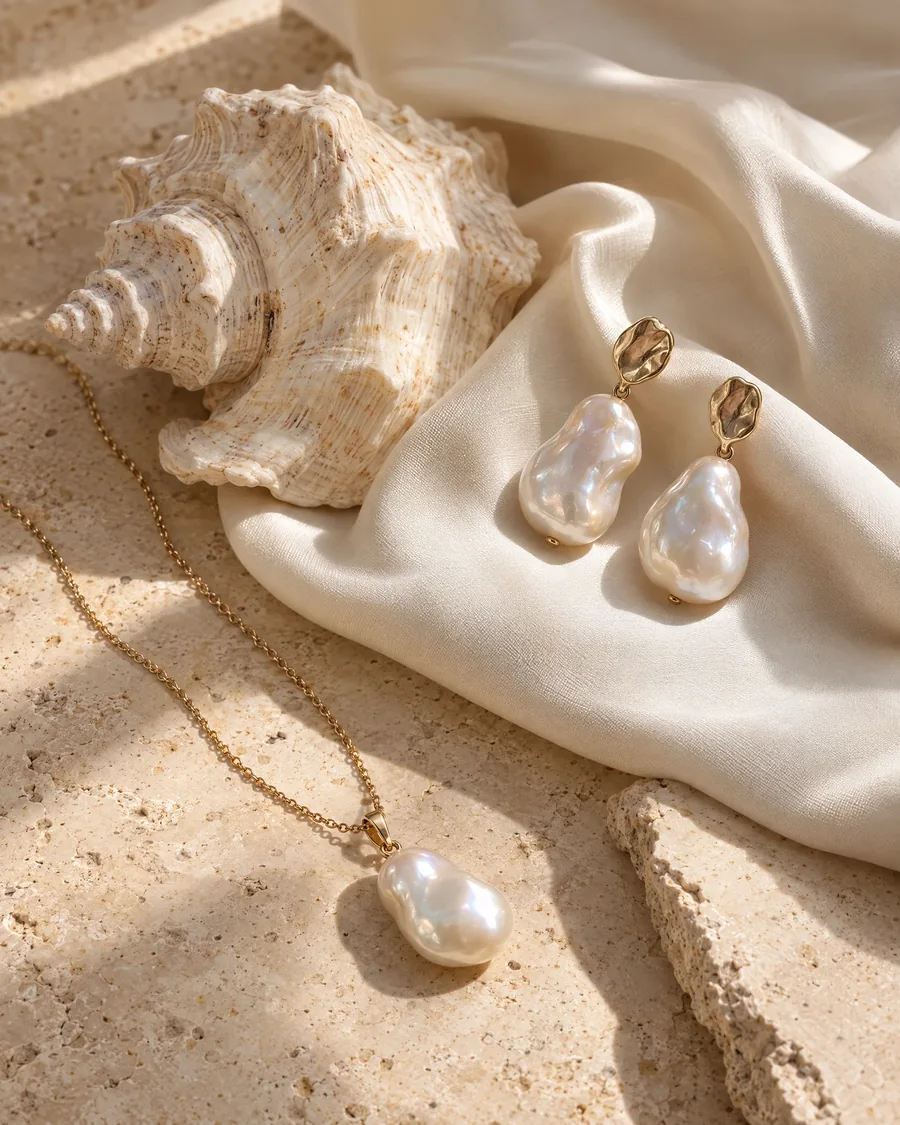
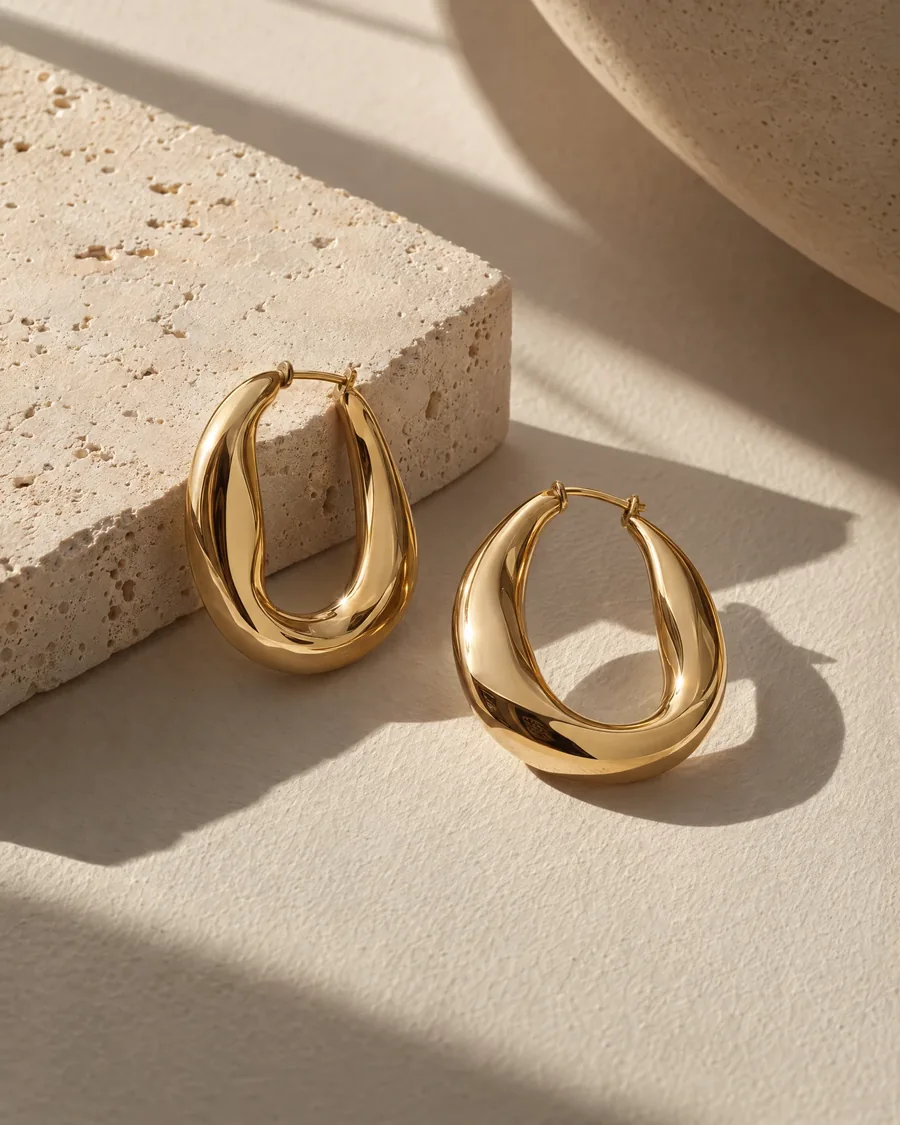
Think beyond the wrist when checking proportion. Expressive earrings may already supply enough detail, especially with a patterned neckline. A quieter bracelet can give the outfit breathing room; a prominent bracelet can instead be balanced by simpler earrings. Browse earring design inspiration to consider those relationships. Balanced bracelet styling does not demand a matching set: repeating a curve or angular outline can connect accessories without making them look identical.
Create two combinations with clothes you wear frequently, rather than planning a different stack for every outfit. One could be restrained enough for long sleeves; the other could offer more presence with a plain short-sleeved top. Compare colors in daylight and your usual indoor lighting, since lighting and screens can change their appearance. These repeatable combinations turn bracelet styling into a quick morning choice, leaving experimentation for days when you have the time and interest.
Keep an adaptable routine, including when to take bracelets off
A useful everyday look includes an exit plan. Before swimming or household cleaning, remove bracelets rather than trying to protect them with a sleeve. For exercise or hands-on work, consider whether wristwear could snag, strike equipment, or interfere with the task, and follow any workplace safety requirements. Thoughtful bracelet styling includes knowing when a bare wrist makes more sense. There is no need to keep the same combination on from breakfast until bedtime.
Give removed pieces a deliberate resting place away from sinks and counter edges. At home, separate padded storage helps reduce scratching and tangling; during travel, use individual cushioned compartments rather than a shared loose pouch. If you often switch from desk work to another activity, plan where your bracelet will go before you take it off. This small habit supports everyday bracelet styling without relying on hurried placement in a pocket or beside a drain.
Care must follow the actual materials, treatments, and complete construction. Cosmetics and household chemicals can harm certain metals, pearls, and porous gems, while heat or sudden temperature changes can damage some gemstones and organic materials. The GIA guidance on caring for jewelry explains why cleaning methods need to suit the piece. Ultrasonic cleaning is not universally safe. If construction is uncertain, consult a qualified jeweler rather than experimenting with aggressive home recipes.
Explore our product collection for individual designs, photographs, and product details. When considering bracelet styling, look at each piece in the context of your own preferences and practical needs. Use the product description to check relevant specifications rather than relying on appearance alone. For a more personal recommendation or a question about a particular piece, contact katherine jewelry with the details that matter to you.
Finish by keeping what works and changing what does not. A single bracelet that sits comfortably through your routine can be a complete look; a stack earns its place only when the added pieces contribute without getting in the way. Revisit your choices when sleeves, tasks, or preferences change. The most useful bracelet styling tips for comfortable everyday wear come back to that balance: choose deliberately, test in motion, and simplify whenever comfort asks you to.