Editorial guidance only. Product characteristics, care needs, and commercial terms should be confirmed in writing for any specific item.
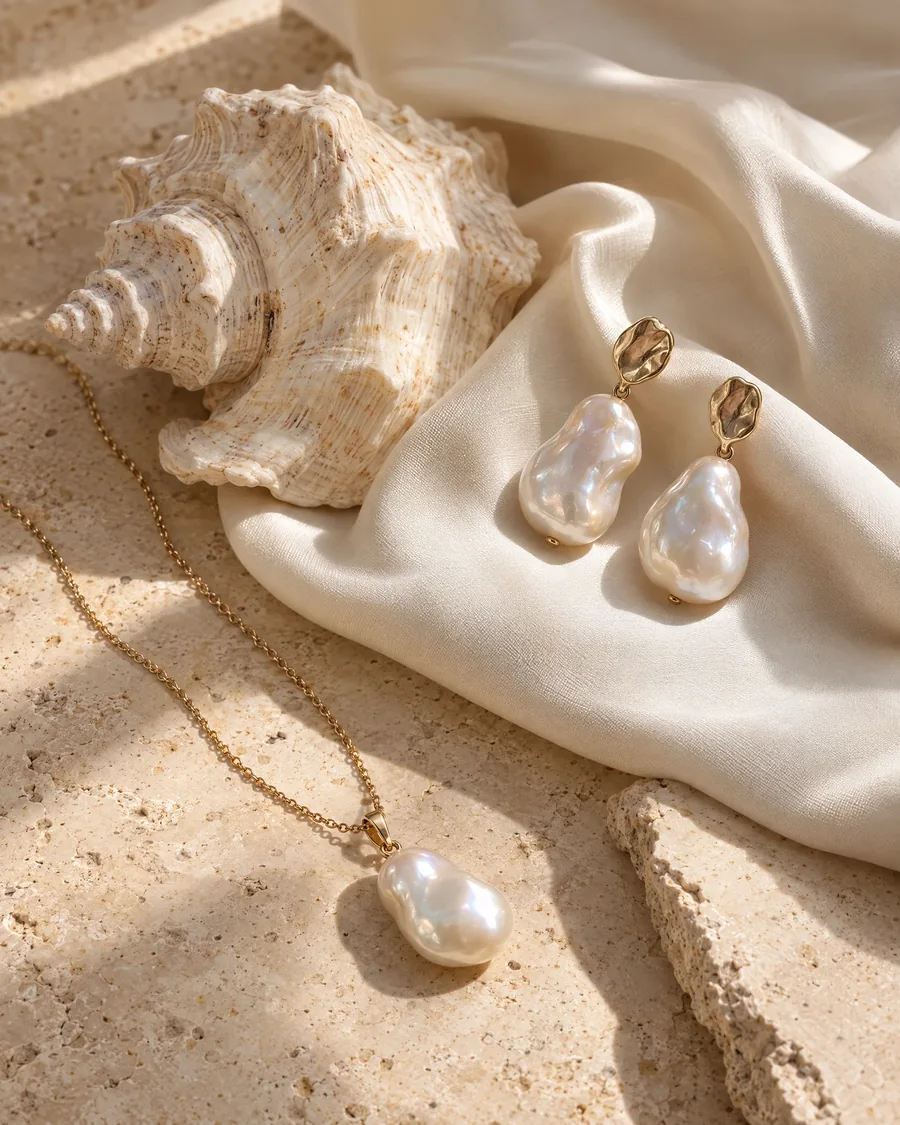
Wearing pearl jewelry with everyday clothes is less about dressing up than choosing a useful contrast. A soft, luminous detail can interrupt the plainness of a T-shirt, soften a tailored jacket or give a relaxed knit a focal point. You do not need a matching set or a special occasion to make the combination feel intentional.
If you are exploring how to style pearl jewelry with modern outfits, begin with the clothes you actually wear. Necklines, fabric texture and your daily routine offer better guidance than rigid styling rules. The approach below treats modernity as a personal design choice, not a measured trend, and turns outfit inspiration into practical decisions.
Choose a focal point and get the proportions right
Start by deciding where you want the eye to land. Pearl jewelry near the face emphasizes the upper part of an outfit; a necklace creates a line across the chest; a bracelet brings attention to the hands. Pick one area to lead before adding other accessories. This is especially useful with clothes that already have a strong feature, such as puffed sleeves, a broad collar or oversized buttons.
Scale is relative to the clothes, not simply to your height or body shape. Compact pearl jewelry can look clear and deliberate against a fitted, plain top, yet nearly disappear beside a bulky scarf. A larger accent can hold its own with an oversized jacket, but it may compete with a heavily decorated neckline. Try each option with the complete outfit rather than judging it against your face alone.
For necklaces, let the neckline establish a frame. With an open shirt, place the necklace clearly inside the opening or deliberately over the fabric; an awkward halfway position can catch on the collar. A crew neck can support a necklace that sits visibly above or below its edge. With a high-neck knit, earrings may be simpler. Pearl jewelry should remain comfortably placed when you sit and turn, not only when you stand still.
Explore our product collection for individual designs, photographs, and product details. When considering pearl jewelry, look at each piece in the context of your own preferences and practical needs. Use the product description to check relevant specifications rather than relying on appearance alone. For a more personal recommendation or a question about a particular piece, contact katherine jewelry with the details that matter to you.
A useful final check is to step back from the mirror until you can see the whole silhouette. If your pearl jewelry competes with your bag hardware, glasses and collar, remove one accessory before changing the clothes. If the outfit feels too quiet, enlarge just one element. This one-leader rule makes pearl jewelry easier to style without reducing every look to the same restrained formula.
Use texture and spacing to refresh casual basics
The easiest casual pairing often starts with contrast. Pearl jewelry against denim, a cotton sweatshirt or a ribbed cardigan creates a different mood from pearls worn with a smooth dress. The everyday fabric keeps the combination relaxed, while the jewelry supplies a point of interest. Choose one familiar base outfit and test an accent with it before attempting a complicated stack or several new accessories at once.
For a weekend coffee stop, try a striped shirt, straight trousers and sneakers with compact earrings. If the stripes are narrow and busy, keep the earring outline simple; with a plain sweatshirt, a more irregular silhouette can become the focal point. The earring design inspiration offers ways to think about shapes near the face. Check any actual earrings with your glasses, headphones and hair before deciding they belong in your everyday rotation.
Layering pearl jewelry works best when each necklace has enough space to remain readable. Begin with one piece, then add a second only if the lengths create a clear separation. Two necklaces that sit at almost the same level may overlap or twist as you move. Try reaching for a bag, bending to tie a shoe and putting on your jacket. If you keep rearranging the layers, a single necklace is the more useful choice.
Color can connect the accessories without demanding a perfect match. A cream-toned accent might echo an oatmeal cardigan, while a pale detail against navy creates a sharper contrast. Check pearl jewelry beside the actual garment in daylight and indoor light: screens and lighting can change how colors appear. Metal-colored details also need not match every buckle or zip, but repeating one visible tone can help a busy outfit feel more cohesive.
When the combination seems overly formal, adjust the clothes before dismissing the pearls. Open a shirt collar, exchange a fitted jacket for a relaxed layer or choose simpler shoes. Avoid making all those changes at once, or you will lose track of what helped. A quick phone photo can reveal whether pearl jewelry feels integrated with the outfit or added as an unrelated finishing touch. Save the successful version for another busy morning.
Adapt one outfit for work, errands and dinner
For a working day, treat pearl jewelry as a way to adjust the tone of your clothes rather than an obligation to look formal. A compact accent can soften a structured jacket without becoming the center of attention. With a relaxed knit and wide-leg trousers, a more noticeable detail can provide definition. Follow your workplace's expectations first; a styling idea is useful only when it fits the room and your responsibilities.
Build a practical desk-to-dinner outfit around one change. For example, wear a plain top, tailored trousers and comfortable shoes during the day, then exchange small earrings for a more expressive pair before dinner. Alternatively, keep the earrings and add a necklace if the neckline leaves room. Pearl jewelry does not need to appear in every accessory category. Keeping the rest of the outfit stable makes the change quick and easy to assess.
Think about what your hands do throughout the day. A bracelet that knocks against a desk or catches under a cuff may be less convenient than earrings, even if it looks appealing in a mirror. A necklace may interfere with a lanyard or sit awkwardly beneath a scarf. Run through ordinary movements before leaving home. Comfort is not separate from styling: a piece you repeatedly tug into place changes how naturally you carry the outfit.
For dinner, use the garment's surface as your guide. A plain dark top gives pearl jewelry a distinct background, while a printed blouse may need a quieter accent. If the neckline has ties, ruffles or embellishment, leave it uncluttered and move the focus toward the ears. The necklace design concepts can help you compare lengths and visual weight, but measure and test an actual piece rather than assuming a pictured proportion will translate directly.
To judge how to style pearl jewelry with modern outfits across several settings, ask what needs to change and what can stay. Perhaps removing a jacket reveals a cleaner neckline; perhaps changing nothing is perfectly appropriate. Check the full outfit under evening lighting if possible, especially when subtle colors matter. The aim is a deliberate, comfortable transition—not a compulsory transformation or a head-to-toe coordinated set.
Create a reliable rotation and care for what you wear
Make pearl jewelry easier to reach for by recording three combinations: one with a crew neck, one with an open shirt and one with tailoring. Note the accessory, neckline and any practical issue, such as a collar catching. These small outfit formulas reduce morning decisions without becoming a uniform. Change the garment color or shoes first, then reconsider the jewelry only if the balance no longer works.
Before buying pearl jewelry, separate visual appeal from material information. A photograph cannot establish whether a pearl is natural, cultured or imitation, or confirm the metal or any treatment. The FTC Jewelry Guides explain the importance of truthful jewelry descriptions. Ask the seller for written details. For questions about information on katherine jewelry, use the contact page; its editorial concepts should not be read as merchandise specifications.
Your routine should protect pearl jewelry as well as make it accessible. Apply cosmetics before putting jewelry on, and avoid contact with household chemicals. Remove pieces before swimming or household cleaning. As the GIA jewelry-care guidance explains, chemicals, heat and sudden temperature changes can harm vulnerable materials. Plan a safe place to set jewelry down rather than leaving it loose beside a sink or among keys.
Store pearl jewelry separately with padding so pieces do not rub against harder items; use cushioned compartments when traveling. Pearls should not be kept in excessively dry conditions. Cleaning must suit the complete construction, including any stringing, settings and other materials. Do not assume an ultrasonic cleaner is safe for pearls or for a mixed-material piece. If the construction or treatment is uncertain, consult a qualified jeweler instead of experimenting with aggressive home-cleaning recipes.
The most useful modern approach is personal and repeatable: choose a focal point, give it space and check it against your actual day. Keep the combinations that feel comfortable, and change one element when you want variety. Pearl jewelry can support a casual outfit or a sharper silhouette without dictating either. Let the clothes, setting and your preferences lead, and the result can feel considered without requiring a special occasion.