Editorial guidance only. Product characteristics, care needs, and commercial terms should be confirmed in writing for any specific item.
Styling mixed metal jewelry starts with a simple shift: think about relationships between pieces rather than whether every finish matches. A silver-colored chain and warm-toned earrings can feel connected through their shape, scale, or placement, even when their colors differ. Learning how to wear mixed metal jewelry with confidence means finding those connections and choosing which details deserve attention. You do not need a prescribed ratio, a new collection, or a perfect two-tone centerpiece. Start with what you enjoy wearing, then use a few deliberate adjustments to make the combination suit your clothes, your plans, and your own sense of balance.
Give contrasting tones a clear visual anchor
The easiest starting point for mixed metal jewelry is one anchor: a piece that establishes the scale and mood of the combination. It might be a broad cuff, a favorite watch, a pendant, or substantial earrings. Put that piece on first, then select companions that support it. This prevents several unrelated statement pieces from competing and gives you a useful answer whenever you wonder what to remove.
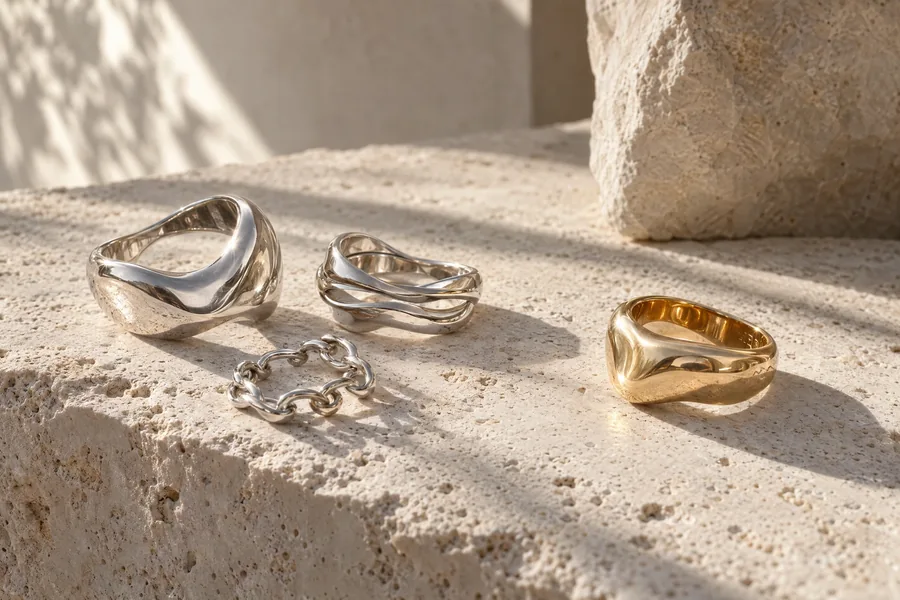
Choose the dominant tone by visual weight, not by counting items. One wide silver-colored bracelet can draw more attention than three fine gold-colored rings. Conversely, large warm-toned hoops may lead a look that includes several delicate cool-toned accents. With mixed metal jewelry, an unequal balance can be easier to read than an exact split. Try one prominent finish and one quieter contrast before experimenting with equal emphasis.
Next, find a connection that is not color. Rounded earrings can echo a circular pendant; narrow rectangular links can relate to an angular ring. You can also repeat a surface effect, such as a softly brushed appearance, while keeping shapes different. For mixed metal jewelry with ornate detailing, simplify elsewhere: a decorative ring may sit more comfortably beside an unadorned chain than another intricate centerpiece. The connection should be visible without making everything identical.
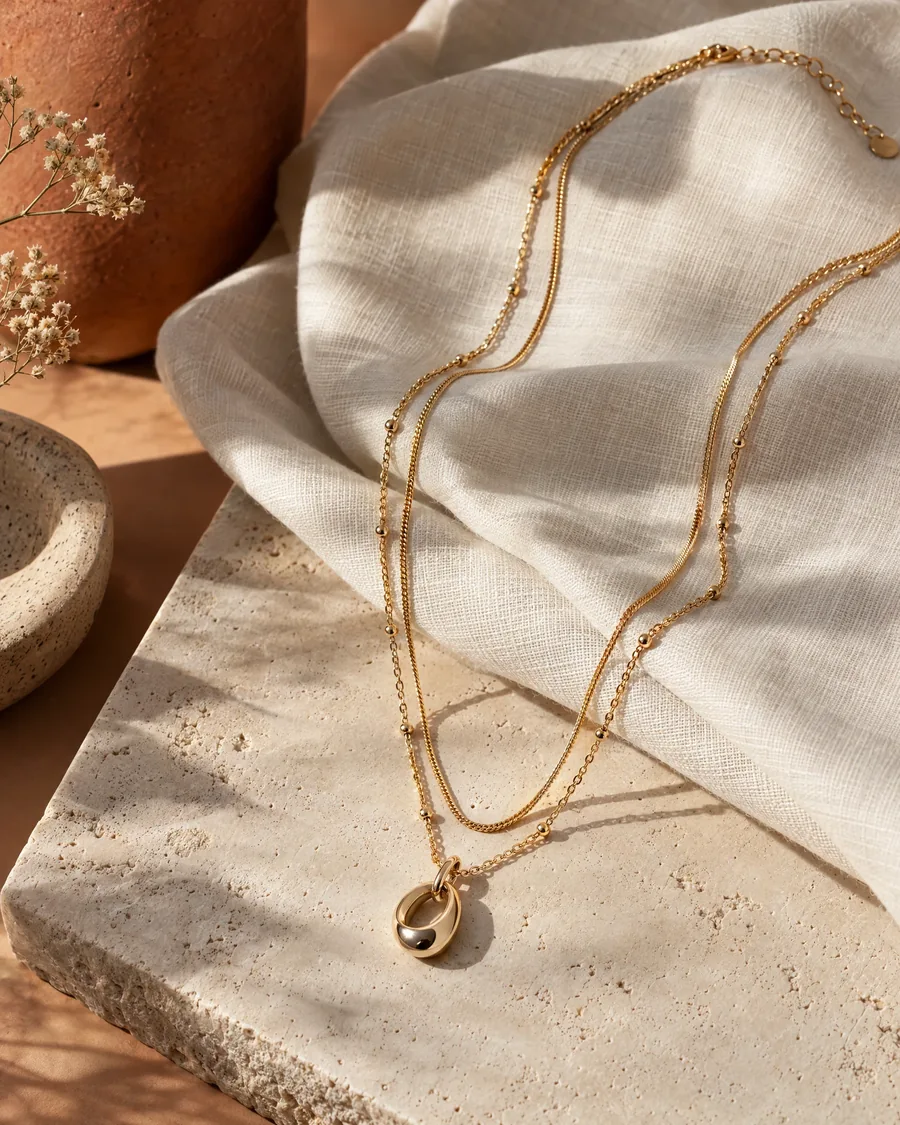
Imagine a white shirt, dark trousers, a silver-colored watch, and warm-toned earrings. Adding a small warm-toned ring repeats the contrast below the face, making the combination feel distributed rather than isolated. If the watch is already broad, skip a large bracelet beside it. Explore bracelet design concepts and necklace silhouettes to compare proportions, treating the imagery as inspiration rather than evidence of material content or availability.
Finish with a mirror check from several steps away, where you can see the whole outfit rather than individual details. Ask whether your intended anchor is still leading and whether the second tone appears connected to it. If mixed metal jewelry looks scattered, change just one element: repeat a curve, remove a competing pendant, or move the contrasting finish closer to the anchor. Small edits often accomplish more than adding another piece.
Create everyday formulas that work with your clothes
A repeatable formula makes mixed metal jewelry useful on rushed mornings. Start with two familiar pieces in one tone and a single accent in another. For example, cool-toned earrings and a fine chain can frame a warm-toned ring. Wear that combination with a regular outfit before adding layers. The goal is to establish a dependable base you can adjust, not to assemble a different arrangement from scratch every day.
Let your neckline determine where the contrast belongs. An open collar gives separate chains room to show; a high neckline may favor earrings and a visible wrist instead. If a pendant disappears beneath your shirt, it cannot do much visual linking. For mixed metal jewelry with a crewneck sweater, try warm-toned hoops, a cool-toned watch, and a small warm-toned ring. Each visible area contributes without requiring a crowded necklace arrangement.
When layering necklaces, choose lengths that leave a visible gap while standing and sitting. Two pendants that overlap may hide the very contrast you want to show. Test the arrangement by bending forward and turning your head; remove a layer if it repeatedly catches or tangles. Apply the same practical thinking to mixed metal jewelry on your hands. Leave space between larger rings, and check that neighboring pieces do not knock together during ordinary movement.
Explore our product collection for individual designs, photographs, and product details. When considering mixed metal jewelry, look at each piece in the context of your own preferences and practical needs. Use the product description to check relevant specifications rather than relying on appearance alone. For a more personal recommendation or a question about a particular piece, contact katherine jewelry with the details that matter to you.
Photograph a successful combination alongside the clothes you wore, then save a short note about what worked: open neckline, one bold piece, or repeated warm accents. Lighting and screens can alter apparent color, so use photographs as outfit reminders rather than material tests. Once mixed metal jewelry has a few reliable formulas in your wardrobe, experimentation becomes easier. Change one variable at a time—a longer chain or larger earrings—so you can identify why the new arrangement succeeds.
Adjust scale and placement for the occasion
Occasion dressing is less about forbidding certain combinations than deciding how much attention your accessories should receive. Mixed metal jewelry can be understated or expressive depending on size, spacing, and surroundings. Before selecting pieces, decide whether the clothing or jewelry will lead. A richly patterned blouse may need only small contrasting accents, while a plain dress can leave room for stronger shapes and a more visible interplay of finishes.
For a workplace with restrained dress expectations, concentrate the contrast in one or two visible areas. A cool-toned watch and warm-toned earrings can be enough, especially if your outfit already has buttons or buckles. Keep movement in mind: noisy bracelets or long pendants may be distracting during your particular tasks. Mixed metal jewelry should support the day you are having, not require constant adjustment whenever you type, reach, or lean over a table.
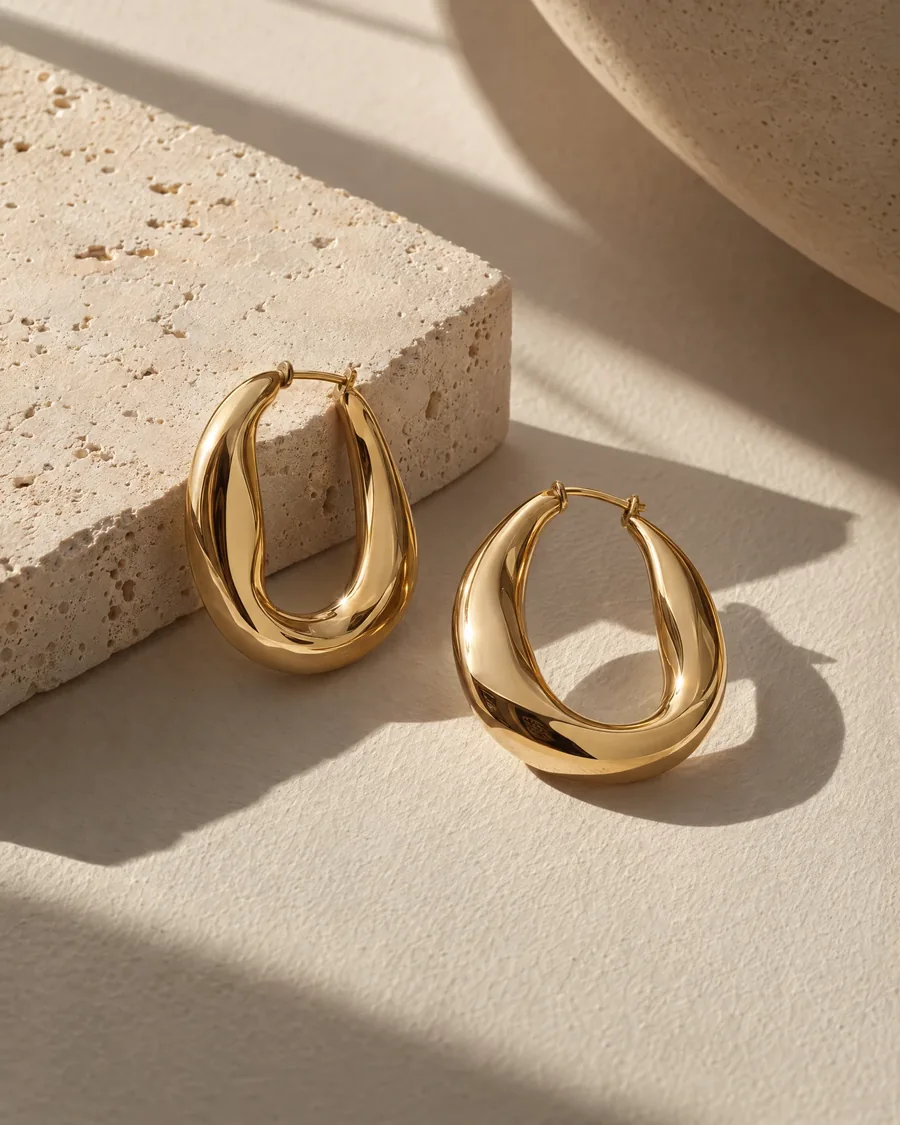
For dinner, make one clear change to your daytime formula rather than enlarging every element. Replace small earrings with a bolder pair and keep the neck quiet, or add a substantial pendant while simplifying your wrists. A simple dark outfit could carry a warm-toned sculptural earring shape with a cool-toned ring that echoes its curves. The sculptural design concepts offer a way to consider bold outlines without treating any illustration as an available product.
Include clothing hardware in your visual assessment, but do not let it dictate every choice. A bag clasp or belt buckle can supply a useful repeated tone; it does not mean all your jewelry must match it. If your outfit contains several prominent hardware finishes, simplify the jewelry shapes first. Mixed metal jewelry often feels calmer when the silhouettes are clear, even if more than two colors remain visible across the complete outfit.
Check the combination in lighting similar to where you will wear it, when practical. Reflective surfaces can appear brighter or warmer under different lights, and a stone's apparent color can shift too. This is a visual check, not a rule about which tones suit particular skin colors. If mixed metal jewelry feels too busy for an evening setting, remove the smallest unrelated accent before replacing the whole arrangement. Preserve the focal point and the connection that made you choose the pieces initially.
Keep personal pieces in the mix and care for each separately
A meaningful ring or well-worn watch does not need to match everything else to belong. Let it become the starting point for mixed metal jewelry, then choose a companion with a related outline or proportion. A family ring with a rounded setting might connect to simple hoops in another tone. Personal significance is a good reason to keep a piece; thoughtful placement can integrate it without disguising its difference.
If a sentimental item feels disconnected, try moving the contrast nearer rather than adding accessories everywhere. A warm-toned ring beside a cool-toned band creates an immediate relationship; earrings can also echo the ring's finish across the outfit. For mixed metal jewelry that includes several treasured pieces, choose which one leads on a particular day. Rotating the focal point gives each item space without demanding that you wear the entire group at once.
Separate styling language from material identity. A silver-colored surface does not establish sterling silver, and a gold-colored finish does not establish solid gold. Plating is a surface layer, not the same as solid metal throughout. When evaluating mixed metal jewelry, ask for written material and construction details rather than relying on photographs. The FTC Jewelry Guides explain why truthful descriptions matter; the katherine jewelry contact page provides a route for inquiries, not an assumption about merchandise specifications.
Care for each piece according to its construction, not the combination's appearance. Different coatings, stones, and settings may need different treatment. The GIA jewelry care guidance recommends precautions around chemicals and separate padded storage to reduce scratching. Remove jewelry before swimming or household cleaning, and ask a qualified jeweler about uncertain materials or cleaning methods. Do not assume an ultrasonic cleaner is safe for every component of mixed metal jewelry.
Ultimately, wearing mixed metal jewelry with confidence is a process of choosing, checking, and editing. Begin with an anchor, repeat one useful detail, and leave enough room for each piece to show. Adjust for your clothing and activities, then store the items separately afterward. Keep the combinations that feel comfortable and recognizably yours. A thoughtful mix does not require perfect symmetry; it needs a visible connection and enough restraint for that connection to be noticed.