Editorial guidance only. Product characteristics, care needs, and commercial terms should be confirmed in writing for any specific item.
The best everyday jewelry capsule is not a miniature version of someone else’s collection. It is a useful group of pieces that fits your clothes, your comfort preferences, and the way your days unfold. Some people want one familiar combination; others need a few options that move between work, weekends, and dinners.
Learning how to build an everyday jewelry capsule collection begins with observation, not buying. This guide walks through a wardrobe audit, practical styling tests, personal design choices, and a manageable care routine. The aim is fewer decisions in the morning, with enough variety to keep your style feeling like your own.
Map your week before choosing your pieces
Start by recording what you actually wear for seven days. Include ordinary mornings, not only outfits you photograph or wear to special events. Note your neckline, sleeves, jewelry choices, and anything you remove before the day ends. An everyday jewelry capsule should respond to those patterns. If a favorite bracelet spends every afternoon beside your keyboard, it may belong in your dinner rotation rather than your working-day group.
Look for specific sources of discomfort or inconvenience. Headphones may press against certain earrings; a pendant may catch when you change clothes; stacked rings may feel cumbersome when gripping a bag. Test the complete outfit while sitting, walking, and doing typical tasks. Comfort is personal, so avoid assuming that small always means comfortable or that a substantial piece must be impractical. Useful everyday jewelry is whatever performs well in your own routine.
Next, identify your three most repeated outfit formulas. These might be a shirt with trousers, a crew-neck knit with jeans, and a simple dress. Lay out each outfit and try two jewelry combinations with it. Notice which pieces remain visible, which compete with the clothing, and which feel unnecessary. This turns everyday jewelry selection into a concrete exercise rather than an abstract search for universal essentials.
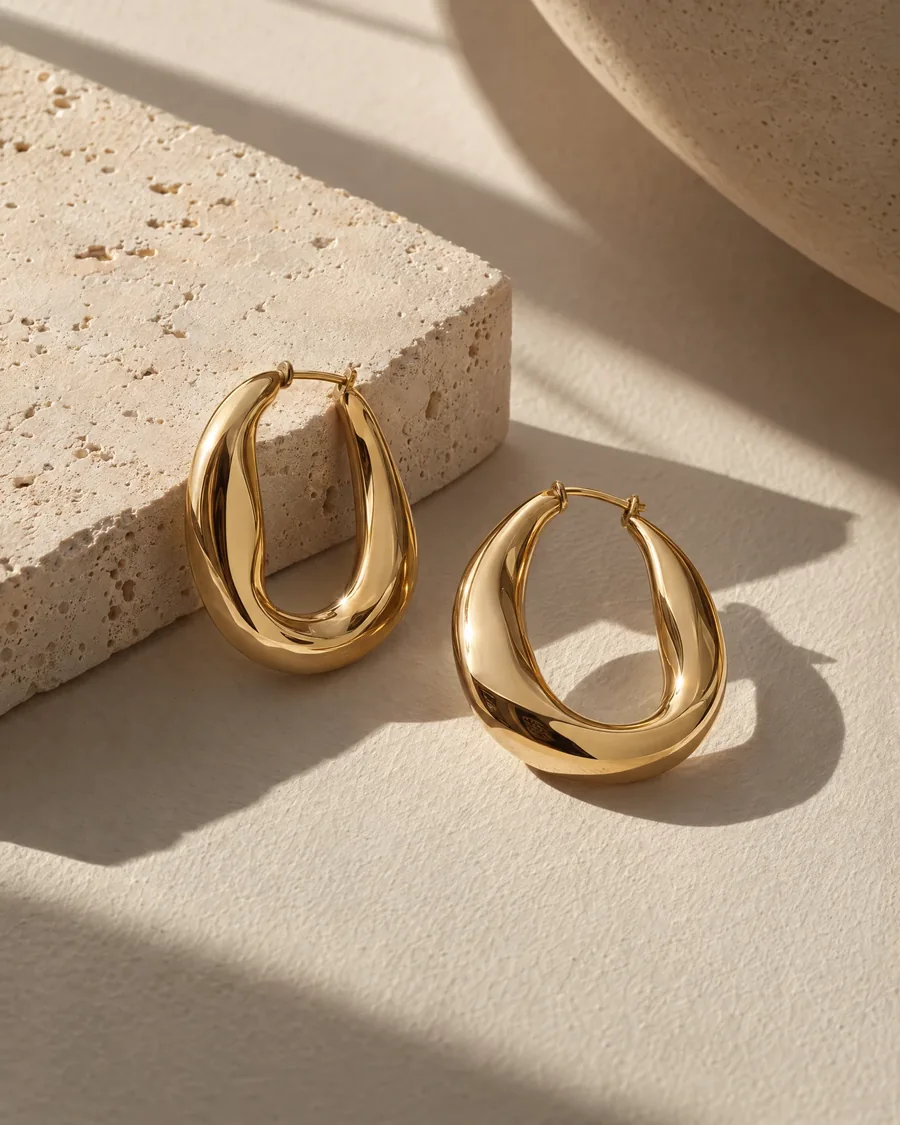
Build your first group from pieces you already own. Choose a reliable option for your most common day, a variation for a different neckline, and an expressive accent for relaxed plans. You do not need earrings, a necklace, rings, and a bracelet in every combination. Leave categories out if you rarely enjoy wearing them. Browse earring design concepts or necklace styling inspiration only after you know which role, if any, is missing.
Finally, separate practical gaps from imagined ones. If you repeatedly want a visible accent above a high neckline, that is a useful observation. If you simply feel that a capsule ought to contain a particular style, pause. Write a one-sentence purpose for each proposed addition: “This would give my plain work shirts a focal point.” A clear purpose helps everyday jewelry earn its place without turning the edit into another shopping checklist.
Build combinations around scale, spacing, and repetition
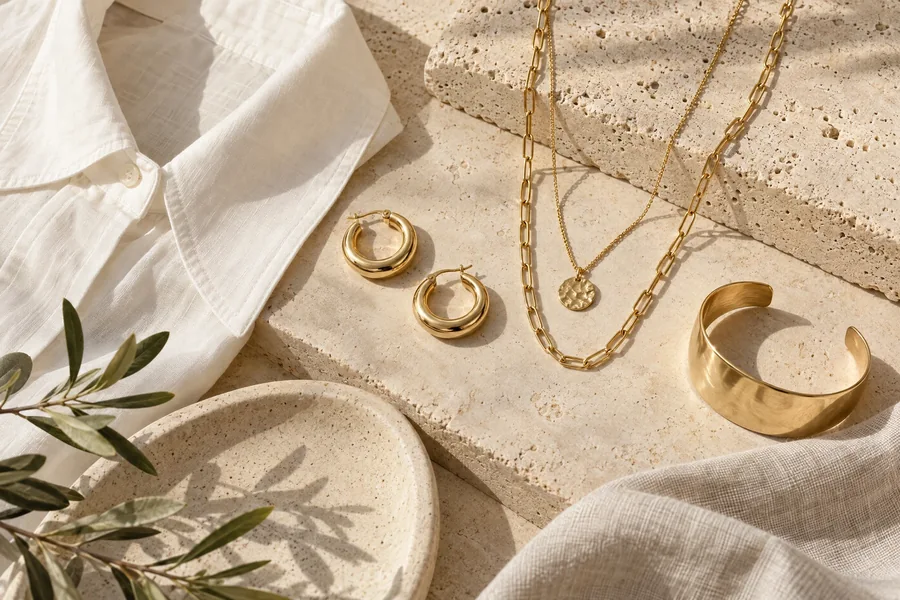
Once you know which roles matter, arrange your selections by visual weight rather than jewelry category. Set out a quiet option, a medium-scale option, and one stronger accent. Visual weight comes from shape, contrast, texture, and coverage—not simply size. A compact, brightly colored detail can attract more attention than a longer, understated chain. This approach makes everyday jewelry easier to combine because each piece has a recognizable styling job.
Use one focal point as a starting rule, not a restriction. With noticeable earrings, try leaving the neckline bare or choosing a quieter necklace. With a distinctive pendant, compare smaller earrings against a second bold shape. Take a quick mirror photo from conversational distance, then check whether your eye has somewhere clear to land. If you enjoy a busier look, keep it; the test helps you see the effect of your everyday jewelry, not obey a dress code.
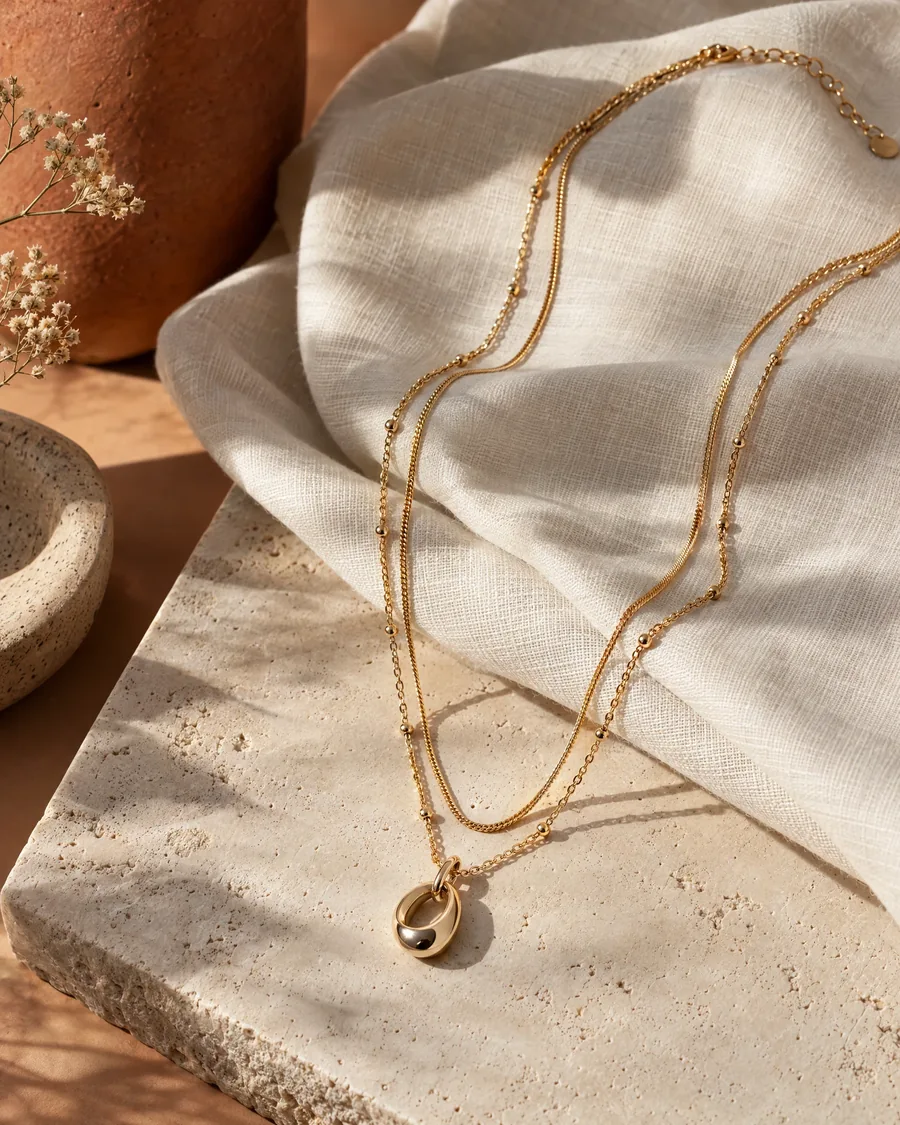
Spacing matters when you layer. Two necklaces that settle at almost the same point may overlap rather than create separate lines. Try lengths that remain visibly distinct while you move, and check whether pendants flip or chains tangle. For rings, compare adjacent widths and leave space where your fingers need to bend comfortably. A combination that looks balanced on a tabletop still needs to work on the body. Everyday jewelry should pass both tests before becoming a default.
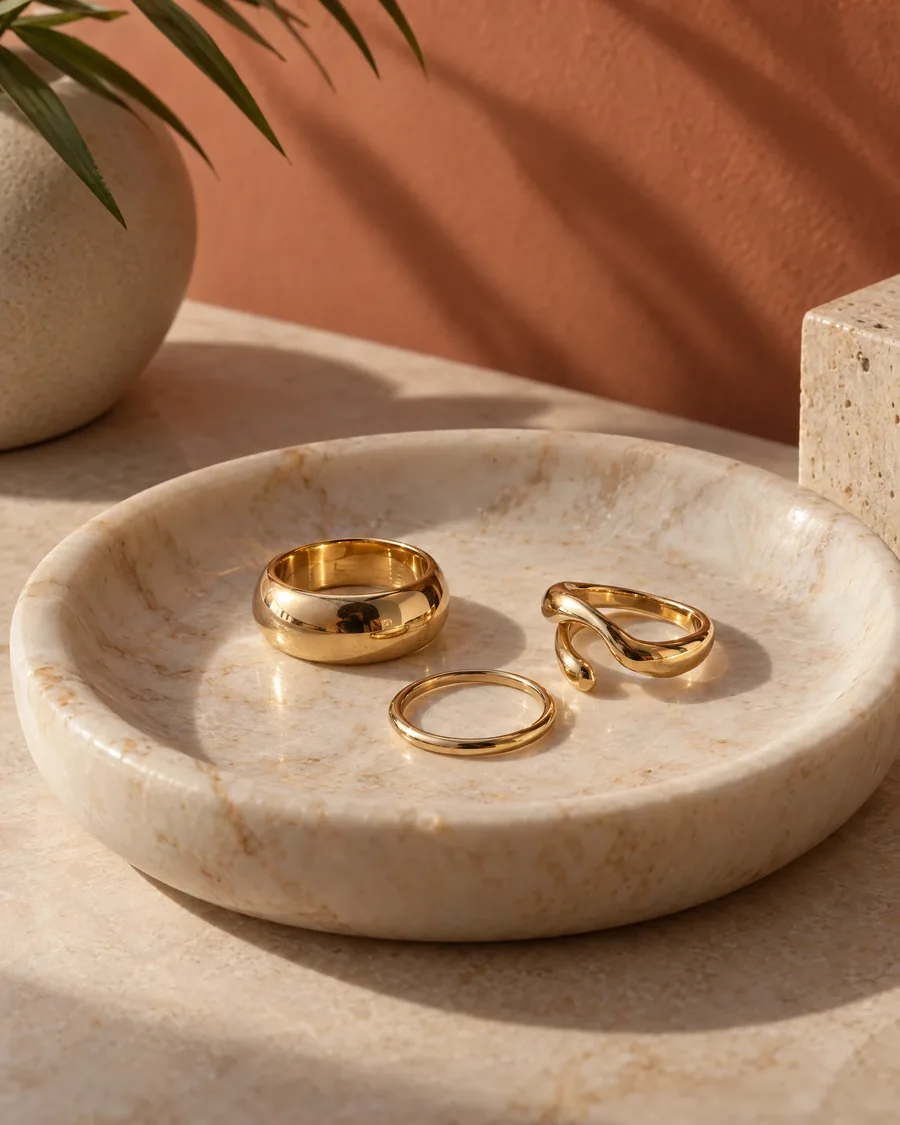
Create coherence by repeating one detail across different pieces. A curved earring might echo a rounded ring; an angular pendant might relate to a straight-edged bracelet. Matching every feature is unnecessary. You can vary scale or surface while keeping that shared visual thread. Explore ring silhouette concepts and bracelet design inspiration to compare outlines, rather than treating the illustrations as a ready-made set or an indication of availability.
Finish with a three-outfit test. Wear a proposed combination with your usual work clothes, casual clothes, and one slightly dressier outfit. Change only one component where needed, and photograph the versions you like. These images become a small styling reference for rushed mornings. If an everyday jewelry piece works beautifully with only one outfit, it can still be worth keeping—just give it a specific role instead of expecting it to anchor the entire capsule.
Leave room for personality without losing versatility
A compact collection can be expressive. The trick is to decide which detail you want to repeat: a sculptural curve, a particular color, a textured surface, or a familiar motif. Choose something you already respond to rather than something described as essential. Your everyday jewelry can have a recognizable character even when the individual pieces differ. Think of the shared detail as a thread running through your choices, not a requirement that everything match.
Try color against clothing before making it a capsule anchor. Place a piece beside your most-worn shirt, coat, and knitwear, then view it in daylight and normal indoor lighting. Color appearance can change with light, and screens are not a reliable substitute for seeing an actual item. Warm-looking and cool-looking tones can both work; harmony and contrast are equally valid preferences. The useful question is whether that everyday jewelry accent makes your existing outfits easier to enjoy.
Mixed metal colors offer another way to personalize a small group. If a combination initially feels disconnected, repeat one of the colors elsewhere or connect the pieces through a similar shape. For example, two curved silhouettes can relate even when their colors differ. Treat these descriptions as appearance, not material identification: a golden or silvery surface does not establish metal content. Ask for written composition details before purchasing; the FTC Jewelry Guides explain the importance of accurate jewelry representations.
Sentimental pieces deserve a different kind of assessment. An inherited pendant or meaningful gift does not have to work with three outfits to justify keeping it. Instead, give it an intentional place: perhaps it becomes your Friday choice or the centerpiece of a simple weekend look. Keeping treasured items outside your everyday jewelry rotation is also reasonable. Frequency is useful for measuring convenience, but it is a poor measure of emotional value.
Explore our product collection for individual designs, photographs, and product details. When considering everyday jewelry, look at each piece in the context of your own preferences and practical needs. Use the product description to check relevant specifications rather than relying on appearance alone. For a more personal recommendation or a question about a particular piece, contact katherine jewelry with the details that matter to you.
Keep the rotation useful with thoughtful care and review
Give your initial edit a month of ordinary use. Keep a short note whenever something feels especially easy—or repeatedly gets left behind. Review those notes before adding anything. A rarely worn piece may need a different outfit, a seasonal role, or a place outside the daily group. Everyday jewelry should simplify your routine; if selecting it still feels complicated, reduce the number of visible options and keep the rest stored separately.
Make storage convenient without sacrificing protection. Separate padded compartments or soft individual pouches help prevent scratching and tangling; travel calls for separate cushioned spaces too. Avoid piling pieces together in an open dish. Sterling silver benefits from anti-tarnish storage, while pearls and opals should not be kept in excessively dry environments. These are general material considerations, not statements about brand merchandise. Choose storage around what your everyday jewelry actually contains.
Everyday does not mean suitable for every activity. Remove jewelry before swimming or household cleaning. Cosmetics and household chemicals may harm metals, pearls, and porous gems, while heat, strong light, and sudden temperature changes can damage some gemstones and organic materials. Keep a protected place for pieces you remove during the day so they do not disappear into a pocket. Building that habit is part of making everyday jewelry practical, not an interruption to wearing it.
Cleaning must suit the entire construction, including settings, coatings, stones, and any treatments. Do not choose a method solely because a piece looks sturdy. Ultrasonic cleaners are not universally safe, and their vibration can loosen settings. The GIA’s jewelry-care guidance explains why different materials require different precautions. If composition or treatment is uncertain, consult a qualified jeweler rather than experimenting with aggressive home recipes. For brand-specific questions, use the katherine jewelry inquiry page and request written details.
At your next review, ask three questions: What do I wear willingly? What gets in the way? What specific role remains unfilled? Consider a new piece only when those answers point to a genuine need, and verify sizing and materials before committing. The most successful everyday jewelry capsule is not the smallest or most coordinated one. It is the group you understand, care for appropriately, and reach for with confidence—while leaving space for your preferences to change.