Editorial guidance only. Product characteristics, care needs, and commercial terms should be confirmed in writing for any specific item.
Good care for gemstone jewelry begins with questions, not a bottle of cleaner. Two stones that look alike may need different handling because their treatments, settings or surrounding materials differ. Even a familiar cleaning method can be unsuitable when a piece includes adhesive, a delicate coating or several kinds of gems.
This katherine jewelry guide explores gemstone jewelry care questions about treatments and settings, with practical ways to request information and act on it. The goal is not to memorize every stone’s properties. It is to identify what you know, what remains uncertain and when a qualified jeweler should make the next decision.
1. Establish What the Stone Is—and What Has Been Done to It
Before cleaning gemstone jewelry, ask for the stone’s identity in writing. A color description such as “blue stone” is not enough to establish a care routine. Request the gemstone name and whether it is natural, laboratory-created or imitation. These descriptions are not interchangeable, and appearance alone cannot settle the question. Keep the answer with your purchase records rather than relying on a remembered conversation or a photograph.
Next, ask whether the stone has received any treatment and whether that treatment changes its care requirements. Your gemstone jewelry questions should distinguish identification from maintenance: knowing the gem’s name does not necessarily tell you whether it has been filled, coated, dyed or otherwise altered. Ask which cleaning methods, chemicals and temperature conditions must be avoided. A useful answer explains the restrictions rather than merely calling the stone “treated.”
Imagine inheriting a green ring with no paperwork. It would be tempting to choose a cleaning method based on its resemblance to a familiar gem. Instead, treat this gemstone jewelry as unidentified until a qualified jeweler assesses it. Explain any history you know, including previous repairs or cleaning. Do not use a home experiment to establish identity; a visible change after treatment may represent damage rather than useful information.
The FTC’s Jewelry Guides address truthful descriptions of gemstone identity, treatments and other material characteristics. For a buyer, that makes written detail more useful than a broad assurance that an item is “genuine.” When considering gemstone jewelry, ask what that word means in the specific description. Also remember that laboratory-created and imitation refer to different categories; neither term should be silently substituted for the other.
Create a short record for each piece: stone identity, disclosed treatments, metal or coating details, and care instructions. Add the date and source of the information so later advice has context. If you explore the design concepts on the products page, remember that editorial imagery is not material documentation. A picture can inspire your taste in gemstone jewelry, but only information about the actual item can guide its care.
2. Read the Setting as Carefully as the Gem
A stone may tolerate a cleaning method that the rest of the piece cannot. Assess gemstone jewelry as a complete construction: gem, metal, surface finish, setting and any connecting parts. Ask whether stones are mechanically secured or whether adhesive is present, and whether the surface is plated or coated. Plating is not the same as solid metal throughout. These details can change what is appropriate even when the central stone seems durable.
Look for changes before deciding to clean. A prong that catches fabric, a stone that appears tilted or a new gap around a setting deserves attention. Do not press the stone, bend a prong or deliberately shake the piece to test it. Set questionable gemstone jewelry aside and ask a qualified jeweler to inspect it. Cleaning is not a repair, and a bright surface can make an insecure setting look reassuring without making it safer.
Consider a ring worn during desk work and errands. Repeated knocks, snagging and contact with nearby objects may affect exposed parts of its setting. When browsing ring design inspiration, notice how far a stone projects and whether small details might catch on clothing. These observations help you formulate questions about gemstone jewelry, but a visual impression cannot establish durability. Ask how the actual setting should be checked and maintained.
Mixed-material designs need an especially cautious approach. A pendant might combine several gems, a coated metal surface and a delicate connector, each with different limits. The care routine for gemstone jewelry should accommodate the most vulnerable component rather than the toughest one. Tell the jeweler about every visible material and any known repairs. Ask whether the whole piece can be cleaned together or whether particular areas need separate professional attention.
Fit and fastening also belong in the care conversation. Earrings with loose backs or bracelets with uncertain clasps risk loss, not just cosmetic wear. The earring concepts can help you compare shapes and proportions, but they do not verify fastening performance or materials. For your own gemstone jewelry, make a habit of checking closures gently before wearing. If a fastening feels different, stop using the piece until it can be assessed.
3. Choose Cleaning Methods by Evidence, Not Convenience
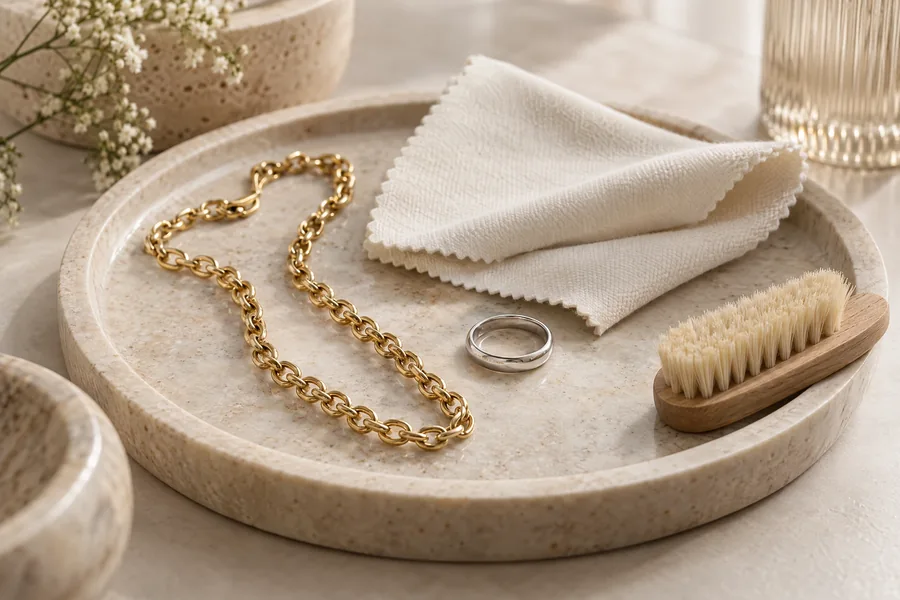
The most useful cleaning question is not “What makes this sparkle?” but “What is safe for this entire piece?” Before cleaning gemstone jewelry at home, confirm the permitted method with its documented instructions or a qualified jeweler. Ask about water exposure, suitable soap, tools, rinsing and drying. A recommendation for one ring should not automatically become the routine for every necklace, earring or bracelet in your collection, even if the stones look similar.
Many durable gems tolerate mild cleaning, but that is not permission to soak every item. The GIA’s jewelry care guidance emphasizes that treatments and construction matter. For gemstone jewelry confirmed suitable for gentle washing, follow the specific instructions and work away from an open drain. Do not improvise with abrasive powders, concentrated household chemicals or an aggressive recipe simply because it worked on a different piece.
An ultrasonic cleaner deserves its own conversation. Ask a jeweler whether vibration and the cleaning solution are appropriate for the stone, treatment and setting. Pearls, organic materials, surface-filled stones and many temperature-sensitive gems require caution, while vibration can loosen settings. Do not put unknown gemstone jewelry into a machine as a first step. A home cleaner’s convenient controls cannot identify a gem or assess how securely it is held.
Heat and sudden temperature changes are another reason to reject quick-fix routines. Avoid assuming that steam, hot water or moving between very different temperatures is harmless. Some gemstones and organic materials can be damaged by those conditions. When gemstone jewelry looks cloudy after wear, first determine whether the issue is surface residue, a treatment-related concern or a setting problem. More intense cleaning is not necessarily the right response to an uncertain change.
If you lack reliable information, pause rather than escalating. Keep the item separate, note what changed and arrange an assessment before trying another method. You can use the katherine jewelry inquiry page to ask what material information is available for an item under discussion, without assuming identification or repair services are offered. A qualified jeweler should resolve unanswered cleaning questions about gemstone jewelry; an inquiry is not a substitute for examining the actual piece.
4. Build a Wear-and-Storage Routine You Can Sustain
Preventive habits often reduce the need for intensive cleaning. Remove gemstone jewelry before swimming or household cleaning, since pool chemicals and cleaning products may harm stones, metals or finishes. Apply cosmetics before putting jewelry on, and avoid exposing pieces to sprays or lotions unnecessarily. Choose a consistent, secure place for items you remove. Leaving a ring beside a sink trades a chemical risk for the possibility of loss down the drain.
Match your wearing choices to the activity rather than expecting one piece to suit every task. Gardening, carrying rough materials and work involving repeated hand contact may call for leaving rings safely stored. For necklaces or earrings, consider whether clothing or equipment might snag projecting details. With gemstone jewelry, a practical decision rule is to remove the piece when you cannot reasonably protect it from impact, chemicals or pulling during the activity.
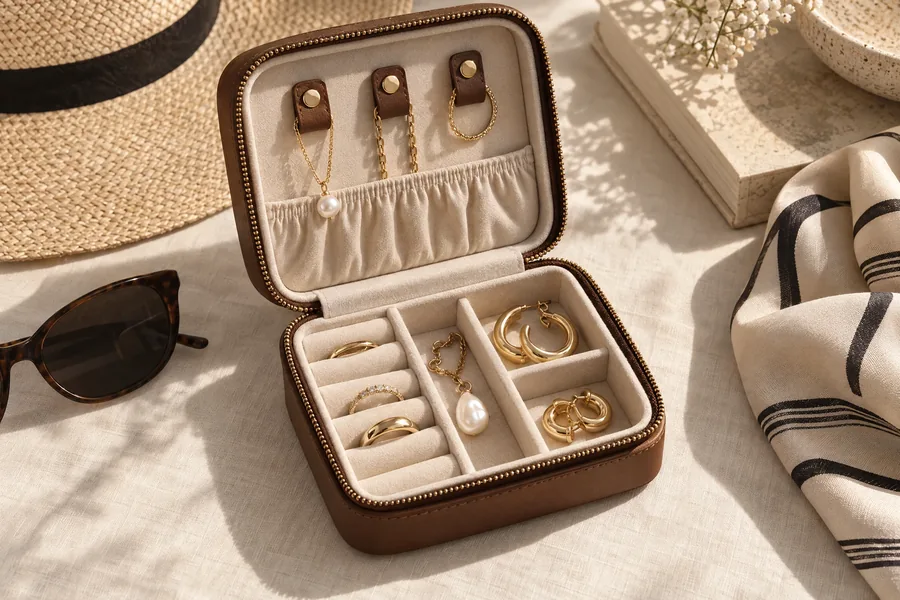
Store pieces separately with padding so stones and metal surfaces do not rub against each other. A crowded dish is convenient, but it can allow scratching and tangling. Travel calls for separate cushioned compartments rather than several items bundled into one pouch. Adapt storage for gemstone jewelry to its materials: sterling silver benefits from anti-tarnish storage, while pearls and opals should not be kept in excessively dry environments. One storage method is not universally suitable.
A care record makes the routine easier to maintain. Alongside material details, note inspections, repairs and any new snagging or changes in appearance. Take ordinary photographs for comparison, while remembering that lighting and screens can alter apparent color. For gemstone jewelry you wear often, ask a jeweler what inspection schedule suits the actual construction and use. There is no reason to invent a universal interval when settings and wearing habits differ so much.
The right questions lead to a manageable plan: What is the stone? Has it been treated? How is it secured? Which cleaning method suits the whole piece? What should prompt an inspection? Keep the answers accessible and revisit them after repairs or changes in condition. Caring for gemstone jewelry does not require a complicated ritual. It requires reliable material information, attention to the setting and the willingness to stop when uncertainty makes a home treatment unwise.