Editorial guidance only. Product characteristics, care needs, and commercial terms should be confirmed in writing for any specific item.
The best travel jewelry collection is small enough to keep track of and versatile enough to make familiar clothes feel considered. Packing well starts before you open a jewelry case: it means choosing pieces for your actual itinerary, knowing which need special care, and giving every item a protected place. If you are wondering how to pack travel jewelry for a weekend getaway, think in complete outfits rather than handfuls of accessories. This katherine jewelry guide walks through a compact selection, practical storage, destination-aware care, and a return-home check that helps you avoid tangles, scratches, and forgotten pieces.
Build a Weekend Capsule Around Your Plans
Start with the schedule, not the jewelry box. List your likely settings: a long journey, daytime walking, dinner out, and perhaps a swim or workout. Then lay out the clothes you will actually wear. A useful travel jewelry capsule supports those outfits without requiring a separate accessory set for every change. For a two-night trip, try one everyday pair of earrings, one necklace, and one optional accent, adjusting that starting point to your habits.
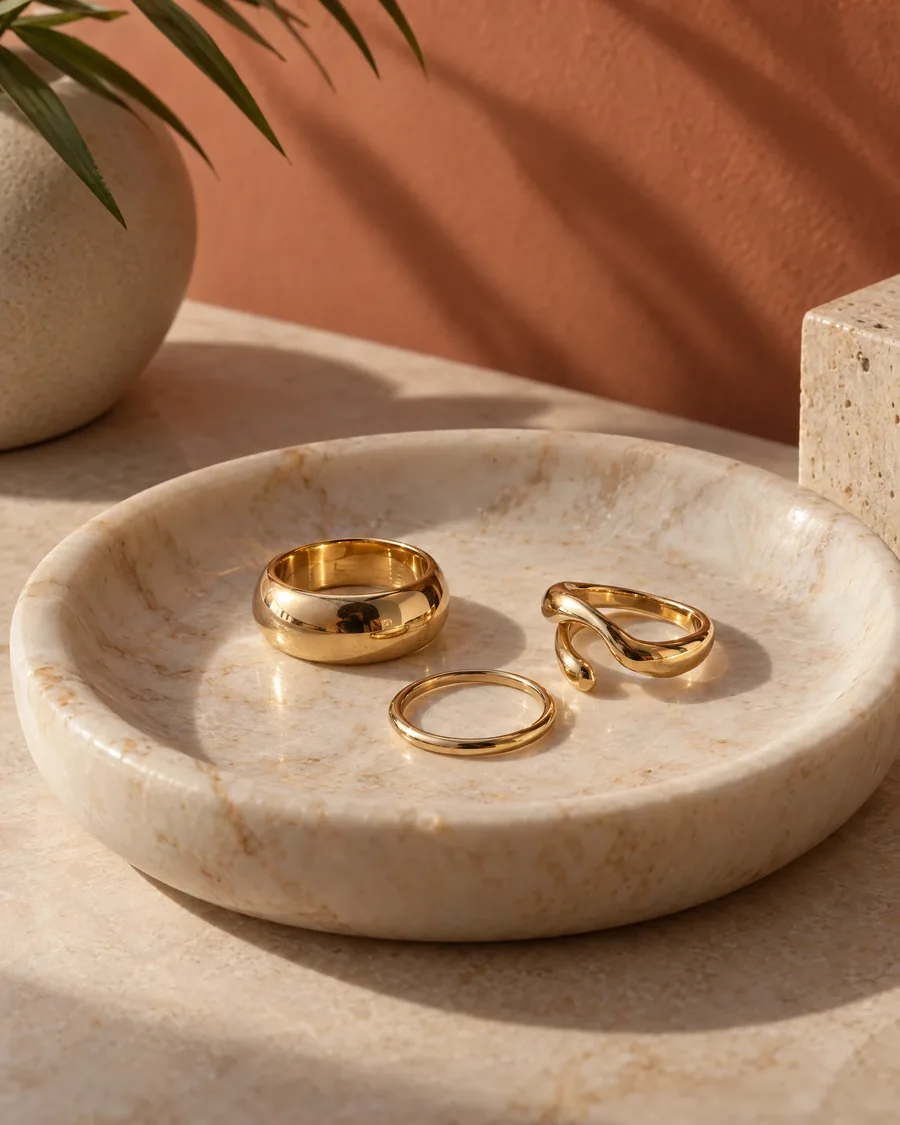
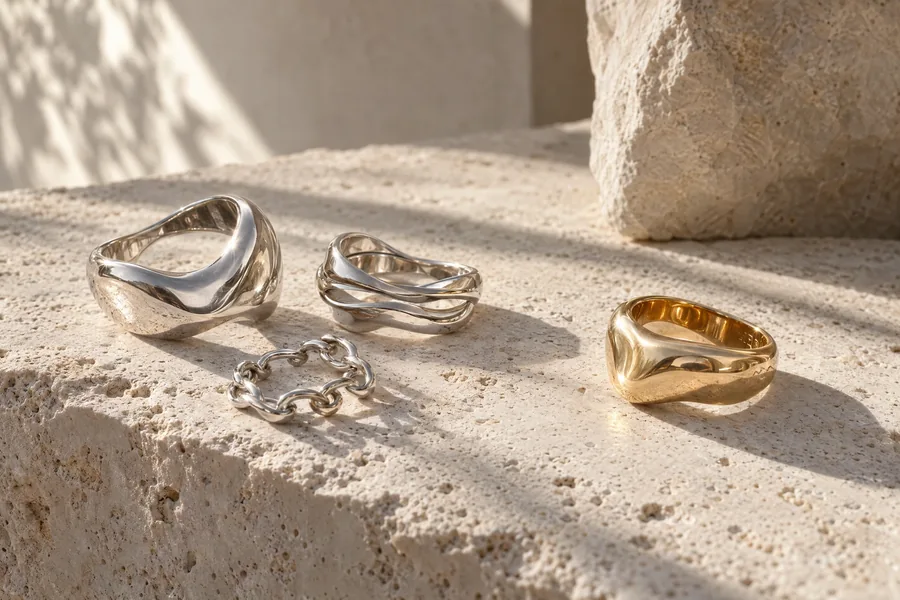
Choose a consistent visual thread so pieces can move between outfits. That might be warm-looking finishes, cool-looking finishes, rounded shapes, or a restrained mix of textures; appearance alone does not establish metal content. Browse earring design concepts and necklace styling ideas to identify silhouettes you already enjoy, rather than treating images as material specifications or stock listings. The strongest travel jewelry choices usually work with both your daytime neckline and evening clothes.
Test the selection on your body before packing. Wear earrings with the scarf, jacket collar, or headphones you intend to use. Check whether a pendant catches on knitwear and whether a bracelet interferes with a bag strap. Comfortable at home does not always mean comfortable through hours of transit. For travel jewelry, eliminate a piece if it demands repeated adjustment during this short rehearsal; practical comfort matters more than theoretical versatility on a busy day.
Use a replacement test for sentimental or valuable belongings: if losing this piece would overshadow the trip, consider leaving it safely at home. This is a personal boundary, not a claim that any destination is unsafe. A family ring may be appropriate for a meaningful dinner but unnecessary for a beach weekend. Keep your travel jewelry selection proportionate to the activities and to the attention you can realistically give it while away from your usual routines.
Finally, take a quick photograph of the chosen pieces laid out separately, and note the number of items or pairs. The image is a packing reference, not a substitute for formal documentation when that is needed. It also stops last-minute additions from multiplying without purpose. A focused travel jewelry edit should leave a little empty space in its case, with every included piece answering a clear question: when will I wear this, and with what?
Give Each Piece a Cushioned, Separate Space
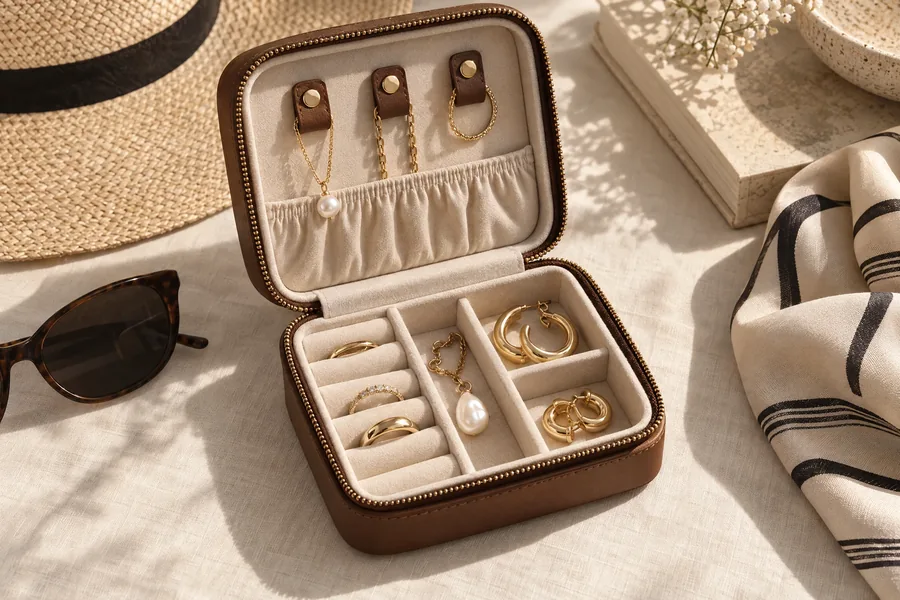
Select the case after selecting the pieces. A compact organizer should offer soft separation, secure closures, and enough depth that nothing is squeezed when it shuts. A ring roll is useful only if it holds your rings gently; an earring panel should not bend posts or force backs against neighboring pieces. Good travel jewelry packing prevents items from moving into one another, rather than simply gathering everything inside a pretty pouch for the journey.
For necklaces, fasten the clasp and arrange each chain in its own padded compartment or soft pouch. If the organizer has necklace tabs, secure the chain so the loose length cannot migrate into another section. Keep pendants from rubbing against other jewelry, especially when their construction is uncertain. Resist stuffing several chains into one pocket to save space: untangling travel jewelry in a hotel room can put needless tension on delicate links and small connecting components.
Store earrings as pairs, but prevent hard surfaces from touching when the design requires it. Stud posts need space around them, while larger shapes may be better laid flat in separate cushioned areas. Check that each back is present before closing the case. Bracelets should rest without being sharply folded or forced around a tight corner. The GIA jewelry care guidance recommends separate, padded storage, a useful foundation for protecting travel jewelry in transit.
Match storage to known materials rather than color or shine. Sterling silver can benefit from anti-tarnish storage, but pearls and opals should not be kept in excessively dry conditions. Do not add drying packets indiscriminately to a mixed collection. If you do not know what a piece contains, avoid treating an airtight bag or a single storage accessory as a universal solution. Preparing travel jewelry is easier when you keep written material details with your home records.
Place the closed organizer in a stable part of your personal bag where it will not be crushed by shoes, bottles, or a heavy laptop. Keep it away from liquids, and know where it is instead of repeatedly shifting it between bags. Carrying travel jewelry with you reduces reliance on luggage that is out of your sight, though no bag arrangement guarantees security. Before departure, gently lift and tilt the closed case; obvious movement suggests that a compartment needs adjusting.
Adapt Your Care to the Destination
Your itinerary determines when jewelry should stay in its case. Remove pieces before swimming or household cleaning, and plan an accessory-free interval for activities where knocks, snagging, or loss seem likely. A beach afternoon does not need to become a test of durability. Keep travel jewelry away from the poolside towel pile and decide where you will leave it before getting changed, while you still have dry hands and time to check the storage.
Cosmetics deserve their own packing space. Sunscreen, perfume, lotions, and other products may harm certain metals, pearls, or porous gems, so avoid spraying or applying them directly over jewelry. Put pieces on after your grooming routine rather than wearing them through it. When choosing travel jewelry for a trip with frequent sunscreen use, favor a smaller wearing schedule instead of assuming that a particular finish or gemstone will tolerate repeated exposure without consequences.
Heat and light also matter. GIA notes that light, heat, and sudden temperature changes can damage some gemstones and organic materials. Do not leave the organizer on a sunny windowsill or in a hot parked vehicle. A shaded, stable spot indoors is a better temporary home. With travel jewelry, protection is not just about scratches inside the case; it also means avoiding conditions that may affect materials even when nobody is wearing them.
If a piece becomes dirty, pause before improvising a cleaning method. Do not use toothpaste, abrasive scrubbing, or an unfamiliar chemical mixture. Even a mild approach must suit the complete construction, including stones, treatments, settings, and coatings. Ultrasonic cleaning is not universally safe, and vibration can loosen settings. A qualified jeweler should advise on uncertain pieces. For travel jewelry, postponing nonessential cleaning until you have reliable instructions is often more sensible than experimenting at the hotel sink.
Resolve material questions before departure whenever possible. The FTC Jewelry Guides emphasize truthful descriptions of metals, gems, and treatments; a gold-colored appearance is not evidence of solid gold, and plating is not solid metal throughout. Request written details from the relevant seller. For questions about the katherine jewelry website, use the contact page rather than guessing from editorial images. Your travel jewelry care plan should follow verified information, not a photograph's visual impression.
Create a Simple Arrival and Return Routine
On arrival, choose one jewelry station before unpacking the rest of your bag. Keep the organizer away from sink edges, open drains, housekeeping clutter, and places where someone might mistake a pouch for rubbish. Avoid leaving pieces loose on bedside tables or folded into tissues. A consistent home for travel jewelry makes it easier to notice an empty compartment, especially when a room is unfamiliar and your usual habits do not yet fit the space.
Use a one-out, one-back habit: remove a piece from its compartment to wear it, then return it there when you take it off. If you change accessories for dinner, put the daytime pieces away before opening another section. This small sequence avoids the growing collection on a dresser. When sharing a room, keep your travel jewelry separate from another person's accessories so that borrowed space does not lead to mixed pairs or uncertain ownership during repacking.
Decide what to do when you need to remove a ring unexpectedly. Carry a small padded pouch with a secure closure inside your bag, and use it rather than a pocket, napkin, or loose cosmetic compartment. Return the ring to the main organizer when convenient. For inspiration, ring design concepts can help you consider which shapes suit your activities, but your existing pieces need their own fit and care checks. Never force travel jewelry onto swollen fingers.
Before checkout, compare the case with your packing photograph and count pieces in the same way you did at home. Check the bathroom, bedside area, dressing surface, and the bag you used last night. Do this while you still have time to look calmly, not after the transport has arrived. An accurate travel jewelry check is specific: both earrings, their backs, each necklace, and any separate pendant or removable component should be accounted for before closing the organizer.
Back home, unpack promptly in a clear, well-lit space. Look for bent posts, loose backs, tangled links, or settings that appear changed; stop wearing a piece with suspected damage until a qualified jeweler can assess it. Return items to storage suited to their materials and arrange any appropriate cleaning separately. Then note what you actually wore. A successful travel jewelry collection is not the largest one you can fit into a case, but the small, protected selection that served the trip.