Editorial guidance only. Product characteristics, care needs, and commercial terms should be confirmed in writing for any specific item.
Good jewelry cleaning starts with knowing what you are handling, not choosing the strongest cleaner in the cupboard. A ring that looks sturdy may contain a treated stone, a thin surface coating, or a setting that should never be scrubbed. Even familiar household shortcuts can turn ordinary buildup into permanent damage.
This guide from katherine jewelry explores common jewelry cleaning mistakes to avoid with delicate materials, from guessing a metal’s identity to soaking pieces that need a lighter touch. The goal is practical: help you decide what can safely be cleaned at home, what needs only a gentle wipe, and when to stop and ask a qualified jeweler.
Identify the Whole Piece Before Choosing a Method
The first jewelry cleaning mistake happens before water touches the piece: assuming its appearance tells you its composition. A yellow finish does not establish solid gold, and a clear stone does not establish diamond. Plated surfaces, imitation gems, and treated stones can look convincing while requiring different care. Find the original description, receipt, or written material information before deciding what to do. If the details are missing, treat that uncertainty as a reason to pause.
Think of jewelry cleaning as a decision about the entire construction, rather than its most durable component. A resilient stone may sit beside a delicate accent, or a metal setting may include adhesive, enamel, or a surface finish. The weakest element should govern the method. Look at the front, back, clasp, and connecting joints under good light. Check for movement, chipped areas, lifted edges, or anything that appears different from the last time you wore it.
A useful example is an inherited ring with a pale blue center stone. Calling it “probably aquamarine” does not make soaking safe, especially when its treatment history is unknown. Before jewelry cleaning, photograph the piece and note what you actually know. Ask a qualified jeweler to identify relevant materials and assess its condition. The FTC’s Jewelry Guides underscore why accurate descriptions of metals, gemstone identity, and treatments matter; appearance is not a substitute for reliable information.
Explore our product collection for individual designs, photographs, and product details. When considering jewelry cleaning, look at each piece in the context of your own preferences and practical needs. Use the product description to check relevant specifications rather than relying on appearance alone. For a more personal recommendation or a question about a particular piece, contact katherine jewelry with the details that matter to you.
Build a simple care note for each item: known metal, known stones, any disclosed treatment, and the recommended method. Leave unknown fields marked unknown rather than filling them with guesses. This makes future jewelry cleaning easier and helps prevent someone else in the household from using the wrong product. If a piece has a loose stone, bent prong, damaged clasp, or peeling finish, put cleaning aside and arrange an assessment before wearing it again.
Skip Household Shortcuts and Control Water Exposure
A cupboard ingredient is not automatically a gentle cleaner. Toothpaste, abrasive powders, baking-soda scrubs, and rough sponges can scratch surfaces or wear away finishes. Acidic kitchen mixtures and strong household cleaners are also poor default choices for unknown materials. In jewelry cleaning, the temptation to remove every mark immediately can create a larger problem than the original residue. Do not combine cleaning products, and keep bleach and other household chemicals away from your pieces.
Water is another tool that needs limits. A bowl of warm liquid may suit some verified, durable constructions, but it is not a universal starting point. Porous gems, organic materials, adhesive components, and certain treatments call for more specific care. For jewelry cleaning of an unidentified piece, do not experiment with prolonged soaking. A light surface wipe may be appropriate in some cases, but even a damp cloth should wait if you do not know whether moisture is safe.
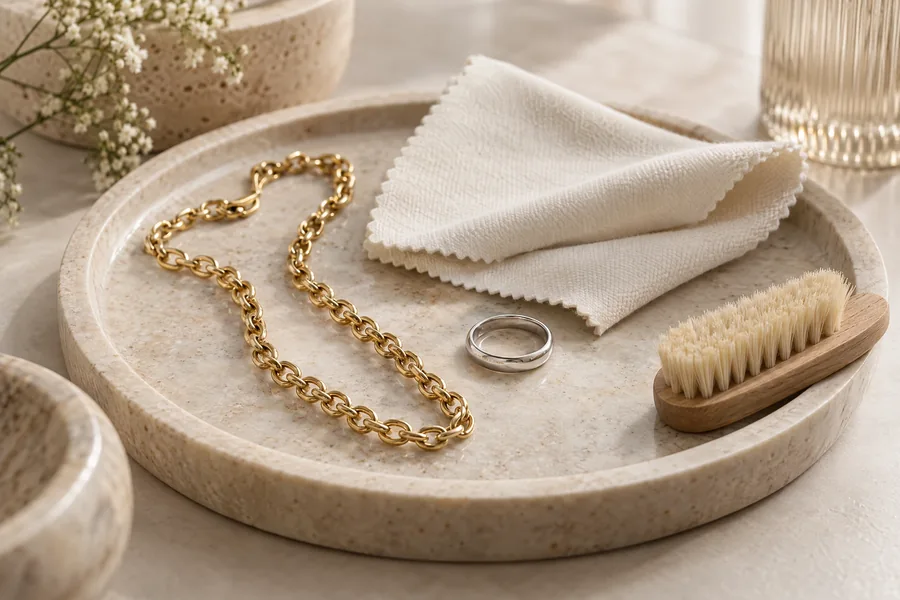
Once the materials and construction are confirmed as suitable, mild cleaning can be straightforward: use lukewarm water with a small amount of mild soap, following the piece’s care instructions. Avoid hot water and sudden temperature changes. Use a soft cloth or, only where appropriate, a very soft brush without force. Keep the session brief and inspect your progress. The GIA’s jewelry care guidance explains why heat, chemicals, treatments, and the complete construction all matter to jewelry cleaning.
Consider a strand of pearls after an evening out. Treating it like an all-metal chain ignores both the pearls and the stringing material. Do not immerse the strand as a default; obtain pearl-specific advice and use only a suitable gentle wiping method. Avoid excessively dry storage environments as well. Our pearl-inspired design concepts offer visual inspiration, not confirmation of any illustrated material. The broader jewelry cleaning lesson is to match care to the actual piece, not its style category.
Set up a controlled workspace before using liquid: a clean bowl, good lighting, and a soft towel underneath. Never rinse an item over an open drain. If rinsing is approved for that piece, use a separate bowl and dry it as directed, ensuring it is fully dry before storage. Do not use a hair dryer to speed the process. Careful jewelry cleaning should leave you able to account for every component, without hurried handling or unnecessary heat.
Avoid Excessive Force, Polishing, and Machine Cleaning
Stubborn buildup often encourages harder scrubbing, but pressure is not a reliable measure of effective jewelry cleaning. Prongs can catch cloth fibers, fine chains can kink, and openwork can bend when pushed against a towel. Support the piece instead of pulling it taut. Work gently on accessible surfaces, and stop if your cloth snags or a component shifts. Dirt lodged beneath a delicate setting is a reason to seek help, not to reach for a needle.
Polishing deserves its own caution because it is not the same as removing everyday residue. Some polishing products are abrasive, and repeated use can affect surface finishes. A cloth intended for one metal should not automatically be used on stones, plating, or decorative coatings. Before jewelry cleaning with a treated polishing cloth, check its instructions and confirm compatibility. Do not try to erase an intentional darkened detail or textured finish simply because it differs from the surrounding surface.
For example, an ornamental bracelet may have recessed dark areas that emphasize its pattern. Scrubbing those areas until they match the raised surfaces could alter the intended appearance rather than improve it. The same caution applies to unfamiliar matte finishes. Make your jewelry cleaning goal specific: removing safe-to-remove residue, not making every surface uniformly bright. If you cannot distinguish dirt, tarnish, finish wear, and a deliberate design feature, have the piece examined before choosing a product.
Ultrasonic cleaners are not a universal upgrade. Their vibration can loosen settings, and certain gemstones, organic materials, and treated stones may be unsuitable. A steam cleaner likewise should not be treated as a shortcut for unknown pieces because heat and temperature changes can cause damage. Ask a qualified jeweler about the suitability of the particular item before machine-based jewelry cleaning. A machine’s general marketing description cannot account for a stone’s treatment history or the condition of its mounting.
Use an early stopping rule: if gentle, approved care does not improve the piece, do not escalate through stronger chemicals, longer soaking, and harder brushing. Stop after the initial careful attempt and arrange an assessment. If a stone appears cloudy afterward, let the piece dry as appropriate and seek advice rather than assuming more scrubbing will fix it. Responsible jewelry cleaning includes recognizing when the remaining issue might be wear, damage, or material change rather than removable grime.
Prevent Buildup and Know When to Hand Over Care
The easiest jewelry cleaning session is often the one made unnecessary by better habits. Remove jewelry before swimming or household cleaning, and avoid contact with cosmetics and household chemicals. Put pieces on after lotions and other products have been applied, while recognizing that residue can still transfer during wear. Keep a safe place nearby when removing a ring, rather than leaving it on the sink edge or loose beside cleaning supplies.
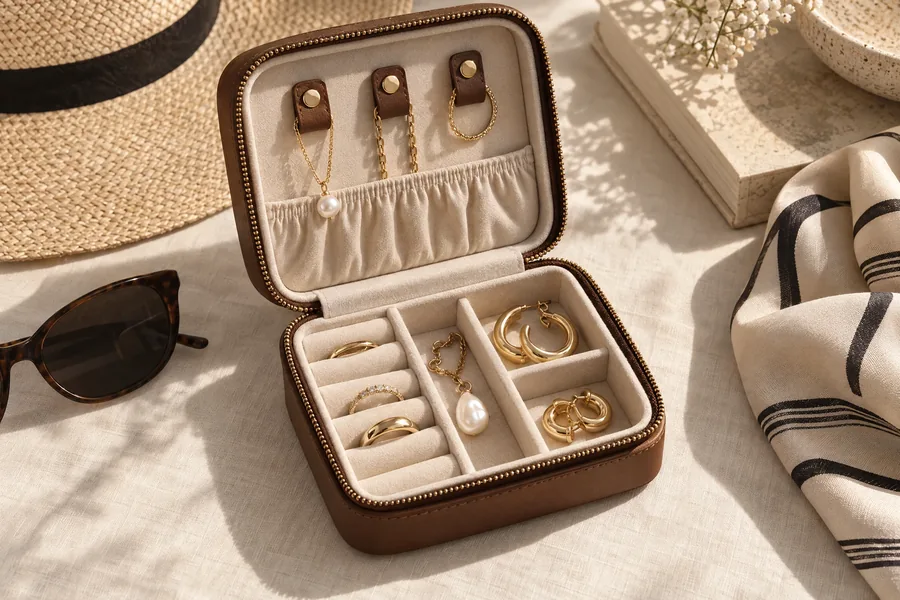
Storage also affects how frequently jewelry cleaning becomes necessary. Keep items separately padded so harder surfaces do not rub against softer ones. Fasten chains and arrange them without sharp bends or tension. Sterling silver benefits from anti-tarnish storage, but that does not make every moisture-control product suitable for every piece. Pearls and opals should not be kept in excessively dry conditions. A mixed jewelry box may therefore need different storage approaches rather than one treatment for everything.
Create a routine based on exposure and condition, not an automatic weekly scrubbing schedule. After wear, inspect a piece briefly and use a suitable gentle wipe if its care instructions allow. Before travel, check clasps and pack items in separate cushioned compartments. For jewelry cleaning, less frequent targeted attention can be safer than repeated polishing of an already clean surface. A frequently worn chain and an occasionally worn delicate pendant may need different routines, even when they share a similar color.
Professional help is especially useful when documentation is missing, a setting moves, a surface peels, or a piece has several unfamiliar materials. Ask the jeweler what the item contains, whether treatments affect care, which home method is appropriate, and what should be avoided. Request the advice in writing when possible. You can use our contact page for website inquiries, but an in-person examination by a qualified jeweler remains the appropriate step for assessing uncertain jewelry cleaning risks.
The lasting rule is simple: identify, inspect, choose the least aggressive suitable method, and stop when something is unclear. Keep any care instructions with your material notes so future decisions do not start from scratch. Avoiding jewelry cleaning mistakes with delicate materials is less about owning specialist equipment than exercising restraint. A piece does not need to look newly polished after every wear; it needs care that respects its surfaces, stones, and construction, so an attempt to brighten it does not become a repair.