Editorial guidance only. Product characteristics, care needs, and commercial terms should be confirmed in writing for any specific item.
Gentle jewelry care begins with small decisions: when to put a piece on, where to leave it during chores, and whether it needs cleaning at all. Different metals, coatings, stones, and settings do not necessarily tolerate the same treatment. A daily jewelry care routine for a mixed material collection should accommodate those differences rather than send every item through one cleaning process.
You do not need a crowded shelf of products to start. A clear handling surface, separate storage spaces, and reliable material information are more useful foundations. Build your routine around four moments: getting dressed, coming home, putting pieces away, and changing plans.
Before wearing: check the piece and the day ahead
Make the first jewelry care check while choosing your outfit. Look at clasps, earring posts, chain links, and visible settings without bending or tugging them. Notice a fastening that closes differently, a bent part, or a stone that appears displaced. A quick look cannot establish structural safety, but it can reveal a change worth investigating. Put a questionable piece aside rather than wearing it and hoping the problem will stay small.
Next, consider your schedule. A necklace suitable for a quiet desk day may be inconvenient during gardening or hands-on work. Rings and bracelets can encounter repeated knocks, while dangling pieces may catch on clothing or equipment. Remove jewelry before swimming and household cleaning. Put it in a designated secure compartment before starting, not on the sink rim or in a pocket where it could be forgotten or lost.
Finish applying lotion, fragrance, cosmetics, and hairspray before adding jewelry, and allow products to dry. This reduces direct exposure without making contact harmless. Chemicals and cosmetic residue can affect metals, pearls, and porous gems, as explained in GIA’s guidance on jewelry care. If you reapply products during the day, remove affected pieces first and handle them with clean, dry hands afterward.
Material information makes jewelry care more precise. Keep seller descriptions or written instructions for each item, including metal content, surface coatings, gemstone identity, and disclosed treatments. A silver-colored piece is not automatically sterling silver, and a pearl-like bead does not establish natural, cultured, or imitation status. The FTC’s Jewelry Guides explain why accurate material descriptions matter. If details are missing, ask rather than assigning a cleaning method from appearance.
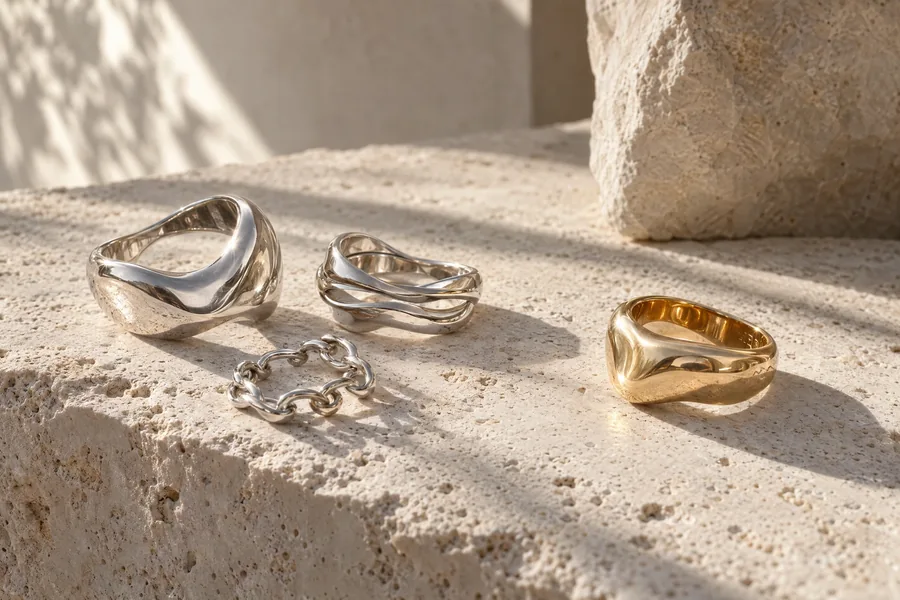
Finally, test how your chosen pieces move together. A bracelet sliding against a watch or neighboring rings striking each other creates avoidable contact. Adjust the combination if needed. The bracelet collection concepts at katherine jewelry offer design inspiration, not evidence of material composition or availability. Use pictures to explore proportions; use confirmed item details for jewelry care decisions. This distinction lets styling stay creative while handling stays grounded in what you actually know.
After wearing: choose the least intervention needed
Evening jewelry care starts with removing pieces over a clear, stable surface, preferably with a soft covering. Avoid working above an open drain. Undo fastenings patiently instead of pulling chains over your head or forcing earrings free. Check for makeup, lotion, moisture, and caught fibers as you remove each item. The purpose is to decide what needs attention, not to make intensive cleaning an automatic daily task.
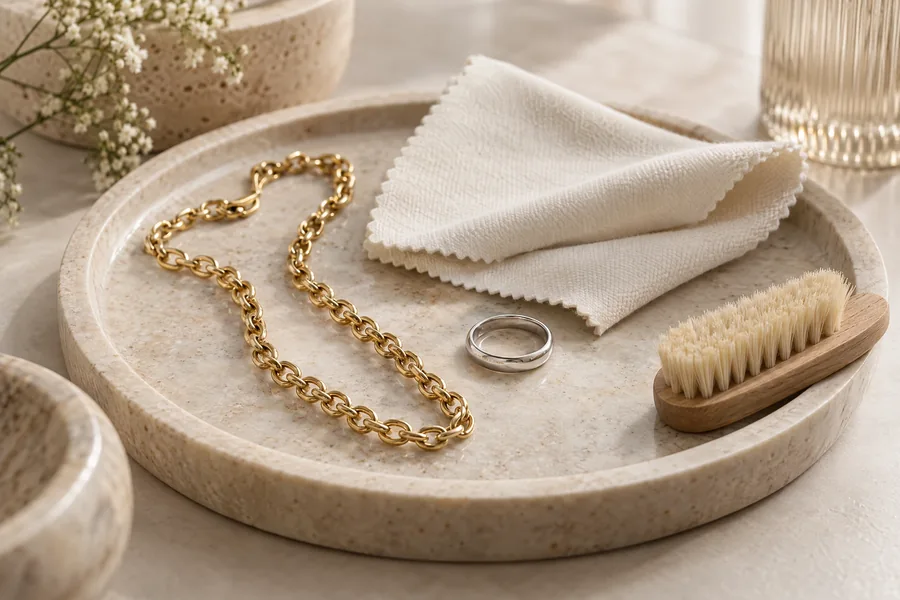
For a piece with confirmed instructions permitting it, a clean, soft cloth and light pressure may remove ordinary surface residue. Keep an untreated wiping cloth separate from any cloth containing polishing compounds; they are not interchangeable. Do not assume a metal-polishing product is suitable for a plated finish, gemstone, or organic material. If a cloth picks up grit, stop using it until it is cleaned or replaced rather than rubbing that grit across another surface.
A useful jewelry care decision rule is to follow the most restrictive requirement in the entire piece. A durable gemstone does not make its coating, adhesive, setting, or neighboring materials equally resilient. Surface plating is a layer, not the same material throughout, so repeated abrasion may affect its appearance. If written guidance permits mild damp cleaning, follow that guidance and dry the item gently before storage. Do not extend permission for one piece to the rest of your collection.
Skip improvised toothpaste scrubs, aggressive mixtures, steam, and ultrasonic cleaning when suitability is uncertain. Ultrasonic vibration can loosen settings, and many organic, treated, or temperature-sensitive materials require particular caution. GIA’s cleaning and gemstone-care recommendations emphasize assessing the complete item. Professional assessment is especially useful when residue persists or a piece has an unfamiliar treatment. Gentle jewelry care includes knowing when not to clean something yourself.
Imagine returning from dinner with lotion on a familiar plain-metal bracelet and makeup near an unfamiliar pearl-like necklace. Follow the bracelet’s confirmed instructions, but pause before wiping or wetting the necklace if its materials are unknown. The pearl-inspired collection concepts illustrate a style category, not a material diagnosis. Good jewelry care does not require both pieces to receive identical treatment. Record the unresolved question, store the necklace safely, and obtain guidance before your next jewelry care session.
At home: organize storage around different material needs
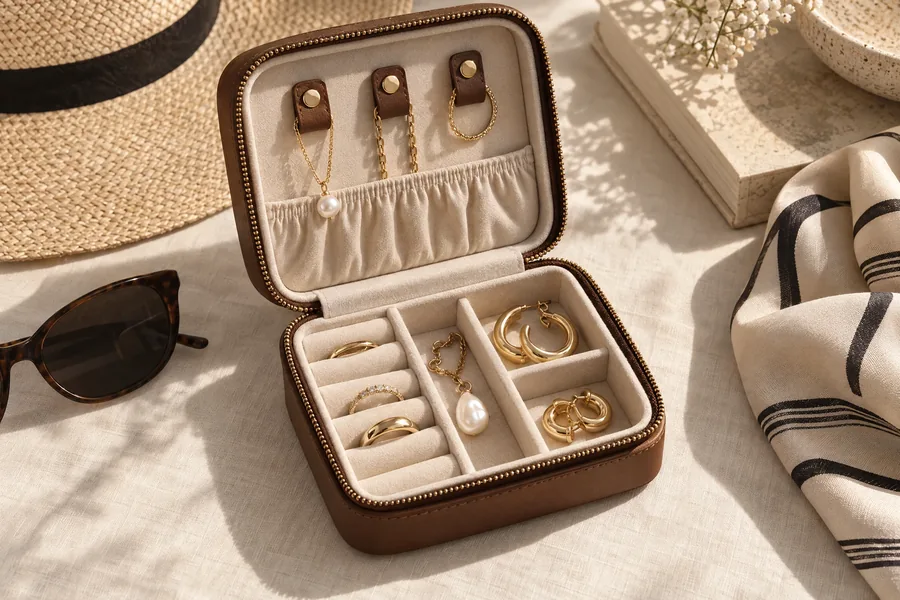
Effective jewelry care continues after cleaning. Give each item its own padded compartment or suitable soft pouch so chains, settings, and harder surfaces cannot rub against neighboring pieces. A shared decorative bowl may look convenient, but it offers little separation when you drop several items into it. Keep frequently worn pieces easy to reach while giving delicate or unfamiliar items protected spaces that do not invite hurried stacking.
Choose a location away from direct sunlight, heaters, and the steam and splashes of a bathroom. Avoid treating “drier is always better” as a universal rule: pearls and opals should not be kept in excessively dry environments. Do not add desiccants to every compartment by default. Sterling silver benefits from suitable anti-tarnish storage, but that does not make the same storage arrangement appropriate for every gem or organic material. Ask for specific guidance when these needs overlap in one design.
Use a small removal station to make jewelry care practical during chores. For example, place a divided, lined container in a secure drawer near the route to your kitchen, rather than beside the sink itself. A ring removed before washing dishes then has a predictable destination. Earrings can stay paired without touching other pieces, and a necklace can lie separately instead of wrapping around a bracelet. Keep the station out of reach of children and pets.
Add a simple material record to your organizer or phone. Note the piece’s identifying description, confirmed materials, permitted cleaning method, and any outstanding questions. Mark uncertainty plainly instead of filling gaps with guesses. Jewelry care becomes easier when you can distinguish “approved for gentle damp cleaning” from “instructions not yet confirmed.” Readers seeking information from katherine jewelry can use the contact page; item-specific advice still depends on knowing the actual construction of the piece concerned.
Periodically inspect the organizer for trapped moisture, loose lining threads, and overcrowding. Fasten necklaces before storage when practical, and lay them without tension. If a chain tangles, place it on a flat surface and ease the loose portions apart without pulling the ends against each other. Stop if the knot resists or a link looks strained. This storage-focused jewelry care check is also a chance to move damaged pieces into a separate, clearly marked space so they are not accidentally worn before assessment.
Away from home: keep the routine simple and adaptable
Travel jewelry care works best when packing starts with your itinerary. Select pieces you expect to wear, not every possible outfit combination. A trip centered on swimming, outdoor activity, or hands-on tasks may call for leaving delicate or sentimental items at home. Consider whether you will have secure storage when jewelry comes off. If that question has no satisfactory answer, bringing fewer pieces is a practical choice rather than an inconvenience.
Pack each item in a separate cushioned compartment, with no pressure on posts, settings, or delicate shapes. Keep jewelry apart from toiletries that could leak and from hard objects that could crush the case. A chain loose inside a cosmetics bag can tangle around other contents even if it was clean when packed. For travel jewelry care, choose a container that holds pieces apart while moving, not merely one that looks tidy when lying open.
A modest kit is usually enough: separate pouches, a clean untreated soft cloth, and access to your material notes. Leave unfamiliar cleaners and polishing products behind. Avoid leaving jewelry in a hot car, direct sunlight, or beside a heater; light, heat, and sudden temperature changes can damage some gemstones and organic materials. Jewelry care away from home should preserve the same material-specific limits you follow at home, rather than rely on whatever cleaning product happens to be available.
Plans can change even without travel. Before an unexpected swim or cleaning task, remove jewelry and use its designated storage space. After a snag or impact, examine the piece without trying to straighten a post or tighten a setting yourself. If a clasp no longer closes securely or a stone seems loose, stop wearing it and arrange assessment by a qualified jeweler. These moments call for a jewelry care decision, not a more vigorous cleaning attempt.
The most sustainable daily jewelry care routine for a mixed material collection is one you can repeat without guessing. Check before wearing, limit unnecessary exposure, clean only within confirmed instructions, and return each piece to separate storage. Keep unfamiliar materials and damaged items out of the normal rotation until their questions are resolved. You do not need to pursue a freshly polished appearance every evening. A thoughtful routine protects the pleasure of wearing jewelry by making careful handling an ordinary part of your day.