
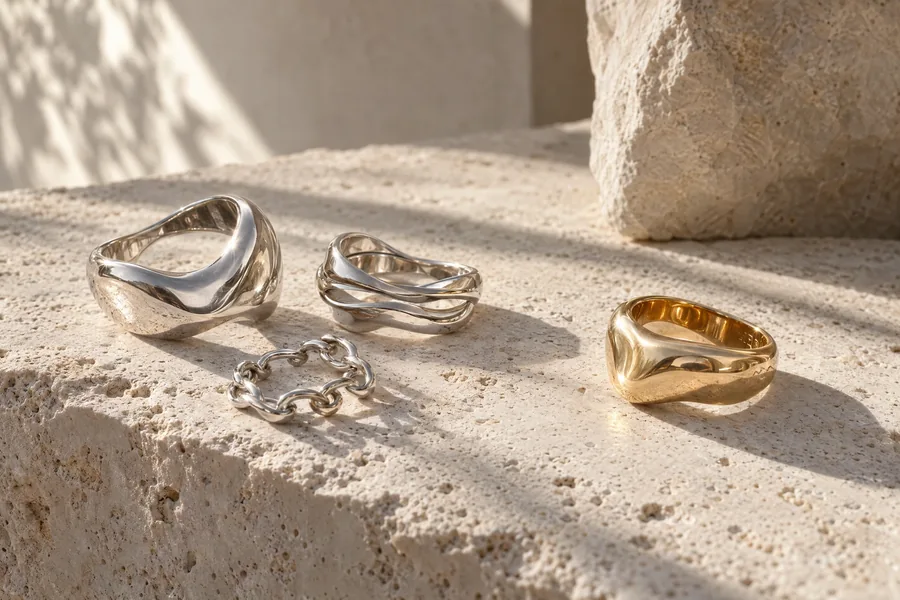
Editorial guidance only. Product characteristics, care needs, and commercial terms should be confirmed in writing for any specific item.
A favorite piece of silver jewelry can look different after a few weeks in a drawer or a season of frequent wear. That darker surface may be tarnish, but the right response is not automatically stronger cleaning. Understanding the metal, finish, stones, and setting helps you decide what is safe to do at home and what needs professional attention. This guide explains how to care for silver jewelry without harsh home remedies, beginning with simple observation rather than a kitchen recipe. Gentle handling, thoughtful storage, and clear material information matter more than chasing a perfectly bright surface at any cost.
Read the surface before you reach for a cleaner
Tarnish develops when silver reacts with substances in its surroundings, particularly sulfur-containing compounds. Humidity, perspiration, and residues from everyday products can influence how quickly the surface changes. Darkening may appear gradually or unevenly, depending on exposure. For silver jewelry, that change is often a surface issue rather than evidence of structural damage. Still, recognizing the difference between discoloration and a damaged finish is essential before you attempt to remove anything.
Start by checking what the piece actually contains. Sterling silver is an alloy normally described as 92.5% silver; silver plating is a surface layer over another material, not silver throughout. A silver-colored object might also be made from a different metal altogether. Do not classify an unfamiliar piece as silver jewelry simply because it looks bright and white. Written material details are a better starting point than photographs, weight, or an isolated mark whose meaning you cannot verify.
The FTC Jewelry Guides emphasize truthful descriptions of metal content, gemstones, treatments, and other characteristics. In practical terms, ask whether a piece is sterling, plated, coated, or intentionally darkened, and whether its stones have treatments that affect care. These questions establish the limits of cleaning silver jewelry: a method appropriate for plain metal may be unsuitable for a thin coating or a decorative finish.
Examine the piece in good, even light on a soft cloth. Gradual brownish or dark discoloration can be consistent with tarnish, while peeling, exposed underlying metal, rough patches, or a suddenly altered surface need closer assessment. Dark areas recessed into a patterned design may be intentional. Do not scrape a spot to identify it. If silver jewelry has loose stones or bent components, stop handling it beyond what is necessary to put it safely aside.
Imagine finding an old pendant with dark grooves and a bright, worn edge. Polishing everything uniformly could remove deliberate contrast without addressing the worn surface. Photograph its condition and gather any original documentation instead. The useful decision rule is to identify the construction and the change first. Unknown silver jewelry deserves an inspection, not a stronger cleaner chosen solely because a soft cloth did not restore its shine.
Choose the least intensive cleaning that fits the whole piece
Set up a small, controlled workspace before cleaning silver jewelry. Use a stable table, a clean soft cloth, good lighting, and clean hands. Avoid working over an open drain, where a dropped earring or detached component can disappear. Begin with a light dry wipe to lift fingerprints and loose residue. Support the piece rather than pulling a chain taut, and do not force a cloth into delicate settings or around a snagged link.
For confirmed, simple, unadorned silver jewelry whose care instructions permit it, a brief wash in lukewarm water with a little mild soap may help remove everyday grime. Rinse carefully and dry thoroughly with a soft, lint-free cloth. This is a cleaning step, not a guarantee of tarnish removal. Avoid prolonged soaking, and do not pack the piece away while moisture remains in links, recesses, or the clasp. Stop if its finish changes unexpectedly.
That approach cannot be transferred automatically to silver jewelry containing pearls, opals, porous gems, organic materials, or treated stones. Adhesives and other construction details may also change what is appropriate. The GIA’s jewelry care guidance explains why gemstones, treatments, and settings must be considered together. If even one component is unknown, ask a qualified jeweler for a suitable method rather than testing water or chemicals on a hidden area.
Skip toothpaste, scouring powders, stiff brushes, bleach, and improvised chemical mixtures. Abrasive shortcuts can scratch surfaces, while chemical recipes cannot accommodate every coating, stone, or setting. A commercial polishing cloth is not automatically suitable either: check its instructions and the piece’s care guidance before using it on silver jewelry. Keep treated cloths away from stones unless their suitability is confirmed, and avoid polishing away intentional dark detailing.
Ultrasonic cleaning also requires a construction-specific decision. Vibration can loosen settings, and numerous sensitive gems and organic materials are unsuitable for these machines. A durable stone does not make the assembled piece universally safe. While browsing earring design inspiration, remember that an image cannot reveal every care-relevant detail. For silver jewelry that remains dull after appropriate gentle cleaning, professional assessment is safer than repeating the process with more pressure, heat, or concentrated products.
Build storage and wearing habits around real life
Good storage reduces both exposure and physical wear. Keep silver jewelry separately padded in a lined compartment or soft pouch, rather than in a pile where chains tangle and harder components rub against polished surfaces. Sterling silver benefits from anti-tarnish storage materials used according to their instructions. These are useful aids, not promises that discoloration will never return. Put only clean, fully dry pieces away, and replace storage materials when their manufacturer recommends it.
A bathroom shelf is convenient but often exposes jewelry to humidity, splashes, and grooming products. Choose a more stable location away from sinks, direct sunlight, and heaters. For silver jewelry with gemstones, consider the stones as well as the metal: light, heat, and sudden temperature changes can harm some materials. Pearls and opals should not be kept in excessively dry conditions, so do not assume that adding aggressive drying measures improves every storage arrangement.
Make removal part of specific routines rather than relying on memory. Before household cleaning or swimming, place your pieces somewhere secure and separate from the activity. Apply cosmetics, fragrance, and hair products before putting jewelry on, allowing products to dry first. Remove pieces before activities likely to cause impact or snagging. These habits limit avoidable exposure for silver jewelry; they do not guarantee a permanently untarnished surface or replace material-specific care instructions.
A weekday routine can be simple: after arriving home, check clasps and settings visually, wipe suitable surfaces gently, and return each piece to its own compartment. If a chain catches in the cloth, stop and investigate instead of tugging. When planning layered looks through necklace design concepts or bracelet design inspiration, consider contact between pieces. Even an attractive combination can create repeated rubbing, so inspect silver jewelry worn together for signs of abrasion.
For travel, separation needs cushioning as well. Choose compartments or individual pouches that prevent pieces from knocking together when a bag moves. Fasten chains before packing and avoid forcing several items into one small pocket. If a piece gets damp, dry it appropriately before closing it away. Pack only the silver jewelry you expect to wear, especially when your trip involves swimming or strenuous activity; fewer pieces make careful handling and secure storage easier to maintain.
Know when to stop—and keep a useful care record
Home care should have a stopping point. If a gentle method appropriate to the construction does not improve silver jewelry, repeating it with greater pressure may create wear rather than progress. Persistent discoloration, an unknown coating, or a delicate setting is a reason to ask for advice. A qualified jeweler can distinguish a cleaning issue from worn plating or structural damage and explain whether cleaning, repair, or leaving the surface alone is the best option.
Seek assessment before further cleaning if a stone moves, a prong catches, a clasp no longer closes securely, or a surface flakes. Do not polish a loose setting in the hope of making the whole piece look better. For inherited silver jewelry, sentimental value may justify extra caution even when the discoloration seems ordinary. Preserving original details can matter more than achieving a uniform shine, particularly when you do not know how the piece was finished.
Prepare focused questions for the seller or jeweler. What is the metal throughout, and is there plating or another surface finish? What are the stones, and are any treatments or adhesives relevant to cleaning? Is a polishing cloth appropriate, and which areas should it avoid? Request written answers where possible. A useful care record for silver jewelry pairs those details with photographs, the date of any inspection, and the cleaning method advised for that specific piece.
Explore our product collection for individual designs, photographs, and product details. When considering silver jewelry, look at each piece in the context of your own preferences and practical needs. Use the product description to check relevant specifications rather than relying on appearance alone. For a more personal recommendation or a question about a particular piece, contact katherine jewelry with the details that matter to you.
The best answer to how to care for silver jewelry without harsh home remedies is a sequence, not a secret formula: identify the piece, inspect its condition, choose the gentlest suitable action, and stop when uncertainty appears. Keep pieces separately protected, remove them before swimming and household cleaning, and follow instructions suited to every component. Tarnish may recur as surroundings and wear change. A consistent routine helps you manage it thoughtfully, without sacrificing a finish, a stone, or a meaningful piece to unnecessary intervention.