Editorial guidance only. Product characteristics, care needs, and commercial terms should be confirmed in writing for any specific item.
A successful jewelry collaboration begins before the camera, fitting or first design discussion. It starts with a brief that explains what the partners are trying to achieve, what each person needs to contribute and which decisions still require confirmation. Beautiful references help, but they cannot replace an agreed scope.
This guide shows how to build a jewelry collaboration brief for stylists and creative partners without turning it into a restrictive instruction manual. Whether you are planning an editorial shoot, exploring a visual concept or proposing a shared campaign, the aim is the same: give creativity a clear framework while leaving room for informed experimentation.
Define the Purpose Before Choosing the Look
Start with a one-sentence purpose that describes the intended outcome, not merely the mood. For example: “Create an editorial image series showing how sculptural accessories change the balance of simple clothing.” That gives a jewelry collaboration a usable direction. “Make something elevated” does not. Add the intended audience and viewing context, such as a magazine feature, a portfolio presentation or social posts, because each setting changes how much visual information a frame can carry.
Next, separate the central idea from its visual treatment. The idea might be contrast between soft fabric and strong outlines; the treatment might use close crops, restrained colors and directional light. In a jewelry collaboration, this distinction helps partners suggest alternatives without abandoning the concept. If a proposed accessory is unavailable or unsuitable, the stylist can preserve the visual relationship through another silhouette rather than treating a single reference image as an absolute requirement.
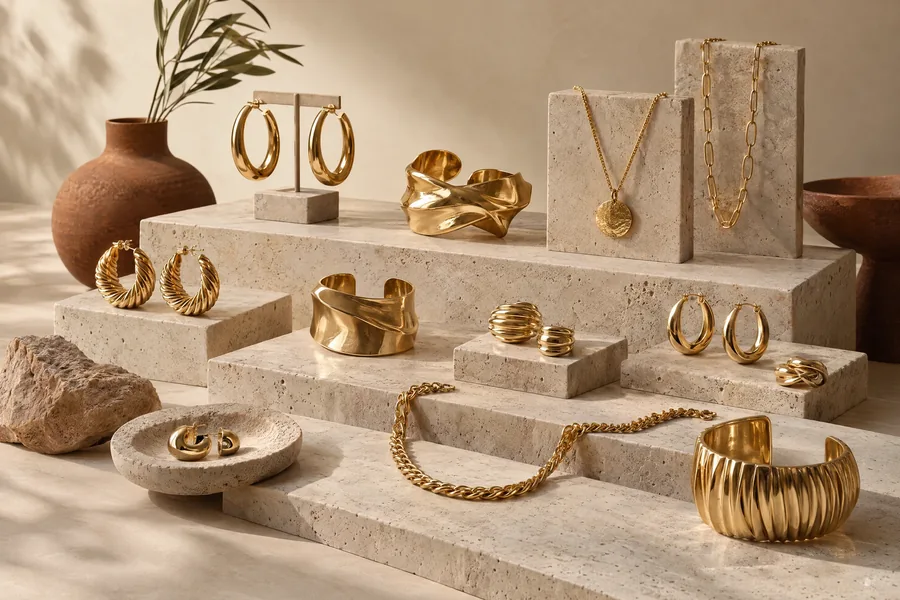
Explore our product collection for individual designs, photographs, and product details. When considering jewelry collaboration, look at each piece in the context of your own preferences and practical needs. Use the product description to check relevant specifications rather than relying on appearance alone. For a more personal recommendation or a question about a particular piece, contact katherine jewelry with the details that matter to you.
Make priorities explicit by dividing the brief into essentials, preferences and open questions. An essential might be a clearly visible accessory outline; a preference might be a neutral background; an open question might be whether movement improves the result. This hierarchy protects a jewelry collaboration from endless subjective revisions. It also gives a practical decision rule: when time or resources become limited, preserve the essentials first and negotiate preferences before adding new ideas.
End this part with a definition of success that the team can actually assess. Instead of promising audience growth or sales, specify that the selected images should communicate the agreed silhouette, work at the intended crop and leave space for required text. For a jewelry collaboration, three concrete acceptance points are often more useful than a long list of adjectives. Ask every partner to confirm that these points describe the same project before anyone commits resources.
Translate Inspiration into Styling and Production Choices
Once the purpose is settled, describe the styling system. Record wardrobe necklines, sleeve lengths, hair placement, nail presentation and the intended relationship between accessories. A jewelry collaboration involving earrings may need an unobstructed side profile, while a wrist-focused concept may depend on cuffs that do not cover the subject. These are production instructions rather than fashion rules. Explain their purpose so a stylist can adapt intelligently when a fitting reveals that the original combination does not work.
Specify a primary composition and one fallback for each planned look. For instance, a neckline study might use a medium portrait as its main frame and a tighter detail if the garment overwhelms the accessory. During a jewelry collaboration, this prevents improvisation from becoming a complete restart. Use the necklace design concepts to discuss length and proportion as visual ideas, then confirm the dimensions and availability of any actual pieces separately with their provider.
Create a factual description field distinct from the creative description. “Warm metallic appearance” is a visual observation; “solid gold” is a material claim requiring reliable documentation. A jewelry collaboration brief should identify which descriptions remain unverified and who will obtain written details before publication. The FTC Jewelry Guides emphasize truthful representations of metal content, gemstone identity, treatments and other product characteristics. Neither a photograph nor a mood-board caption establishes those facts.
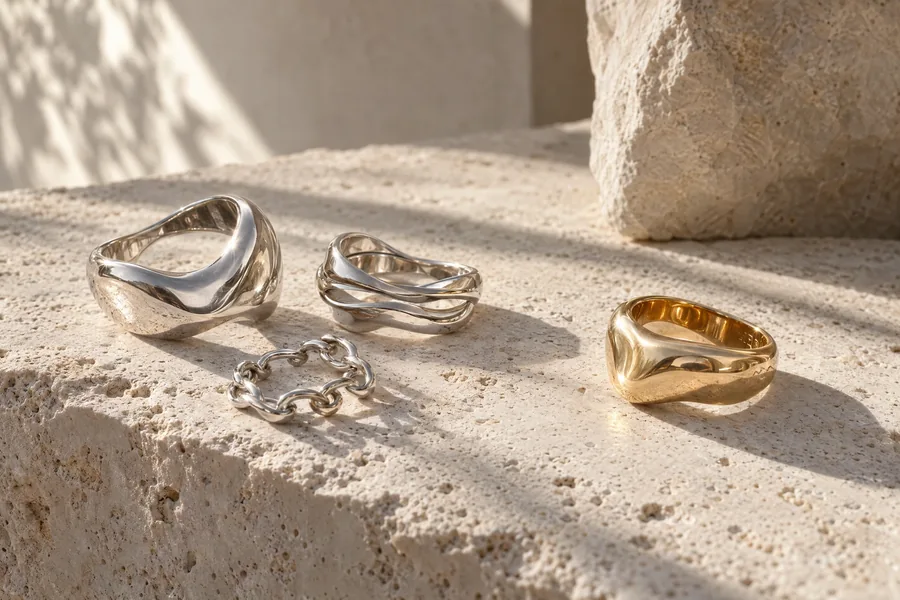
Include a fitting checkpoint before finalizing the shot plan. Record whether pieces stay positioned during movement, whether closures are accessible and whether the wearer is comfortable with the proposed styling. Do not promise that any item will be suitable for every person. If a jewelry collaboration includes rings, use confirmed sizing information and professional fitting where appropriate; visual estimates are not dependable substitutes. Agree on an alternative look rather than forcing an unsuitable piece into the original composition.
Finally, document lighting and retouching boundaries. Reflective surfaces can reveal equipment, while stone color may look different under different lights or on different screens. In a jewelry collaboration, the photographer and retoucher should know whether an image is an abstract creative study or an accurate representation of a particular item. Allow ordinary cleanup where agreed, but flag edits that change proportions, settings or visible construction. Save a reference frame so later approvals have a shared visual baseline.
Agree on Responsibilities, Deliverables and Permissions
A polished concept still needs a clear scope. List what each partner will supply, what they will receive and which tasks fall outside the arrangement. For a jewelry collaboration, distinguish creative direction, sourcing, styling, photography, editing and publication rather than assuming one person handles everything. Name a responsible contact for each task, even on a small team. If nobody owns a decision, mark it unresolved instead of hiding it beneath a general promise to work together.
Define deliverables in countable terms: proposed looks, selected final images, file formats, crop versions, captions and any behind-the-scenes material. State whether working files or unselected photographs are included. A jewelry collaboration can otherwise drift when one partner expects a few editorial images and another expects a complete campaign library. Separate the agreed package from optional additions, with any extra work subject to written approval of its scope, timing and compensation before it begins.
Give usage permissions their own paragraph or attachment. Identify the approved channels, duration, territory where relevant, credit wording and whether paid advertising, third-party sharing or later reuse requires further permission. In a jewelry collaboration, appearing in the same shoot does not automatically mean every participant can use every asset without limits. Obtain appropriate permissions from photographers, models and other rights holders. Where ownership or licensing terms are complex, have the written agreement reviewed by a qualified legal adviser.
Map the approval process around decisions, not vague dates. One person might approve concept direction, another factual captions and another final image selection. Set a response window, a method for consolidating feedback and the number of included revision rounds. A jewelry collaboration benefits from one collected feedback document rather than scattered messages from several reviewers. Silence should not count as approval unless the agreement explicitly says so; unresolved feedback should trigger a revised schedule or escalation to the designated contact.
Keep commercial assumptions out of the creative language. Ask separately about fees, expenses, deposits, cancellation, transport and any proposed exchange of services or assets. If contacting katherine jewelry, use the contact page to present the concept and request confirmation of whether participation is possible. A jewelry collaboration proposal is not evidence of a sample-loan program, production capability or standard terms. Any actual arrangement, including responsibilities and costs, needs written confirmation before the team relies on it.
Plan Sample Handling and Close the Project Cleanly
If physical pieces will be involved, attach a handling plan to the brief. Record each item’s identifier, provider, documented condition and agreed return arrangements, with photographs where permitted. Confirm who may collect, wear, transport and return it. A jewelry collaboration should not depend on someone remembering which pouch belongs to which piece after a busy shoot. Use a check-in and check-out record, and clarify responsibility for loss or damage through the written agreement rather than an informal assumption.
Build care constraints into the schedule before styling starts. Cosmetics and chemicals can harm some jewelry materials, and light or heat may damage certain gemstones or organic materials. The GIA jewelry care guidance supports cautious handling and separately padded storage. For a jewelry collaboration, agree when accessories will be put on, where they will rest between looks and who can handle cleaning. With uncertain construction or materials, seek a qualified jeweler’s advice instead of improvising a cleaning method.
Set a workable sequence with explicit dependencies: confirmation of participants, factual information, fitting, concept approval, production, selection, revisions and release. Leave space for a missing item, an unsuitable fit or delayed feedback. A jewelry collaboration timeline should distinguish a target date from a firm commitment, especially while access to pieces or people remains unconfirmed. If an essential dependency slips, decide whether to reduce the scope, use the agreed fallback or reschedule; do not silently compress every remaining task.
Before release, conduct one final check against the brief. Confirm captions, credits, permissions, file versions and any material descriptions, then record approval in one place. After a jewelry collaboration, complete returns promptly according to the agreed arrangements and reconcile approved expenses. A short review should identify which choices worked, where information arrived late and what should change next time. Judge the process against the project’s stated goals, not against unsupported expectations of reach, publicity or commercial results.
The final document should be short enough to use during production but complete enough to settle foreseeable questions. Keep the core purpose, styling priorities, deliverables, permissions and decision owners easy to find; place detailed handling records and reference images in attachments. A useful jewelry collaboration brief does not eliminate creative surprise. It makes room for it by clarifying what is flexible, what needs approval and what must remain accurate. Send one dated version, confirm acceptance and update it whenever an agreed decision changes.