Editorial guidance only. Product characteristics, care needs, and commercial terms should be confirmed in writing for any specific item.
The difference between classic and contemporary pearl styling is less about the pearl itself than the choices around it. A rounded strand beside a crisp collar reads differently from an irregular pendant against a plain T-shirt, even when both outfits share a restrained palette. Neither approach is inherently more elegant or more current.
This guide explores classic versus modern pearl styling ideas through proportion, placement and everyday outfit decisions. At katherine jewelry, the examples here are editorial design inspiration, not statements about available merchandise. Use them to identify what you want your jewelry to do: create order, introduce contrast or connect those two moods.
Classic and Contemporary: Two Different Ways to Create Balance
A classic arrangement usually builds its appeal through repetition: similar shapes, regular spacing and a clear focal point. Picture a rounded pearl necklace resting above the neckline of a simple dark dress, with small earrings echoing its scale. In this version of pearl styling, the jewelry reinforces the outfit’s existing order. The eye moves smoothly rather than stopping at several competing details, leaving the wearer’s face as the main focus.
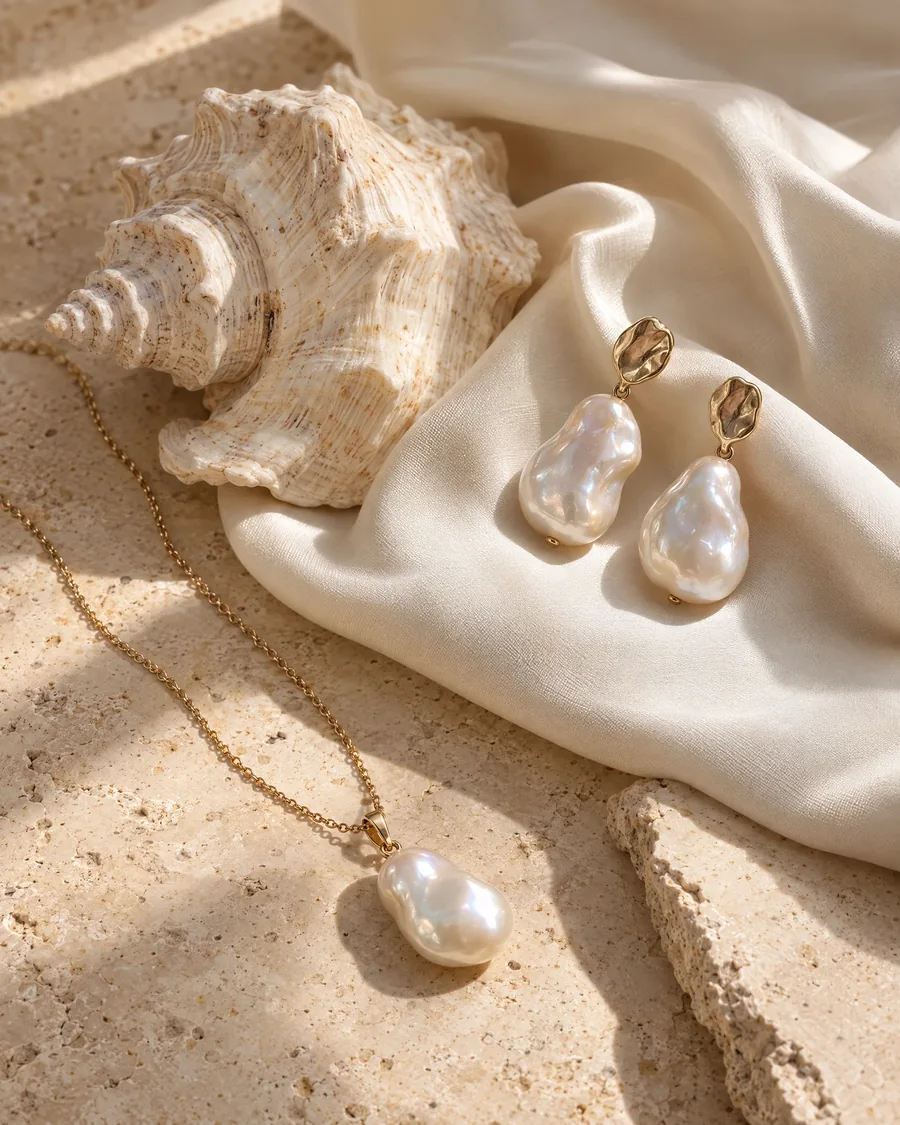
A contemporary arrangement often introduces a deliberate interruption. An irregular pearl shape, an off-center pendant or a noticeable gap between elements can change the rhythm without requiring a larger piece. Modern pearl styling works especially well when the clothing provides a quiet background. Try a plain crew-neck top with one distinctive necklace rather than adding texture, decorative buttons and several other statement accessories at once.
Shape alone does not determine the result. An irregular pearl worn on a restrained, evenly arranged necklace can still feel composed, while a strand of rounded pearls can feel unexpected against an oversized shirt. To compare pearl styling approaches fairly, keep the outfit constant and change only one element. Swap a centered necklace for an asymmetric design concept, then notice whether the new arrangement feels purposeful or merely busy.
Consider the mood you need before choosing the details. For a presentation where you want a calm, coherent appearance, repeated shapes and modest scale may be useful. For dinner in a relaxed setting, a single unexpected proportion can supply personality. These are editorial choices rather than fixed dress rules. Successful pearl styling responds to the whole situation, including how formal the clothing feels and how much visual attention you want.
Browse the pearl design concepts with those distinctions in mind, looking at spacing and silhouette rather than assuming that every pearl look belongs to one category. A useful decision rule is to name your leading idea in two words: “quiet repetition,” “bold contrast” or “soft asymmetry.” That small exercise makes pearl styling easier because it gives you a reason to include—or remove—each additional piece.
Use Necklines, Scale and Placement to Shape the Look
Begin at the neckline, because it sets the visible space your necklace must occupy. An open collar can frame a shorter strand, while a high neckline may provide a continuous backdrop for a longer pendant. In classic pearl styling, a clean relationship between jewelry and fabric often matters more than a particular necklace length. Avoid a piece that repeatedly catches on the edge of the neckline when you move.
Try the necklace with the actual garment rather than judging it on its own. Stand, sit and turn your shoulders; a pendant that looks centered in a mirror may shift beneath a lapel. Contemporary pearl styling can use that lapel as part of the composition, but accidental obstruction rarely helps. Either leave enough visible space around the focal element or choose earrings instead of forcing a necklace into a crowded neckline.
Scale is relational, not a universal prescription. A fine strand may disappear against a thick knit, while a prominent necklace can compete with a closely gathered collar. Use a quick photograph taken from conversational distance to evaluate the balance. For pearl styling that feels deliberate, decide whether the jewelry should be noticed first, discovered second or simply support the outfit. Adjust its visible size to match that intention.
Earrings offer another way to control emphasis. Small paired shapes can support a necklace without repeating every detail; a longer earring can create the main visual line when the neck is left bare. Explore the earring design inspiration for silhouette comparisons. If you are testing asymmetric pearl styling, keep another feature stable, such as a simple hairstyle or undecorated neckline, so the asymmetry has room to read clearly.
For a practical example, start with a collared shirt and straight trousers. Buttoning the shirt higher and adding compact earrings creates a contained, classic arrangement. Opening the collar and choosing one longer pendant shifts the emphasis toward movement and negative space. Both versions use the same clothes. The lesson for pearl styling is to change placement before buying more accessories: a small adjustment may achieve the difference you wanted.
Build Everyday Outfits Through Repetition or Contrast
Clothing texture can move the same jewelry between moods. A smooth blouse and neatly finished jacket allow pearls to blend into a polished ensemble. Denim, a substantial knit or a relaxed cotton shirt creates a different relationship: the jewelry becomes a contrasting detail. Casual pearl styling does not need to look intentionally disheveled. Keep the clothing comfortable and considered, then let the difference in textures provide the interest.
For a working day, try one repeated detail rather than a fully matched set. A necklace and small earrings might share a rounded outline while differing in size. Alternatively, leave the ears simple and repeat the necklace’s visual rhythm with a bracelet. This approach to pearl styling gives an outfit continuity without making every accessory identical. Check the combination while seated at your desk, especially if wrist jewelry interferes with typing.
Layering becomes easier when each piece has a separate job. One necklace can establish the main line; a second can add a finer accent above or below it. Look through the necklace concept collection for differences in silhouette, not promises about materials. Layered pearl styling is most readable when the pieces remain visually distinct. If they overlap into a dense cluster, remove one or reconsider their relative lengths.
Mixing visible metal colors is an aesthetic choice, not a requirement for a contemporary look. A single metal tone can make an irregular pearl feel especially clear, while two tones may create an appealing bridge between other accessories. With mixed-tone pearl styling, repeat one tone elsewhere only if the outfit needs that connection. There is no need to coordinate every buckle, bag fitting and jewelry component with exact precision.
For a weekend-to-evening change, keep a plain top and dark trousers, then edit rather than accumulate. During the day, choose a discreet pearl detail with comfortable shoes. For evening, replace it with a stronger necklace or more expressive earrings and simplify the remaining accessories. These classic versus modern pearl styling ideas work because the focal point changes while the foundation stays familiar. You can test the contrast without rebuilding your entire wardrobe.
Choose a Personal Formula—and Protect the Pieces You Wear
Your most useful formula may sit between the two categories. Perhaps you like balanced earrings but prefer an irregular necklace, or enjoy a traditional strand with contemporary tailoring. Personal pearl styling starts with identifying what you consistently wear, not what you admire briefly in a photograph. Review three favorite outfits and note their shared features: open necklines, plain fabrics, compact proportions or generous silhouettes. Build your first combination around those repeated preferences.
Do not infer pearl identity or metal content from a photograph. Natural, cultured and imitation descriptions matter, and a visible finish does not establish what lies underneath it. The FTC Jewelry Guides provide context for truthful material descriptions. Before turning pearl styling inspiration into a purchase decision, request written details about materials and any relevant treatments. The katherine jewelry contact page is an inquiry route, not a substitute for those specifics.
Comfort belongs in the styling decision, too. Try the complete outfit for more than a quick mirror check, noticing whether earrings catch in your hair or a strand rubs against a collar. For everyday pearl styling, a slightly quieter piece that stays comfortably placed may serve you better than a dramatic one you keep adjusting. Test any layered combination for tangling before wearing it to an event where frequent rearranging would be distracting.
Care should suit the actual materials and construction. According to GIA’s jewelry care guidance, cosmetics and household chemicals may harm pearls; jewelry should be removed before swimming or cleaning. Keep pieces separately padded and avoid excessively dry storage for pearls. Thoughtful pearl styling also means planning when to take jewelry off. Do not assume an ultrasonic cleaner is suitable; ask a qualified jeweler when materials, treatments or construction are uncertain.
Finish with a simple editing test: does each piece contribute to the mood you chose? If two accessories make the same statement, try removing one. If everything feels too uniform, introduce a single contrast in shape, placement or clothing texture. The strongest pearl styling is not necessarily the most classic or the most experimental. It is the combination that looks intentional, suits your day and feels natural enough that you can stop thinking about it.