Editorial guidance only. Product characteristics, care needs, and commercial terms should be confirmed in writing for any specific item.
Choosing moissanite jewelry becomes easier when you separate three questions: what the stone is, how it looks, and how the finished piece will fit your life. A bright, colorless appearance does not make two gemstones identical, and a photograph cannot settle a material comparison. This guide approaches moissanite jewelry versus diamond as a practical decision rather than a contest with one universal winner.
Whether you are considering a ring, pendant or earrings, useful answers begin with written material details and realistic expectations. Understanding moissanite jewelry also means looking beyond the center stone to the setting, maintenance and seller’s description.
Start with material identity, not a diamond-like appearance
The essential distinction is straightforward: moissanite and diamond are different gemstones. Diamond is crystalline carbon; moissanite is silicon carbide. They can serve similar design purposes, particularly in bright, faceted jewelry, but visual resemblance does not make them interchangeable. When evaluating moissanite jewelry, treat its material name as meaningful information, not merely another way to describe a diamond look. That approach lets you appreciate the stone on its own terms while keeping the comparison accurate.
Origin and identity answer different questions. A laboratory-grown diamond is diamond, while laboratory-created moissanite remains moissanite. The term “lab-created” describes production; it does not establish that every stone made in a laboratory is the same material. A seller may describe moissanite jewelry as an alternative to diamond, but that comparison should never replace a clear statement of gemstone identity. Ask what the stone is before asking how closely it resembles something else.
Imagine two listings showing almost identical solitaire rings. One says “diamond-style sparkle,” while the other identifies the gemstone, metal and any relevant treatment. The second description gives you a stronger starting point, even if the photographs are equally attractive. For moissanite jewelry, request written confirmation of the stone identity, whether its stated origin is natural or laboratory-created, and whether treatments or coatings affect its appearance or care. Keep that information with your purchase records.
The FTC’s Jewelry Guides emphasize truthful descriptions of gemstone type, metal content, treatments and other material characteristics. Apply that principle to the whole piece: a description of moissanite jewelry should also explain its metal and whether a surface finish or plating is present. A gold-colored image, for example, does not establish solid gold construction. Nor does a bright white setting identify a particular alloy by sight.
Explore our product collection for individual designs, photographs, and product details. When considering moissanite jewelry, look at each piece in the context of your own preferences and practical needs. Use the product description to check relevant specifications rather than relying on appearance alone. For a more personal recommendation or a question about a particular piece, contact katherine jewelry with the details that matter to you.
Compare appearance in the lighting where you will wear it
Both materials can look bright and lively, but they do not handle light identically. Moissanite often displays more pronounced rainbow-colored flashes, while diamond has its own balance of brightness and colored light. Neither effect is automatically more beautiful. When viewing moissanite jewelry, notice whether you enjoy those flashes rather than asking only whether another person might mistake the stone for diamond. Personal preference is a better guide than a promise of visual indistinguishability.
Lighting can change the impression substantially. Small, intense light sources may emphasize dramatic flashes; broad daylight can make the same piece feel quite different. A screen adds another layer of uncertainty through exposure, editing and display settings. If you can inspect moissanite jewelry in person, compare it under ordinary indoor light and indirect daylight, not just a display spotlight. If you cannot, request clear views under more than one lighting condition and ask which images are representative.
Shape, cut quality and size also influence what you notice. A larger stone gives optical effects more room to become visible, while a smaller stone may read mainly as a bright detail at everyday viewing distance. Facet arrangement can alter the rhythm of reflections. Compare moissanite jewelry and diamond examples with similar shapes and face-up dimensions whenever possible. Comparing a large oval with a small round tells you as much about their designs as their materials.
Consider a reader choosing earrings for work rather than a ring they will examine closely throughout the day. At normal conversational distance, scale, symmetry and the way the earrings frame the face may matter more than tiny optical differences. The earring design concepts can help you explore proportions, while ring design inspiration offers another context for comparing silhouettes. Neither collection imagery verifies materials; use it to clarify the style you want in moissanite jewelry.
A useful decision rule is to compare appearance at two distances: close enough to enjoy the stone’s detail and far enough to see the complete piece. Ask whether you like the effect in both situations. If rainbow flashes delight you, moissanite jewelry may suit your aesthetic; if they distract you, explore other options without treating that preference as a judgment of quality. Choose the appearance you genuinely enjoy, rather than the one you think you ought to prefer.
Judge everyday suitability by the complete piece
Both moissanite and diamond are durable gemstones used in jewelry, but durability has several meanings. Resistance to scratching is not the same as resistance to chipping, and no gemstone makes a setting indestructible. For moissanite jewelry intended for frequent wear, evaluate how exposed the stone is, how securely it is held and whether the design suits your activities. A strong stone can still be lost if a worn or damaged setting no longer holds it securely.
Picture two people choosing a ring: one works mainly at a desk, while the other regularly handles equipment or lifts heavy objects. The same high-set design may fit their routines very differently. Raised settings can catch on fabric or encounter knocks; lower profiles may be easier to manage, although they still need care. When comparing moissanite jewelry with a diamond piece, keep the setting style similar so you do not mistake a construction difference for a gemstone advantage.
The surrounding metal deserves equal attention. Different alloys, coatings and finishes have different maintenance needs, and surface plating is not equivalent to the same metal throughout. Ask for the metal specification, any coating details and advice on future upkeep. Before choosing moissanite jewelry, also consider practical access to inspection and repair. A complicated setting may require more attention than a simpler design, regardless of the center stone, and the seller’s actual service terms should be confirmed in writing.
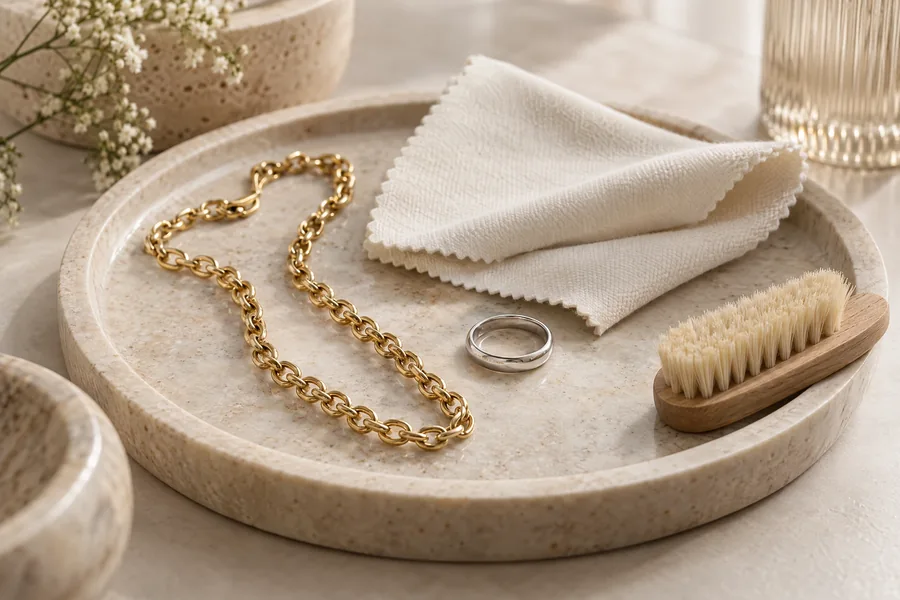
Routine care should follow the needs of the complete construction. The GIA’s jewelry care guidance advises removing jewelry before swimming or household cleaning and cautions that ultrasonic cleaning is not universally suitable. Vibration can loosen settings, while treatments or additional materials may require special precautions. Do not assume moissanite jewelry is safe for an aggressive cleaner simply because its main stone is durable. Have a qualified jeweler assess unfamiliar materials and cleaning methods first.
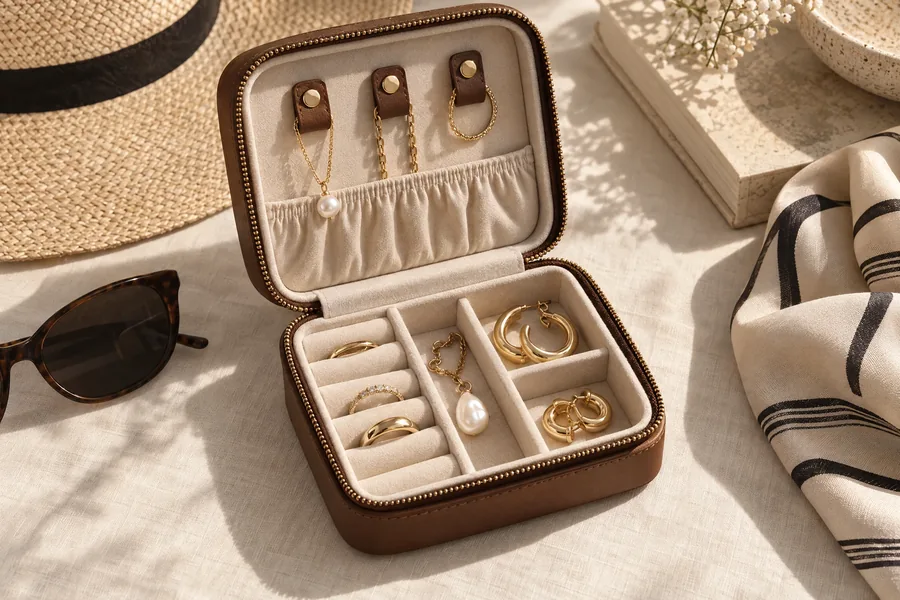
For ordinary maintenance, follow the seller’s material-specific instructions; mild cleaning may suit many durable gems, but mixed materials can change the recommendation. Store pieces separately in padded compartments and check for visible changes such as a bent prong or a stone that seems loose. Stop wearing a piece if its setting appears compromised. The most useful care plan for moissanite jewelry is modest and consistent: reduce avoidable knocks, keep records of construction and seek assessment before trying uncertain cleaning techniques.
Build a comparison that answers your real priorities
A useful comparison starts with a brief, not a verdict. Decide what the piece must do: mark an occasion, provide an everyday accent or anchor a particular outfit. Then identify your nonnegotiables, such as gemstone identity, dimensions, setting profile and an overall spending limit. For moissanite jewelry, this keeps the discussion focused on the finished piece you want. Comparing material names alone will not tell you whether either option meets your needs.
Ask each seller the same questions so the answers are comparable. Request written gemstone and metal details, face-up stone measurements, treatment information, care instructions and any applicable return or repair terms. Carat is a unit of weight, and different materials can have different weights at similar dimensions, so measurements are especially useful. If a description uses a diamond-equivalent size for moissanite jewelry, ask what that means and request the actual dimensions rather than assuming equal weight or appearance.
Budget comparisons also need a consistent basis. Compare similar stone dimensions, metals and setting complexity, then look at the complete quoted amount and confirmed terms. Do not assume that a lower initial cost guarantees better value, or that a higher one guarantees a better match. For moissanite jewelry, value can mean enjoying the appearance, having clear material documentation and choosing a design you can maintain. Avoid treating either gemstone as a guaranteed investment or predicting what a future buyer will pay.
Suppose you love the outline of a pendant but remain uncertain about the stone. Separate the decisions: first select an appealing silhouette, then compare verified material options in that design. The necklace design concepts can support that first step. For questions about information shown on this site, use the katherine jewelry inquiry page; do not assume a concept is available for purchase. This process makes a moissanite jewelry versus diamond material comparison more manageable because each question has a clear purpose.
Your final choice need not prove that one gemstone is universally superior. Choose moissanite jewelry if its distinct appearance and the verified details of a particular piece align with your preferences; choose diamond if its material identity and appearance better serve your priorities. In either case, insist on accurate descriptions, assess the whole setting and plan sensible care. The strongest decision is one you can explain plainly: you know what the piece is, why you like it and how you will look after it.