Editorial guidance only. Product characteristics, care needs, and commercial terms should be confirmed in writing for any specific item.
Thoughtful pearl care starts with restraint: a light wipe, protected storage and a willingness to leave stubborn marks to a qualified jeweler. Pearls are delicate, but the thread, clasp, setting and any neighboring stones also influence what is safe. This pearl care guide for cleaning and storing delicate jewelry turns that principle into a manageable routine, without harsh products or elaborate equipment.
Whether you wear a strand to dinner or occasionally reach for pearl earrings, the goal is the same: reduce residue, friction and unnecessary exposure. Start with what you know about the piece, and treat uncertain materials or construction as a reason to proceed cautiously.
Build a gentle routine before and after wearing
The most useful pearl care habit happens before cleaning is needed. Apply perfume, hairspray, makeup, sunscreen and lotion before putting on jewelry, and allow those products to dry. Add pearls near the end of dressing so they are less likely to catch on clothing or receive a direct spray. Take them off before swimming or household cleaning; a necklace tucked beneath a shirt is not reliably protected from chemicals or moisture.
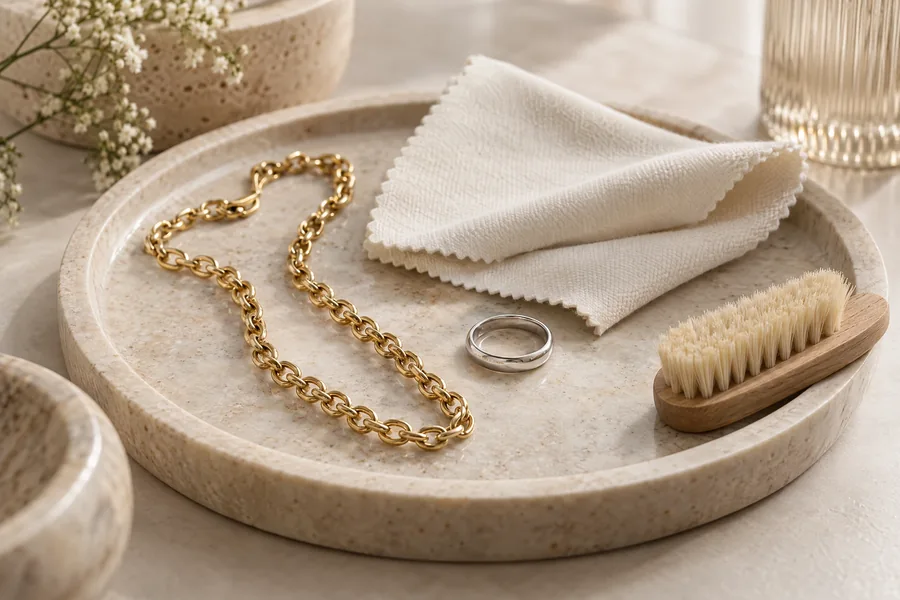
After wearing, place the piece on a clean, soft surface and wipe the pearls lightly with a lint-free cloth. Support a strand rather than pulling it through your hand, and work gently around settings. Choose a plain cloth reserved for this purpose, not an abrasive polishing cloth or one impregnated with metal-cleaning compounds. Regular pearl care should lift everyday residue without trying to buff the surface into a different finish.
If a dry cloth does not remove light residue, dampen a clean section with plain water and wring it out thoroughly. Wipe gently, then remove excess moisture with a dry cloth. Do not immerse a strand: its thread, knots and enclosed spaces may retain moisture. Lay it flat on a clean towel until fully dry before storage. Hanging a damp necklace can put unnecessary tension on the stringing material.
Imagine returning from dinner with a trace of makeup where a necklace touched your neckline. The sensible pearl care response is one careful wipe, not repeated scrubbing. If the mark remains, stop rather than adding detergent, vinegar, baking soda or a brush. The GIA’s jewelry-care guidance explains why cosmetics, household chemicals and unsuitable cleaning methods can harm delicate jewelry. A stubborn spot is a reason to seek assessment, not escalate the recipe.
Keep the routine easy to repeat by storing a clean cloth near your jewelry box, away from cleaning products. Replace or wash it when soiled, and ensure no detergent residue remains before reuse. Good pearl care does not require a full cleaning session after every outing. A brief inspection and gentle wipe are usually the starting point; visible damage, unknown construction or persistent dirt should change the plan to professional advice.
Let the whole piece determine the cleaning method
A pearl necklace is not just a row of pearls, and an earring is not just its visible front. Metal parts, coatings, adhesive attachments, stringing materials and additional stones can all limit a cleaning method. Safe pearl care follows the most vulnerable component. When you cannot identify that component, do less at home: a cautious cloth wipe is preferable to applying a cleaner selected for the metal alone.
Do not use ultrasonic or steam cleaning on pearls. Ultrasonic vibration can loosen settings, while heat and sudden temperature changes can damage sensitive materials. A machine labeled for jewelry is not automatically suitable for every piece. This pearl care decision remains the same even if neighboring stones tolerate stronger treatment: their presence does not make the pearls, attachments or thread equally tolerant. Ask a qualified jeweler to assess the complete construction.
Mixed-material jewelry presents a common trap. Suppose the clasp looks tarnished while the pearls appear clean. Dipping the entire necklace in a metal cleaner exposes everything to a treatment meant for only one part. Even a polishing cloth can transfer residue onto adjacent pearls. Keep metal-cleaning products away from them, and ask how the clasp can be treated without contaminating the strand. Effective pearl care sometimes means leaving one task unfinished until it can be handled safely.
Written material information is more useful than guessing from color, shine or price. Ask whether the pearls are natural, cultured or imitation, whether treatments are disclosed, and what is known about the metal and attachments. Those categories are not interchangeable. The FTC Jewelry Guides address accurate descriptions of jewelry materials and treatments; they do not identify your piece. Such details help a jeweler tailor advice, but cannot replace an inspection of its condition.
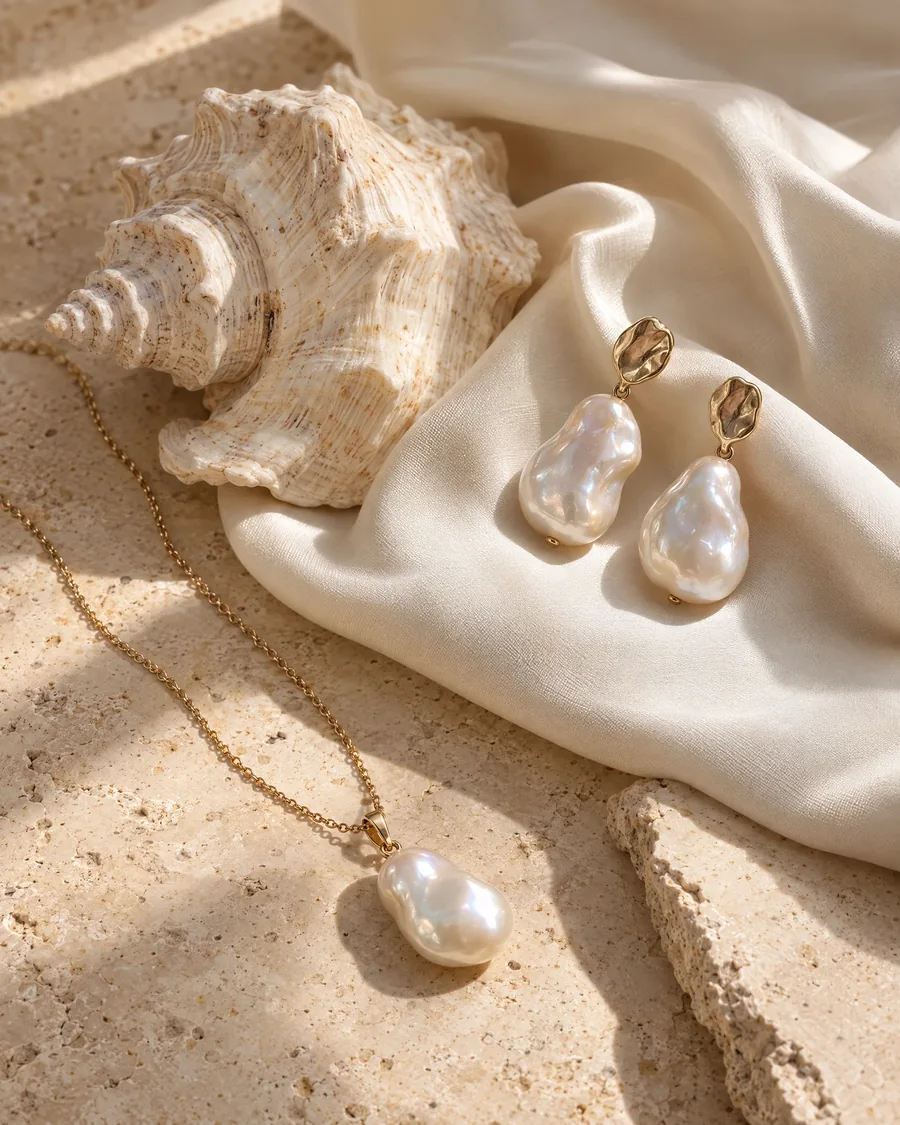
Use photographs to discuss design, not to diagnose materials. The pearl collection concepts at katherine jewelry offer editorial inspiration rather than proof of composition or availability. For questions about a depicted design, use the inquiry page to request available information. For an existing piece in your jewelry box, bring it and any documentation to a qualified jeweler. That distinction keeps pearl care grounded in the object you actually own.
Make storage protective without creating extremes
Storage deserves as much attention as cleaning because contact with harder jewelry can scratch delicate surfaces. Give each pearl piece a separate lined compartment or a clean, soft pouch. Keep chains, exposed prongs and metal clasps from rubbing against the pearls. A useful pearl care test is to move the closed box gently: if items slide into one another, the arrangement needs better separation, not simply more layers piled on top.
Lay a strand loosely rather than hanging it for extended storage or winding it tightly around a small card. Arrange the clasp so it does not press against a pearl, and avoid sharp bends that strain the thread. Earrings need protection too: keep posts and backs from scraping their fronts. These pearl care adjustments are small, but they address the actual contact points instead of relying on a jewelry box’s attractive exterior.
Choose a stable indoor location away from direct sun, heaters and strong temperature changes. Pearls should not be kept in excessively dry environments, as GIA notes, but that is not an instruction to soak them or add water to the box. Avoid improvising humidity treatments. A shelf away from heating vents is generally a more sensible choice than a sunny windowsill, a hot car or a bathroom with repeated environmental changes.
When traveling, give each piece its own cushioned compartment and secure the organizer so it cannot tumble freely. Separate jewelry from cosmetics that could leak and from hair accessories with hard edges. Pack a soft pouch for use at your destination, too. Practical pearl care includes deciding where the jewelry will go when you remove it: a protected compartment is safer than a bedside ledge, a crowded counter or loose inside a handbag.
Match the arrangement to the shape, not just the material. A long strand needs room to rest loosely; a compact pair of earrings needs protection from its own hardware. The necklace design concepts and earring design concepts illustrate different forms, not verified storage requirements for merchandise. Before putting any piece away, check that it is fully dry. Consistent pearl care favors clean cushioning, physical separation and stable conditions over complicated storage gadgets or untested containers.
Inspect for wear and know when to stop
Before wearing pearls, take a brief look in good light. Check the surface for new chips, cracks or unusual changes, and examine the clasp or earring backs for secure closure. You do not need to diagnose the cause of every mark. The pearl care decision is simpler: if something appears damaged or insecure, set the piece aside until a qualified jeweler can inspect it rather than wearing it and hoping it holds.
On a strung necklace or bracelet, look for fraying thread, stretched areas or changes in the spaces between pearls. Knots can help separate pearls, but their presence does not guarantee that a strand remains sound. Do not pull hard to test the thread or tug at a suspect knot. Restringing needs depend on condition and use; responsible pearl care relies on inspection rather than a universal calendar that may not fit your piece.
A snag deserves attention even when nothing visibly breaks. If a necklace catches on a zipper or an earring receives a hard knock, stop and check for a shifted attachment, loose component or damaged closure. Avoid household glue, makeshift wire repairs and scraping around a setting. These attempts can complicate later work or expose pearls to unsuitable substances. Keep the item protected and describe what happened when seeking professional help.
Prepare useful questions for that visit: Is the stringing secure? Are the attachments stable? What cleaning method suits all the materials? Does the piece need repair before further wear? Bring any written material descriptions or previous care instructions. This makes pearl care advice more specific than a generic cleaning recommendation. At katherine jewelry, editorial guidance cannot verify an individual item’s composition, treatments or condition, and images cannot substitute for examination.
A dependable pearl care routine is deliberately modest: put jewelry on after personal-care products, wipe gently after wearing, let damp pieces dry flat and store them separately in stable conditions. Avoid soaking, harsh chemicals, ultrasonic cleaning and excessive heat. When residue persists or construction is uncertain, stop experimenting. The aim is not to make every piece look newly polished at home, but to reduce avoidable damage and recognize when skilled attention is the sensible next step.