Editorial guidance only. Product characteristics, care needs, and commercial terms should be confirmed in writing for any specific item.
Choosing between solid gold and gold-plated jewelry starts with more than comparing color. The difference lies in what the piece is made of beneath its surface, which affects how its finish may wear and how you should care for it. This solid gold versus gold plated jewelry buying guide explains the terms, highlights questions worth asking, and helps match a choice to your routine. Neither label alone tells you whether a particular design is right for you: construction, stones, settings, and how often you wear it all matter.
Use the guidance here to assess descriptions rather than infer metal content from a photograph. A warm gold appearance is a finish, not proof of a specific material.
Read the metal description, not just the color
Solid gold describes jewelry made of a gold alloy throughout its metal components, rather than a base metal covered with a gold-colored surface layer. Pure gold is relatively soft for many everyday jewelry uses, so gold jewelry is commonly alloyed with other metals. A karat marking describes the proportion of gold in the alloy; it does not mean the entire piece is pure gold. When a description says solid gold, look for the stated karat and which parts of the piece it applies to.
Gold-plated jewelry has a base material with a layer of gold on its surface. The underlying metal and the plating details can vary, so the word “plated” alone does not tell you the base alloy, the thickness of the layer, or how the finish will hold up. Related terms such as gold-filled or vermeil have their own meanings and should not be treated as synonyms for solid gold. If the wording is unclear, ask the seller to specify the construction in writing.
For example, a shopper comparing two gold-colored chains should check whether the chain, clasp, and any connecting components share the same stated material. A pendant might also combine several materials. Do not assume that a gold-colored surface means every part is solid gold, or that a photograph reveals what lies underneath. The FTC’s Jewelry Guides explain the importance of truthful representations of metal content and other jewelry characteristics; use that principle as a prompt to seek precise details.
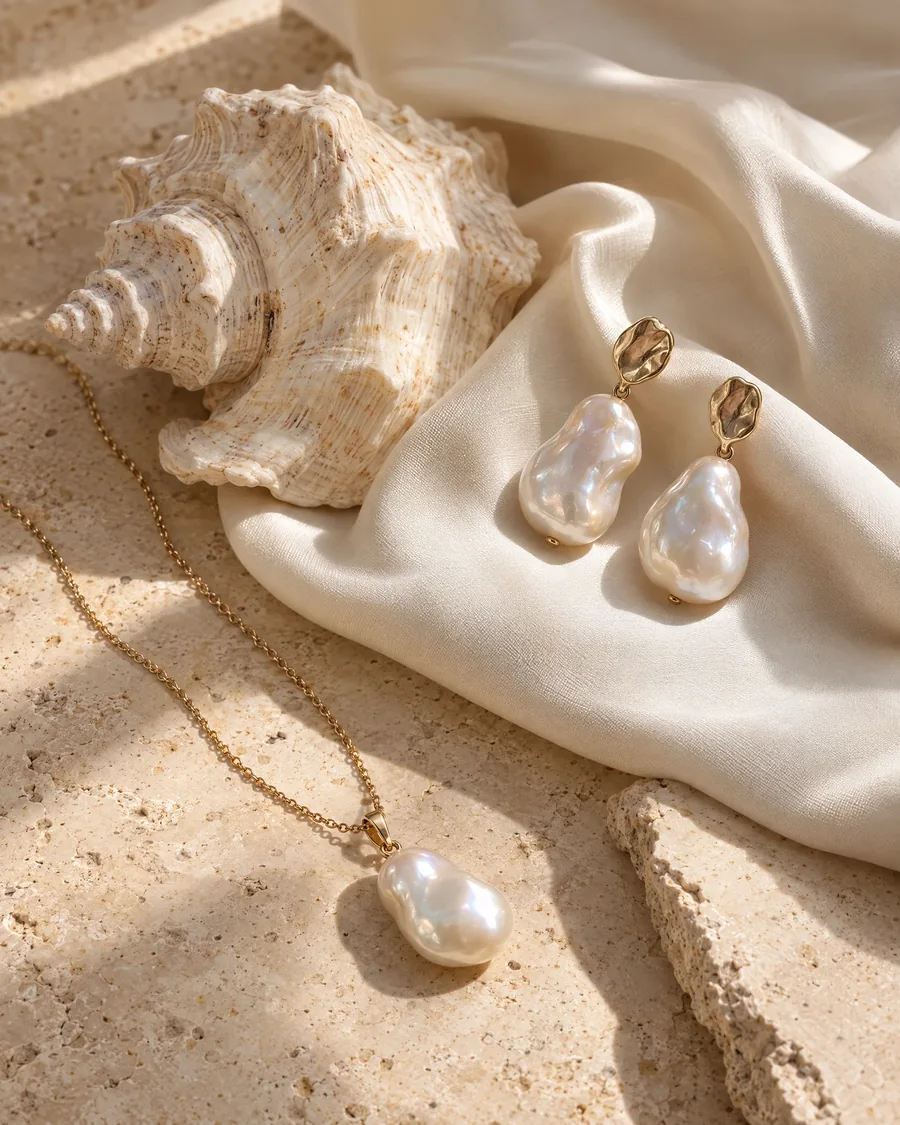
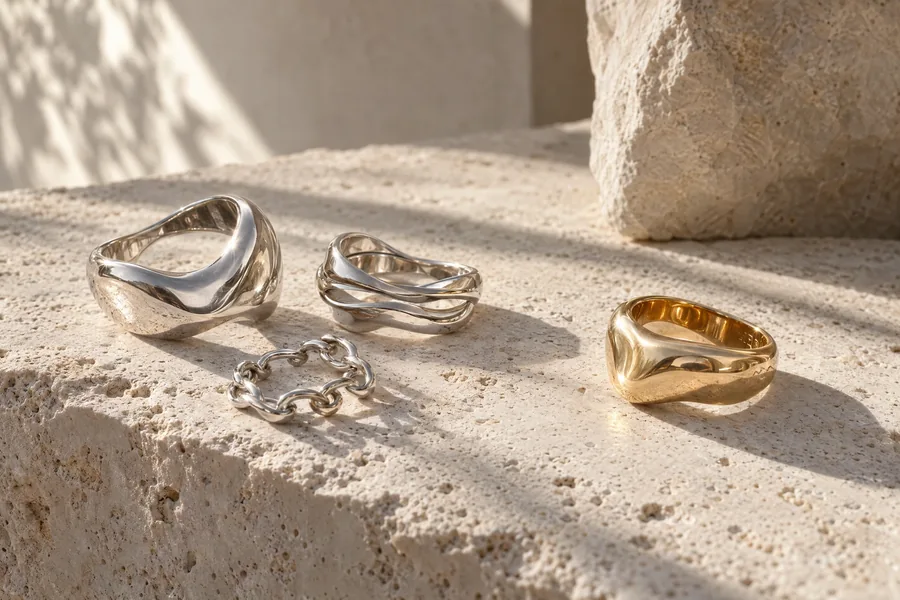
Descriptions are also a useful way to separate visual inspiration from a material claim. A collection image can suggest a silhouette or styling direction without verifying the metal of an actual item. When browsing necklace design ideas or ring styles, treat the page’s specific written material information—not the color on screen—as the basis for comparison. This is especially important when a listing uses broad phrases such as “gold tone” or “gold finish.”
A practical rule: before deciding, make a short checklist of the metal or base metal, karat if gold is stated, which components the description covers, and any additional surface treatment. If a seller cannot clarify a material term, pause rather than filling in the gaps yourself. Solid gold and plated jewelry can look similar at a glance, but an accurate description lets you compare them honestly.
Compare finish, wear and everyday use
Because solid gold is not simply a surface coating over a different base metal, ordinary surface wear does not reveal another underlying metal in the same way it can with plating. That does not make every solid gold piece immune to scratches, dents, or changes in appearance. Gold alloys differ, and the design, thickness, finish, and how a piece is worn affect how it looks over time. Ask about the stated alloy and construction instead of assuming that the phrase solid gold guarantees a particular level of toughness.
With gold-plated jewelry, the surface layer can gradually wear, especially in areas that rub against skin, clothing, other jewelry, or frequently handled objects. How quickly that happens cannot be reliably predicted from the label alone. Plating method and thickness, base material, design, and wearing habits all play a part. If you plan to wear a bracelet every day, for instance, consider its contact with a desk or keyboard; a pendant worn occasionally may encounter less repeated friction.
Think through your own routine rather than choosing by a broad claim such as “everyday wear.” Do you remove jewelry before exercise, bathing, or sleep? Do rings often contact hard surfaces during your work? A person who likes to rotate accessories and store them carefully may be comfortable with a plated finish. Someone seeking a piece to wear frequently may prefer to investigate solid gold, while still recognizing that it needs sensible handling. The best fit depends on your priorities, not a universal ranking.
Ask whether a stated finish covers the whole piece, whether any areas are left unplated, and whether the design combines metals. If the item has stones, ask whether the setting or treatment affects care. A two-tone appearance can result from different materials or finishes, so appearance alone is not an answer. You can browse bracelet design concepts as inspiration, then apply those questions to the written details of any specific piece you are considering.
When weighing solid gold versus gold plated jewelry, compare the expected use and the information available, not just the initial visual impression. If one description is specific and the other vague, request clarification before comparing them. Katherine jewelry’s about page provides brand context, but general educational guidance here should not be taken as a claim about the metal content of any particular design. Confirm item-specific details directly.
Choose with a realistic care routine
Care begins with the complete piece, not just its gold color. Solid gold jewelry can still be affected by contact with chemicals, and stones, pearls, adhesives, or delicate settings may need gentler handling than the metal itself. Plated jewelry calls for care that avoids unnecessary abrasion and chemical exposure to its surface. For either type, remove jewelry before swimming or household cleaning, and keep it away from cosmetics and household products when practical. These habits help limit avoidable exposure without promising that a finish will last indefinitely.
After wearing a piece, use a soft cloth if appropriate and store it dry, separately from items that could scratch or snag it. Avoid tossing chains together or letting rings rub against harder objects in a crowded compartment. For travel, use separate cushioned spaces so jewelry cannot knock against itself. If the construction includes pearls, opals, treated gems, or a complex setting, do not assume that a cleaning method suitable for plain metal is safe for the whole item.
Be cautious with home cleaning recipes and equipment. Ultrasonic cleaning is not universally safe: vibration can loosen settings, and some pearls, organic materials, surface-filled stones, and temperature-sensitive gems require caution. The Gemological Institute of America’s jewelry care guidance emphasizes that care depends on the materials and construction. When you do not know what a piece contains, ask a qualified jeweler to assess it before using an ultrasonic cleaner or a more aggressive treatment.
For a plated item, avoid scrubbing the surface with an abrasive cloth or using products without confirming they are appropriate for that finish and any stones. For solid gold, do not assume the metal makes every cleaning solution suitable: the alloy, setting, and any added materials still matter. If a piece changes color or develops a mark, first stop wearing it and seek advice rather than trying to polish through the surface. Attempting an unverified repair may complicate assessment or damage delicate components.
Make care part of your purchase decision. If you know you tend to leave jewelry on while cleaning, swimming, or applying products, consider whether you are willing to change that routine and store the piece carefully. The label solid gold is useful information, not a substitute for care instructions tailored to the whole design. Ask the seller what cleaning and storage guidance applies to the specific item, and keep that information with your records.
Make a decision based on evidence and priorities
There is no single right choice for every wearer. Solid gold may appeal if you want gold alloy throughout the stated components and plan to wear a piece often; plated jewelry may suit someone who prioritizes a particular look, rotates accessories, or expects occasional use. These are decision factors, not guarantees of lifespan or value. Compare the complete written description, construction, intended wear, and care requirements before deciding. If budget matters, set your own comfortable limit rather than treating a material label as a promise of future resale value.
Before buying, ask clear questions: What is the base material? If gold is stated, what karat is it? Which parts are covered by that description? Is the surface plated, and what information is available about the finish? Are stones natural, cultured, lab-created, imitation, or treated, where relevant? What care is recommended for the complete piece? These questions help distinguish precise disclosure from attractive but nonspecific wording. Request answers in writing so you can refer back to them.
Also check practical details that affect fit and use. For a ring, consult the seller’s sizing information and consider professional fitting if you are unsure; online sizing guidance is approximate. For earrings, necklaces, or bracelets, look for stated measurements and closure details when provided. A well-matched style can still disappoint if its proportions or fit do not suit you. Browse earring style inspiration or other design categories for ideas, while keeping the material assessment tied to the specific item description.
When browsing katherine jewelry, treat collection imagery as design inspiration, not independent proof of metal content or availability. The brand’s website is an inquiry site, and an image should not be read as confirmation that a pictured concept is an actual item or has particular specifications. Use the contact page to request clarification where needed. General buying guidance cannot establish the materials of a specific piece; rely on accurate, item-specific information supplied in writing.
In the end, the solid gold versus gold plated jewelry buying guide comes down to matching verified construction with your habits and expectations. Choose solid gold when its disclosed metal content fits your priorities; choose a plated finish when its surface construction and care needs suit the way you plan to wear it. Either way, read beyond the color, ask questions before committing, and store and clean the piece according to its full material makeup. A careful comparison is more useful than assuming one label tells the whole story.